


Epitalon Peptide: Telomerase Activation, Telomere Biology, and What the Research Shows
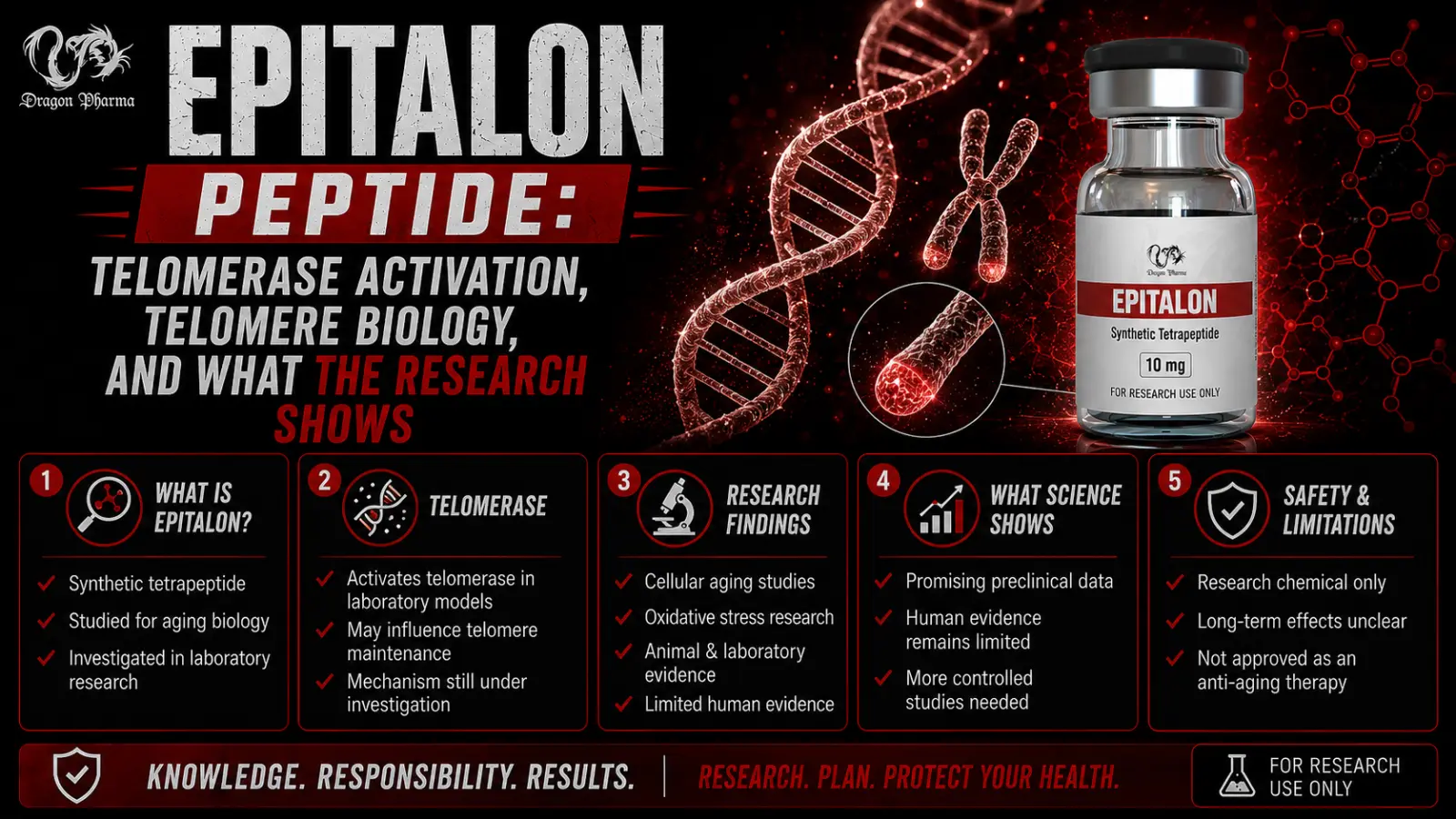
Epitalon (also spelled Epithalon or Epithalamide) is one of the most studied peptides in longevity science — and one of the most misrepresented. Claims about it "reversing aging" circulate constantly, but the actual research program behind it, spanning three decades and over 100 published papers, tells a more specific and more interesting story than the marketing shorthand suggests.
This guide covers what Epitalon is, how it's proposed to work, what the Khavinson research program actually demonstrated, and where the evidence gaps are — for anyone researching where to buy Epitalon peptide for laboratory use and wanting to understand the science before they do.
Table of Contents
- What Is Epitalon?
- Discovery: The Khavinson Research Program
- Mechanism of Action: Telomerase and Telomere Biology
- Cellular Aging and the Hayflick Limit
- Key Research Findings
- Epitalon and Cancer Biology: A Complicated Relationship
- Circadian Rhythm and Pineal Gland Function
- What the Evidence Doesn't Yet Show
- Buying Epitalon Peptide for Research: What to Know
- FAQ
What Is Epitalon?
Epitalon is a synthetic tetrapeptide with the amino acid sequence alanine-glutamic acid-aspartic acid-glycine (Ala-Glu-Asp-Gly, sometimes abbreviated AEDG). It was developed as a simplified synthetic analog of epithalamin, a polypeptide complex naturally secreted in small quantities by the pineal gland.
Because it's only four amino acids, Epitalon is structurally simple compared to most research peptides — it has no complex folding, no chirality complications, and favorable stability characteristics, which is part of why it's remained a consistent subject of longevity research since the 1980s.
Discovery: The Khavinson Research Program
Epitalon's research history is unusually concentrated: the overwhelming majority of studies on the peptide come from one research group — the St. Petersburg Institute of Bioregulation and Gerontology in Russia, led by gerontologist Vladimir Khavinson. Khavinson's team first isolated the pineal extract epithalamin, then synthesized the shorter Epitalon tetrapeptide as a more defined, reproducible analog.
Over more than three decades, Khavinson's program produced upwards of 100 published papers covering animal lifespan studies, human aging biomarkers, telomere and telomerase biology, and pineal gland/circadian function. That volume of research is unusual for a peptide that has never received Western regulatory approval, and it's a large part of why Epitalon still holds a serious position in longevity-science discussions. It's also worth noting as a limitation: because so much of the foundational data originates from a single lab, independent replication outside that research group remains comparatively limited — a point worth keeping in mind before anyone decides to buy Epitalon peptide expecting the same protocols or results described in the original papers.
Mechanism of Action: Telomerase and Telomere Biology
Telomeres are repetitive DNA sequences that cap the ends of chromosomes, protecting coding DNA during cell division. Each time a cell divides, telomeres shorten slightly. Once they become critically short, the cell can no longer divide — a state known as replicative senescence, or the Hayflick limit.
Telomerase is the enzyme responsible for rebuilding telomere sequences, but in most adult human somatic cells, telomerase activity is low or effectively absent. This is the core reason telomerase upregulation is such a central target in aging research: if you can keep telomerase active, you can theoretically delay the point at which cells stop dividing.
Epitalon's proposed mechanism centers on activating telomerase in somatic cells. The foundational study behind this claim — Khavinson, Bondarev, and Butyugov (2003), published in the Bulletin of Experimental Biology and Medicine — found that Epitalon treatment increased expression of the telomerase catalytic subunit and telomerase enzymatic activity in human fetal fibroblast cultures, with corresponding telomere elongation in cells that had been telomerase-negative.
A more recent independent study (Biogerontology, 2025) revisited this question in human cell lines and confirmed that Epitalon can increase telomere length through telomerase upregulation — though the same paper noted that a comprehensive dose-response study directly linking Epitalon concentration to quantitative changes in telomerase activity, hTERT expression, and telomere length had not yet been done, and identified that gap as the focus of ongoing work.
Mechanistically, Epitalon's small size allows it to enter cells and potentially reach the nucleus, where researchers hypothesize it interacts with chromatin-associated proteins to influence gene transcription — consistent with Khavinson's broader "peptide bioregulator" theory, which proposes that short tissue-derived peptides act as gene-expression regulators specific to their tissue of origin.
Cellular Aging and the Hayflick Limit
As cells approach the Hayflick limit, they don't simply stop functioning quietly — senescent cells can persist and secrete inflammatory signaling molecules that affect surrounding tissue, a phenomenon increasingly studied in its own right as a driver of age-related disease. Telomere length itself is now widely used as a biomarker of biological aging, since shorter telomeres correlate with higher risk across a range of age-related conditions.
This is the theoretical basis for interest in Epitalon: if telomerase activation can meaningfully delay telomere attrition, it could in principle extend a cell's functional replicative lifespan. In cell culture, Epitalon's telomere-elongation effect was demonstrated to be sufficient to let human fetal fibroblasts continue dividing well past the point at which untreated cells reached senescence.
Key Research Findings
Beyond the foundational fibroblast studies, the Khavinson research program has reported several other outcomes, largely in animal models:
- Lifespan extension in rodents — multiple studies (Khavinson et al., 2000, 2003a/b, 2017; Anisimov and Khavinson, 2010) report increased lifespan and longevity markers in treated animals, with some estimates of overexpressed-telomerase lifespan extension in mammals reaching into the 12–24% range in related telomerase research
- Recovery in accelerated-aging models — genetically modified mice bred to exhibit early-onset aging (shortened telomeres, brain shrinkage, splenic atrophy, intestinal damage, and loss of olfactory function) reportedly showed improvement in these physiological markers after Epitalon exposure, including evidence of new neuron formation and partial restoration of the sense of smell
- Melatonin and circadian restoration — research in aging primates and limited human data suggests Epitalon may help restore more youthful melatonin secretion patterns
It's worth being precise about the strength of this evidence: the rodent lifespan and accelerated-aging findings are compelling within their models, but they have not been replicated at scale by independent research groups outside Khavinson's program, and no large human randomized controlled trials currently confirm these effects translate to human lifespan or healthspan.
Epitalon and Cancer Biology: A Complicated Relationship
Epitalon's relationship to cancer biology is genuinely more nuanced than most summaries present it. On one hand, long-term carcinogenesis studies in rodents (again primarily from Khavinson and Anisimov's group) have reported oncostatic (tumor-suppressing) effects in models of breast, prostate, and colon cancer. On the other hand, Epitalon's core proposed mechanism — activating telomerase — is the same pathway cancer cells exploit to achieve unlimited replication, since telomerase reactivation (often via TERT promoter mutation) is one of the defining features that allows tumor cells to bypass normal senescence limits.
Some more recent mechanistic work has explored whether Epitalon's binding to histone H1 might, in specific contexts, actually downregulate telomerase in certain cancer cell lines rather than activate it — suggesting the peptide's effect may be context-dependent between normal and malignant cells rather than uniformly "pro-telomerase." This tension between telomerase activation in healthy cells and telomerase's role in cancer biology is an active and unresolved area of the research, not a settled question.
Circadian Rhythm and Pineal Gland Function
Since Epitalon is modeled on a pineal gland-derived compound, part of its research interest involves circadian and melatonin regulation. The proposed mechanism suggests Epitalon may increase hypothalamic sensitivity to the body's natural pineal signaling, supporting more regular melatonin secretion patterns — of interest in aging research because melatonin rhythm disruption is itself associated with several markers of aging. This effect profile has been studied in primates and, to a more limited degree, in humans, though — as with the telomerase data — independent replication outside the original research program remains limited.
What the Evidence Doesn't Yet Show
To be direct about where the research currently stands:
- No large-scale, independently replicated human randomized controlled trials confirm Epitalon's lifespan or healthspan effects in people
- Dose-response relationships between Epitalon concentration and telomerase/telomere outcomes are still being actively characterized, not fully established
- Long-term human safety data is limited
- The cancer-biology picture is mixed and mechanistically unresolved, not a clean "anti-cancer" story
None of this means the underlying science is illegitimate — the telomerase-activation mechanism is biologically coherent and has been observed in independent cell-line work, which is meaningfully more replication than many research peptides can claim. It means the leap from "promising cell and animal data" to "proven human anti-aging compound" hasn't been made yet, and any research use should be approached with that gap clearly in mind.
Buying Epitalon Peptide for Research: What to Know
Anyone looking to buy Epitalon peptide for laboratory purposes should treat sourcing with the same rigor as the research itself. Reputable research-compound suppliers should provide:
- Third-party purity/identity testing (typically HPLC or mass spectrometry) available on request
- Clear labeling as a research chemical, not a supplement or therapeutic product
- Documentation restricting sale to qualified researchers and laboratory use only
Because Epitalon has never gone through Western regulatory approval as a therapeutic, research-grade Epitalon exists in a different category than either pharmaceuticals or over-the-counter supplements — it is manufactured and sold specifically for in-vitro and laboratory research, not for self-administration.
Frequently Asked Questions
What does Epitalon actually do?
In research settings, Epitalon has been studied primarily for its potential to activate telomerase and influence telomere length in human cell cultures. It has also been investigated for its effects on circadian rhythm, melatonin regulation, and, in animal models, markers associated with aging and lifespan.
Is Epitalon proven to extend human lifespan?
No. Evidence for lifespan extension comes primarily from animal studies. To date, no large-scale human clinical trials have confirmed that Epitalon extends lifespan or healthspan in people.
Does Epitalon cause cancer, or prevent it?
Neither claim has been conclusively established. Some animal studies suggest potential tumor-suppressing effects, while Epitalon's interaction with telomerase involves biological pathways that are also active in certain cancer cells. Its overall role remains an active area of scientific research.
Who conducts most Epitalon research?
Much of the foundational Epitalon research has been conducted by Vladimir Khavinson and colleagues at the St. Petersburg Institute of Bioregulation and Gerontology, with publications spanning several decades.
Where can I buy Epitalon peptide for research?
When sourcing Epitalon for research, look for suppliers that provide independent third-party purity testing, clear research-use labeling, and appropriate quality documentation for laboratory use.
Articles

Post Cycle Therapy (PCT) is the recovery phase following an anabolic steroid cycle. Its primary goal is to restore natural testosterone production, regulate estrogen levels, and help preserve muscle mass gained during the cycle.
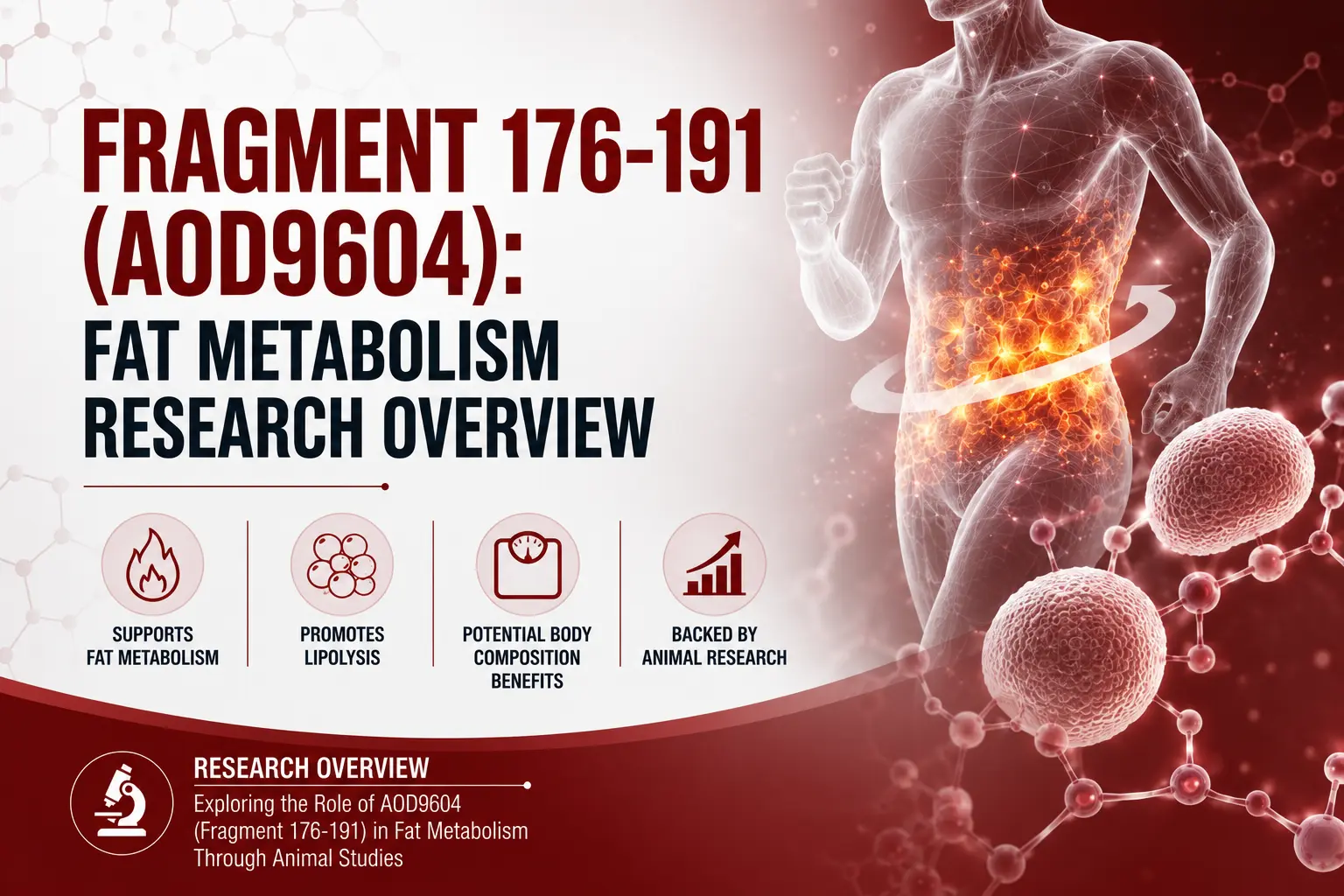
This article clarifies that relationship and organizes what's known about its proposed mechanism, evidence quality, and secondary research areas in cardiovascular and joint health.
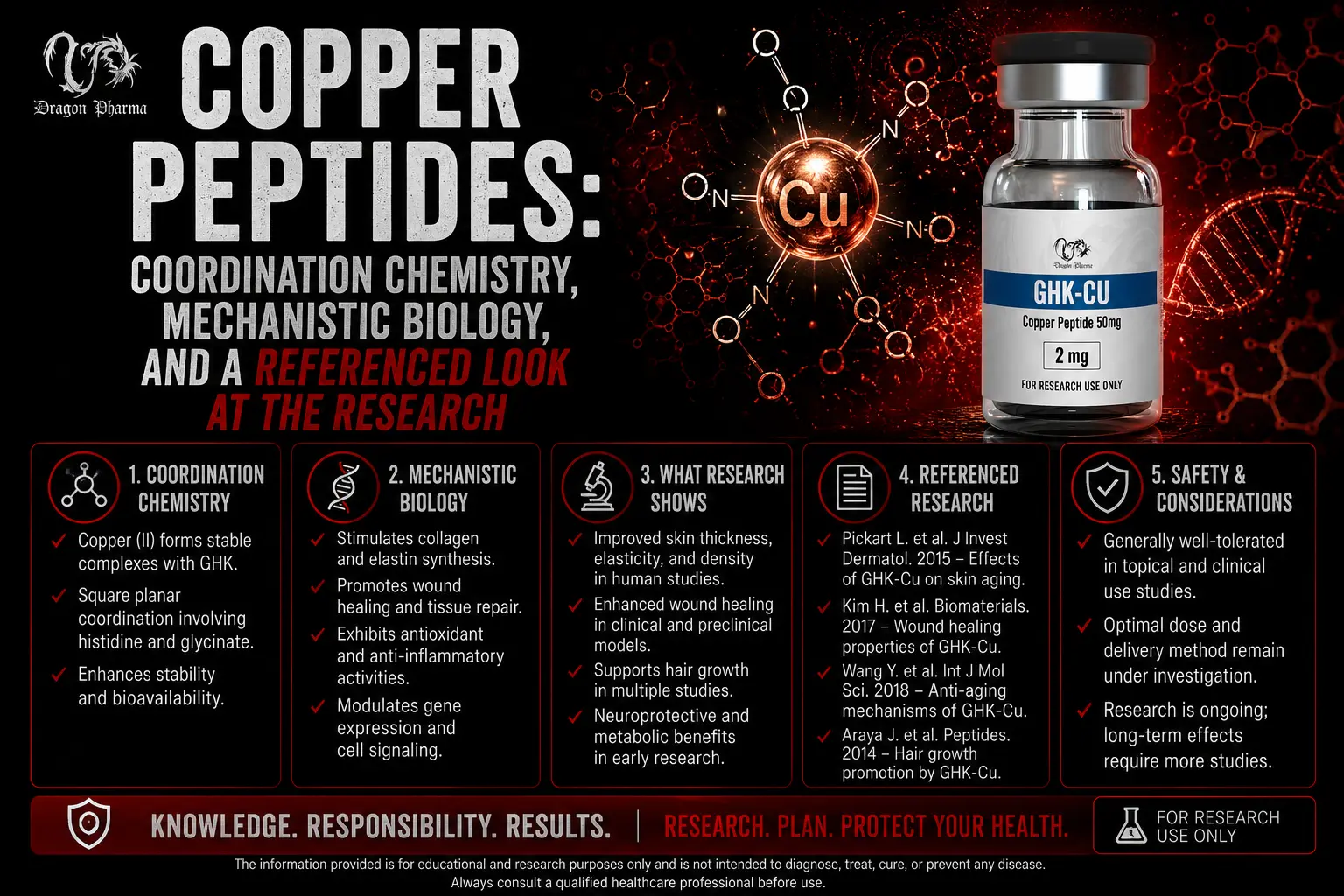
Three members have received the most sustained research attention: GHK-Cu (glycyl-L-histidyl-L-lysine copper(II)), AHK-Cu (alanyl-histidyl-lysine copper(II)), and DAHK-Cu (aspartyl-alanyl-histidyl-lysine copper(II)). Each has a distinct coordination structure, tissue origin, and research focus.
Customer Reviews
Please leave your review on products or service below.
Thank you beforehand.