


BPC-157 Peptide: Tissue Repair Mechanism & Research Overview
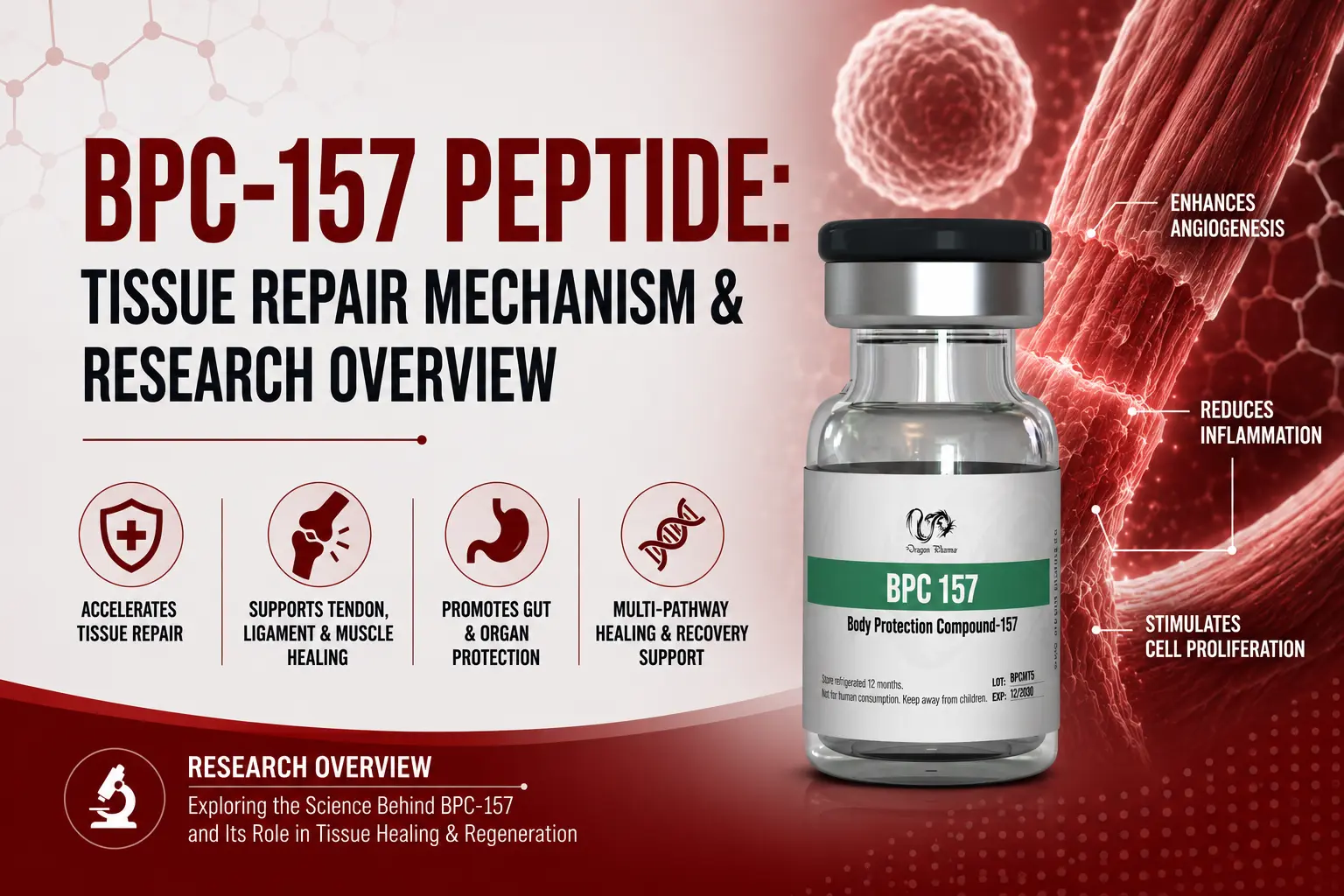
BPC-157 (Body Protection Compound-157) is a synthetic pentadecapeptide studied extensively across animal models for its association with tissue repair, spanning tendons, ligaments, muscle, bone, blood vessels, and neural tissue. Originally identified from a protective protein found in human gastric juice, the stabilized synthetic version has become one of the most researched compounds in the tissue-repair peptide category. This article organizes what animal research shows about its mechanism and tissue-specific effects.
Key Facts at a Glance
| Property | Detail |
|---|---|
| Full name | Body Protection Compound-157 |
| Alternate names | Bepecin, PL 10 |
| Structure type | Synthetic pentadecapeptide (15 amino acids) |
| Origin | Identified from a protective peptide fragment found in human gastric juice; the research-grade version is a stabilized synthetic analog |
| Notable stability property | Reported to resist gastric acid breakdown for a minimum of 24 hours in research settings |
| Primary research focus | Tissue repair across tendon, ligament, muscle, bone, vascular, and neural systems |
| Evidence type | Primarily animal research (rodent models); limited human clinical trial data |
What Is BPC-157?
BPC-157 is a stable synthetic peptide developed from a naturally occurring protective compound found in human gastric juice, studied for reparative effects that extend well beyond the digestive tract. While its origin is gastric, animal research indicates its studied effects are systemic rather than limited to intestinal tissue — a key reason it has drawn broad research interest across orthopedic, vascular, and neurological research contexts.
Mechanism of Action
BPC-157's proposed reparative effects are linked to its influence on fibroblast activity, collagen regulation, and angiogenesis, with some research suggesting an association with growth hormone signaling.
- Research suggests BPC-157 concentration may influence fibroblast migration, with elevated levels associated with increased fibroblast movement toward injury sites.
- Earlier studies have proposed a role for BPC-157 in regulating collagen fragments, potentially affecting fibroblast function and the deposition and maintenance of collagen at repair sites.
- Data from cell studies suggests BPC-157 exposure may be associated with up to a threefold increase in fibroblast reproduction in these models.
- Some research has proposed a mechanistic association between BPC-157's healing effects and growth hormone signaling pathways, though this relationship is not yet fully characterized.
Tissue-Specific Research Findings
| Tissue/System | Reported Research Findings |
|---|---|
| Tendons | Enhanced recovery of transversely cut Achilles tendons in rodent models, with restoration of full tendon integrity reported |
| Ligaments | Healing of surgically induced ligament injuries observed within approximately three months of exposure in rodent studies |
| Brain/neural tissue | Proposed positive effects on inflammation, hemorrhage, and edema in models of traumatic brain injury and brain pathology linked to GI/liver lesions or NSAID/insulin overdose |
| Blood vessels | Associated with angiogenesis (new blood vessel formation) and reported to inhibit/reverse clot formation in abdominal aorta anastomosis models |
| Skeletal muscle | Reported reparative activity in muscle injury research models |
| Bone | Proposed role in supporting bone healing processes in animal research |
| Skin | Associated with skin damage repair in research models |
| Peripheral nerve (sciatic) | Proposed involvement in sciatic nerve healing research |
Fibroblast Activity and Collagen Regulation
Fibroblasts are the primary cell type responsible for producing collagen and supporting connective tissue repair. Research suggests BPC-157 may accelerate fibroblast migration toward injury sites and support the deposition and organization of collagen fibers — a proposed mechanistic basis for its broad reparative effects across connective tissues including tendon, ligament, and skin.
Vascular and Neurological Research
BPC-157's studied effects on angiogenesis — the formation of new blood vessels — are proposed to support tissue repair broadly, since adequate blood supply is essential to healing across nearly all tissue types. Separately, research in models of traumatic brain injury and toxin-induced brain pathology has explored BPC-157's potential role in modulating inflammation, hemorrhage, and edema, representing an area of research distinct from its musculoskeletal applications.
BPC-157 vs. TB-500: Comparison Table
p>BPC-157's studied effects on angiogenesis — the formation of new blood vessels — are proposed to support tissue repair broadly, since adequate blood supply is essential to healing across nearly all tissue types. Separately, research in models of traumatic brain injury and toxin-induced brain pathology has explored BPC-157's potential role in modulating inflammation, hemorrhage, and edema, representing an area of research distinct from its musculoskeletal applications.Researchers wondering BPC 157 where to buy should ensure they obtain research-grade material from reputable suppliers like Dragon Pharma, as BPC-157 products intended for laboratory research.
| Feature | BPC-157 | TB-500 |
|---|---|---|
| Origin | Derived from a gastric-protective protein fragment | Derived from Thymosin Beta-4 |
| Primary proposed mechanism | Fibroblast migration, collagen regulation, angiogenesis | Actin regulation supporting cell migration and repair |
| Tissue research breadth | Tendon, ligament, muscle, bone, vascular, neural, gastrointestinal | Muscle, tendon, wound healing, cardiac tissue |
| Common research pairing | Frequently studied/stacked alongside TB-500 for complementary repair mechanisms | Frequently studied/stacked alongside BPC-157 |
Storage and Stability (Research Use Only)
| Condition | Recommendation |
|---|---|
| Lyophilized form | Store frozen (-20°C) for long-term stability |
| Reconstituted solution | Refrigerate (2–8°C); use within the research protocol's defined window |
| Light exposure | Store protected from light |
| Handling | Avoid repeated freeze-thaw cycles to preserve peptide integrity |
Frequently Asked Questions
What does BPC-157 stand for?
BPC-157 stands for Body Protection Compound-157, a synthetic pentadecapeptide studied for its association with tissue repair processes.
Where does BPC-157 come from?
It was identified from a protective peptide fragment found in human gastric juice. The research-grade version used in laboratory settings is a stabilized synthetic analog rather than a naturally extracted compound.
What tissues has BPC-157 been studied on?
Animal research has explored its association with tendon, ligament, muscle, bone, skin, blood vessel, peripheral nerve, and brain tissue repair.
How does BPC-157 affect fibroblasts?
Research suggests BPC-157 concentration may influence fibroblast migration toward injury sites, with some data associating exposure with up to a threefold increase in fibroblast reproduction in study models.
Has BPC-157 been studied for tendon injuries?
Yes. In rodent models of transversely cut Achilles tendons, BPC-157 exposure was associated with enhanced recovery and restoration of full tendon integrity.
Does BPC-157 affect blood vessel formation?
Research suggests BPC-157 may support angiogenesis (new blood vessel formation) and has been associated with inhibiting and reversing blood clot formation in specific vascular research models.
Has BPC-157 been studied for brain injury?
Yes, in preclinical models. Research has explored its proposed role in modulating inflammation, hemorrhage, and edema associated with traumatic brain injury and toxin-induced brain pathology.
Is BPC-157 the same as Bepecin or PL 10?
Yes, these are alternate names that have been used to refer to the same compound in research literature.
How is BPC-157 different from TB-500?
Both are studied for tissue repair, but BPC-157 is derived from a gastric-protective protein and primarily researched for fibroblast/collagen and angiogenic mechanisms, while TB-500 derives from Thymosin Beta-4 and is primarily studied for actin-regulated cell migration.
Key Takeaways
- BPC-157 is a stable synthetic pentadecapeptide identified from a protective protein in human gastric juice, studied for reparative effects that extend well beyond the digestive tract.
- Its proposed mechanism centers on fibroblast migration, collagen regulation, and angiogenesis, with a possible association with growth hormone signaling.
- Animal research spans tendon, ligament, muscle, bone, skin, vascular, and neural tissue repair, with particularly notable findings in Achilles tendon and ligament healing models.
- Its studied effects on brain inflammation, hemorrhage, and edema represent a distinct research direction from its musculoskeletal applications.
Articles
Best known for its role in skeletal muscle repair, MGF has more recently drawn research interest in neuroscience. This article reviews what transgenic mouse studies have found, the limitations of that evidence, and how MGF compares to related growth factors.
This article covers their coordination chemistry, proposed mechanisms, and research findings across evidence tiers — including one genuine human clinical trial that source material often obscures under vague "subjects" language.
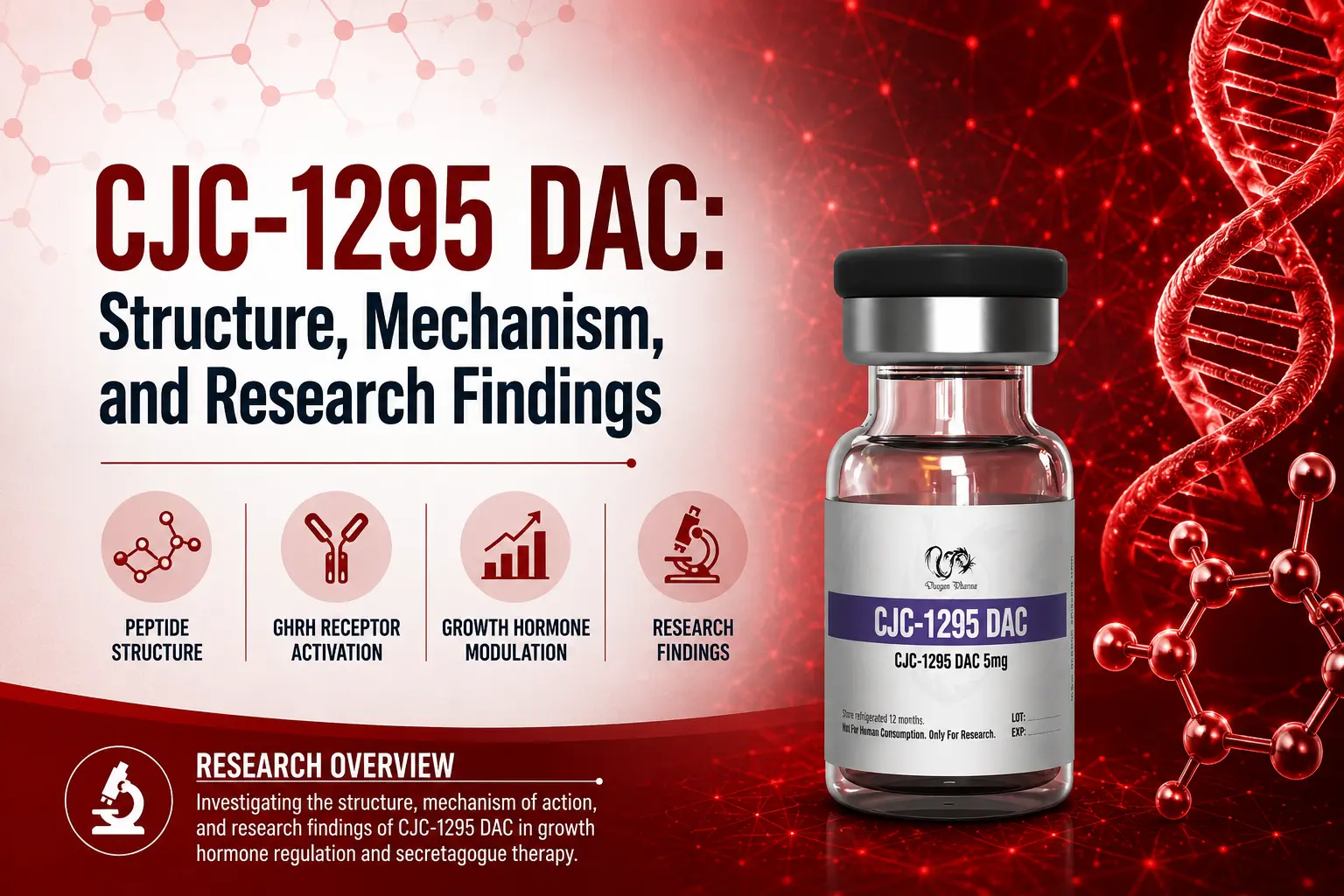
This article covers its structure, mechanism, and research findings — including human clinical trial data, GHRH-knockout mouse research, and corrections to two citation issues found in the source material, one involving a duplicated/misattached reference and one involving a pharmacokinetic claim sourced to a study that isn't actually a pharmacology paper.
Customer Reviews
Please leave your review on products or service below.
Thank you beforehand.