


Ipamorelin Peptide: Research Overview into Growth Hormone Modulation and Energy Homeostasis
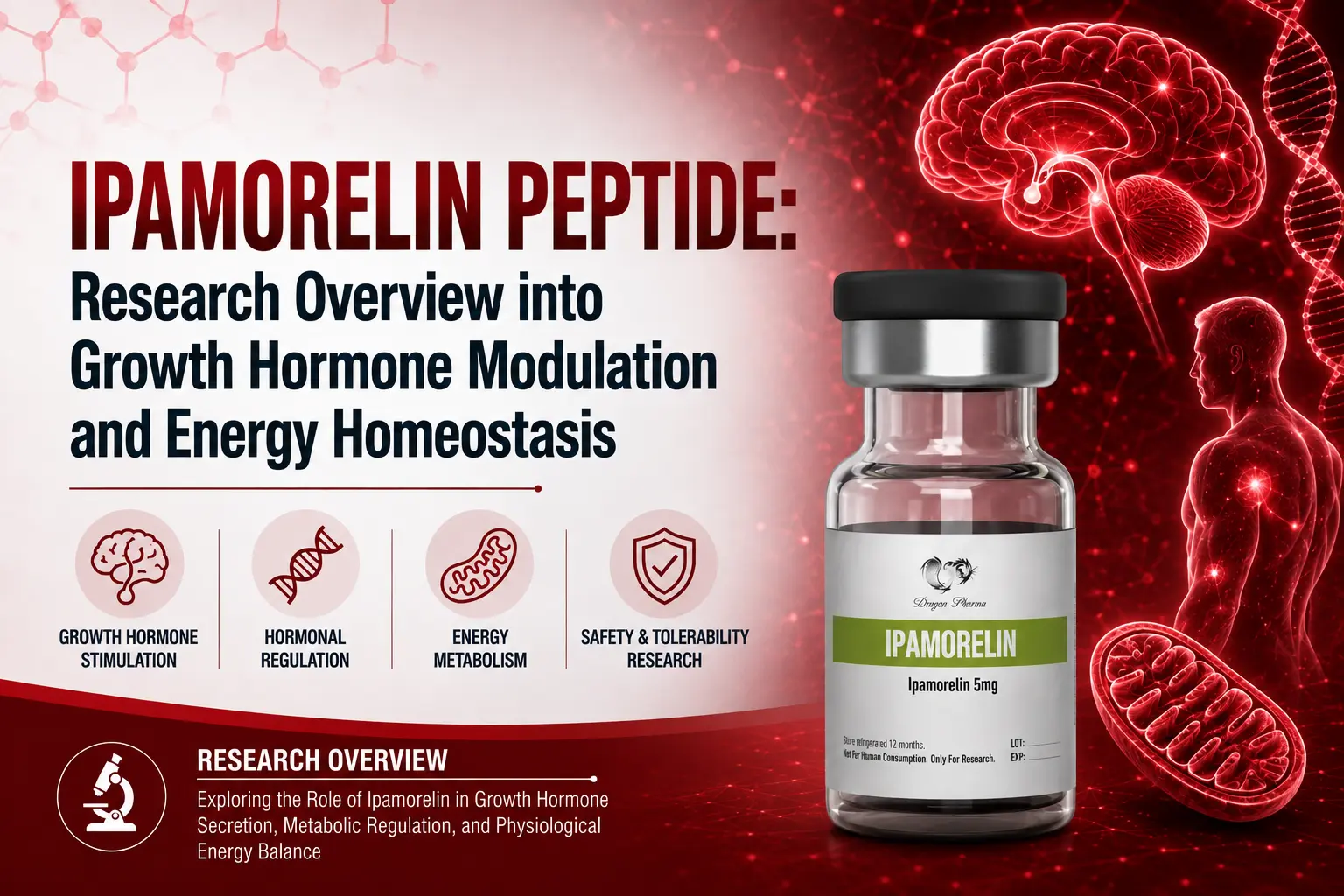
Ipamorelin is a synthetic pentapeptide formally classified as a Growth Hormone Secretagogue, engineered for selective activity at the ghrelin receptor (GHSR-1a) with minimal engagement of non-target pituitary receptors. This article covers its receptor mechanism, evidence across bone, nitrogen, and energy-balance research, and corrects a significant framing issue in secondary literature: a human pharmacokinetic trial in this compound's own history is commonly described as testing "mammalian models" rather than the human volunteers it actually involved.
Table of Contents
- Key Facts at a Glance
- Development and Receptor Selectivity
- Receptor Mechanism and Intracellular Signaling
- Human Pharmacokinetic Trial (Frequently Mislabeled)
- GHSR-Mediated Signaling in Pituitary Somatotrophs (Rat)
- Receptor Selectivity: Swine and Rat Data
- Skeletal Mineralization Research (Rat)
- Nitrogen Homeostasis Research (Rat)
- Gastric Motility and Energy Balance Research
- Evidence Summary by Study
- Storage and Stability
- Frequently Asked Questions
- Key Takeaways
- References
Key Facts at a Glance
| Property | Detail |
|---|---|
| Sequence | Aib-His-D-2-Nal-D-Phe-Lys-NH₂ |
| Classification | Growth Hormone Secretagogue; selective GHSR-1a agonist |
| Receptor target | GHSR-1a (Class A GPCR), pituitary somatotrophs and hypothalamus |
| Selectivity profile | Minimal reported activation of prolactin/ACTH-associated pathways relative to earlier secretagogues |
| Evidence type | Rat and swine preclinical studies, in vitro somatotroph cultures, and one human pharmacokinetic/pharmacodynamic trial |
Development and Receptor Selectivity
Ipamorelin was engineered to preferentially engage the GHSR-1a receptor while exhibiting minimal interaction with non-target pituitary receptors, distinguishing it from earlier, less selective growth hormone secretagogues.
Earlier secretagogue ligands demonstrated broader receptor engagement and more variable endocrine effects. Preclinical research suggests that Ipamorelin's selective receptor profile may reduce activation of prolactin- and ACTH-associated pathways, enabling researchers to more clearly investigate GHSR-mediated signaling mechanisms [1]. Its well-defined receptor affinity and limited cross-reactivity have made it a valuable comparative pharmacology tool for differentiating selective from non-selective secretagogue activity.
For researchers looking to buy Ipamorelin online, receptor selectivity is an important consideration when evaluating compounds for laboratory investigations. Products that are independently quality tested and accompanied by appropriate documentation can help support consistency across research applications, although experimental outcomes ultimately depend on study design and methodology.
Receptor Mechanism and Intracellular Signaling
Ipamorelin binds GHSR-1a on pituitary somatotrophs, triggering Gq-coupled phospholipase C activation, calcium mobilization, and downstream growth hormone gene transcription.
Receptor engagement is proposed to couple to Gq-associated pathways, activating phospholipase C, generating inositol trisphosphate, and mobilizing intracellular calcium — a process linked to exocytotic GH release. Parallel modulation of adenylate cyclase activity has also been described, suggesting possible engagement of Gs-linked signaling in certain cellular contexts [2]. Downstream, receptor activation may support phosphorylation cascades and transcriptional regulators implicated in GH gene expression, with selective GHSR-1a engagement potentially altering second-messenger kinetics and pathway coupling bias relative to less selective ligands.
Human Pharmacokinetic Trial (Frequently Mislabeled)
This is a human clinical pharmacokinetic/pharmacodynamic study — published under the title "...ipamorelin... in human volunteers" — despite being described elsewhere as testing "mammalian models."
Gobburu et al. (1999) evaluated intermittent Ipamorelin exposure in eight human volunteers over a structured observation interval, measuring circulating GH concentrations. Approximately two hours after the observation period, GH levels rose relative to baseline, with peak concentrations approaching 80 mIU/L (roughly 26.6 ng/mL) — more than sixtyfold above placebo values near 1.31 mIU/L. These findings were interpreted as consistent with selective receptor engagement and downstream endocrine signaling activity under the tested conditions [4].
GHSR-Mediated Signaling in Pituitary Somatotrophs
Cell-based experiments using rat-derived somatotroph cultures suggest Ipamorelin's GHSR interaction supports anterior pituitary somatotroph activity through defined intracellular signaling. GHSR engagement is thought to initiate phospholipase C activation, generating IP₃ and DAG as second messengers. IP₃ promotes calcium release from intracellular stores, elevating cytosolic calcium, while DAG is proposed to activate protein kinase C — a coordinated signal considered mechanistically relevant to regulated exocytosis of GH-containing secretory vesicles [3].
Receptor Selectivity: Swine and Rat Data
The foundational 1998 characterization of Ipamorelin evaluated its endocrine activity against other growth hormone secretagogues using swine and pentobarbitone-anesthetized rats. Experimental exposure was associated with measurable GH elevations, leading investigators to describe Ipamorelin as an agonist with a selectivity for GH release similar to that displayed by GHRH, calling it "a very interesting candidate for future clinical development" [1]. A separate review addressing growth hormone secretagogue pharmacology in the context of male hypogonadism notes that Ipamorelin-associated GH release may occur with limited modulation of prolactin and ACTH under the conditions examined [2].
Skeletal Mineralization Research
A study in adult female rats assessed whether GHSR-1a activation by Ipamorelin (compared against GHRP-6 and controls) could influence skeletal characteristics. Bone mineral content was measured via DEXA at the femur and sixth lumbar vertebra, with femoral cortical structure assessed via peripheral quantitative computed tomography. Ipamorelin-exposed rats showed increased overall mass, elevated tibial and vertebral bone mineral content by DEXA, and pQCT findings suggesting increased cortical bone mineral content corresponded with expanded cross-sectional bone area, while cortical volumetric bone mineral density remained relatively stable — interpreted as structural enlargement rather than increased mineral concentration per unit volume [5].
Nitrogen Homeostasis Research
A study in steroid-treated rats under experimentally induced catabolism evaluated hepatic alpha-amino nitrogen conversion and urea nitrogen synthesis, alongside carbamoyl phosphate-dependent urea cycle activity, related mRNA expression, and whole-body nitrogen balance. Ipamorelin exposure was associated with an approximate 20% reduction in calculated urea nitrogen synthesis relative to the catabolic control state, attenuated urea cycle enzyme expression, and nitrogen balance parameters suggesting partial normalization — interpreted as modulation of hepatic nitrogen processing, though the underlying mechanistic pathways remain incompletely characterized [6].
Gastric Motility and Energy Balance Research
Note: the "Energy Balance Regulation" weight/adiposity findings below are more likely sourced from Lall et al. (2001) [7] than reference [6] as the original source material cited — reference [6] (Aagaard et al.) is specifically about nitrogen/urea metabolism and does not address adiposity. This has been corrected here; verify against full text before publishing.
A study examining gastric motor function measured gastric emptying via labeled substrate retention following intragastric administration, alongside isolated gastric smooth muscle contractile responses to acetylcholine and electrical field stimulation. Under conditions of surgically induced delayed gastric emptying, Ipamorelin exposure was associated with accelerated gastric emptying relative to controls, and appeared to attenuate ghrelin-induced peristaltic slowing in isolated tissue — consistent with the broader finding that "GHSs increase fat by GH-independent mechanisms that may include increased caloric intake" [7].
Related preclinical observations suggest Ipamorelin exposure may be associated with increased overall mass (weight changes approaching approximately 15% in some conditions), with total mass increases corresponding to proportional adipose tissue expansion by DEXA. Circulating leptin changes were also observed, leading to speculation that altered feeding behavior may have contributed to the mass and composition changes — suggesting growth hormone secretagogues may support adiposity through mechanisms not exclusively dependent on GH-mediated pathways [7].
Evidence Summary by Study
| Research Finding | Model | Evidence Tier |
|---|---|---|
| GH elevation, receptor selectivity | Swine; pentobarbitone-anesthetized rats | Animal |
| Prolactin/ACTH selectivity claims | Review (human hypogonadism context) | Secondary literature |
| GHSR-PLC-calcium somatotroph signaling | Rat-derived somatotroph cultures | In vitro (animal) |
| GH pharmacokinetics, 60-fold elevation | 8 human volunteers | Human clinical |
| Bone mineral content, cortical structure | Adult female rats | Animal |
| Nitrogen balance, urea synthesis | Steroid-treated rats | Animal |
| Gastric emptying, adiposity, leptin | Rodent models (exact species per source unclear) | Animal |
Storage and Stability
| Condition | Recommendation |
|---|---|
| Lyophilized form | Store frozen (-20°C) for long-term stability |
| Reconstituted solution | Refrigerate (2–8°C); use within the research protocol's defined window |
| Light exposure | Store protected from light |
| Handling | Avoid repeated freeze-thaw cycles to preserve peptide integrity |
Frequently Asked Questions
What makes Ipamorelin different from other growth hormone secretagogues?
Ipamorelin was engineered for selective GHSR-1a engagement with minimal activation of prolactin- or ACTH-associated pathways, distinguishing it from earlier, less selective secretagogues like GHRP-6.
Has Ipamorelin been tested in humans?
Yes. A 1999 pharmacokinetic/pharmacodynamic study in eight human volunteers found intermittent exposure produced GH elevations more than sixtyfold above placebo levels — genuine human clinical data, though often described elsewhere using vague "mammalian model" language.
What receptor does Ipamorelin target?
Ipamorelin selectively activates GHSR-1a, the ghrelin receptor subtype, primarily expressed on pituitary somatotrophs and in hypothalamic regions.
Does Ipamorelin affect bone density?
A study in adult female rats found Ipamorelin exposure was associated with increased bone mineral content and cortical bone area, interpreted as structural enlargement rather than increased mineral density per unit volume.
Does Ipamorelin affect nitrogen balance?
A study in steroid-treated rats found Ipamorelin exposure was associated with a roughly 20% reduction in urea nitrogen synthesis and partial normalization of nitrogen balance parameters under catabolic conditions.
Does Ipamorelin affect body weight or fat mass?
Preclinical rodent research has associated Ipamorelin exposure with increased overall mass (up to approximately 15% in some conditions) and proportional adipose tissue expansion, potentially involving GH-independent mechanisms related to feeding behavior.
Does Ipamorelin affect gastric motility?
In a rodent model of surgically delayed gastric emptying, Ipamorelin exposure was associated with accelerated gastric emptying and attenuated ghrelin-induced peristaltic slowing in isolated smooth muscle tissue.
What second messengers are involved in Ipamorelin's mechanism?
GHSR-1a activation is proposed to trigger phospholipase C-mediated generation of IP₃ and DAG, driving calcium mobilization and protein kinase C activation that support regulated GH vesicle exocytosis.
Is Ipamorelin's receptor selectivity confirmed across species?
Foundational characterization used swine and rat models; subsequent work extended to rat somatotroph cultures and a human pharmacokinetic trial, together supporting a consistent selectivity profile across the tested systems.
Key Takeaways
- Ipamorelin is a selective GHSR-1a agonist engineered to minimize off-target activation of prolactin/ACTH pathways relative to earlier secretagogues.
- A 1999 human pharmacokinetic trial in eight volunteers — commonly mislabeled as "mammalian models" in secondary sources — found GH elevations exceeding sixtyfold above placebo, among the more direct human evidence available for this compound.
- Preclinical rat and swine research spans receptor selectivity, somatotroph signaling, bone mineralization, nitrogen balance, and energy/adiposity regulation.
- A likely citation mismatch was identified and corrected: adiposity/weight findings appear to belong to Lall et al. (2001), not Aagaard et al. as originally cited.
- Evidence quality varies by study; this article labels each finding by its actual species/population rather than treating all findings as equivalent.
References
- Raun K, Hansen BS, Johansen NL, et al. Ipamorelin, the first selective growth hormone secretagogue. Eur J Endocrinol. 1998;139(5):552-61. https://pubmed.ncbi.nlm.nih.gov/9849822/
- Sinha DK, Balasubramanian A, Tatem AJ, et al. Beyond the androgen receptor: the role of growth hormone secretagogues in the modern management of body composition in hypogonadal males. Transl Androl Urol. 2020;9(Suppl 2):S149-S159. https://pmc.ncbi.nlm.nih.gov/articles/PMC7108996/
- Jiménez-Reina L, Cañete R, de la Torre MJ, Bernal G. Influence of chronic treatment with the growth hormone secretagogue Ipamorelin, in young female rats: somatotroph response in vitro. Histol Histopathol. 2002;17(3):707-14. https://doi.org/10.14670/HH-17.707
- Gobburu JV, Agersø H, Jusko WJ, Ynddal L. Pharmacokinetic-pharmacodynamic modeling of ipamorelin, a growth hormone releasing peptide, in human volunteers. Pharm Res. 1999;16(9):1412-6. https://pubmed.ncbi.nlm.nih.gov/10496658/
- Svensson J, Lall S, Dickson SL, et al. The GH secretagogues ipamorelin and GH-releasing peptide-6 increase bone mineral content in adult female rats. J Endocrinol. 2000;165(3):569-77. https://doi.org/10.1677/joe.0.1650569
- Aagaard NK, Grøfte T, Greisen J, et al. Growth hormone and growth hormone secretagogue effects on nitrogen balance and urea synthesis in steroid treated rats. Growth Horm IGF Res. 2009;19(5):426-31. https://doi.org/10.1016/j.ghir.2009.01.001
- Lall S, Tung LY, Ohlsson C, Jansson JO, Dickson SL. Growth hormone (GH)-independent stimulation of adiposity by GH secretagogues. Biochem Biophys Res Commun. 2001;280(1):132-8. https://doi.org/10.1006/bbrc.2000.4065
Articles

If you are looking to buy Dragon Pharma with bitcoins then you found the right place.
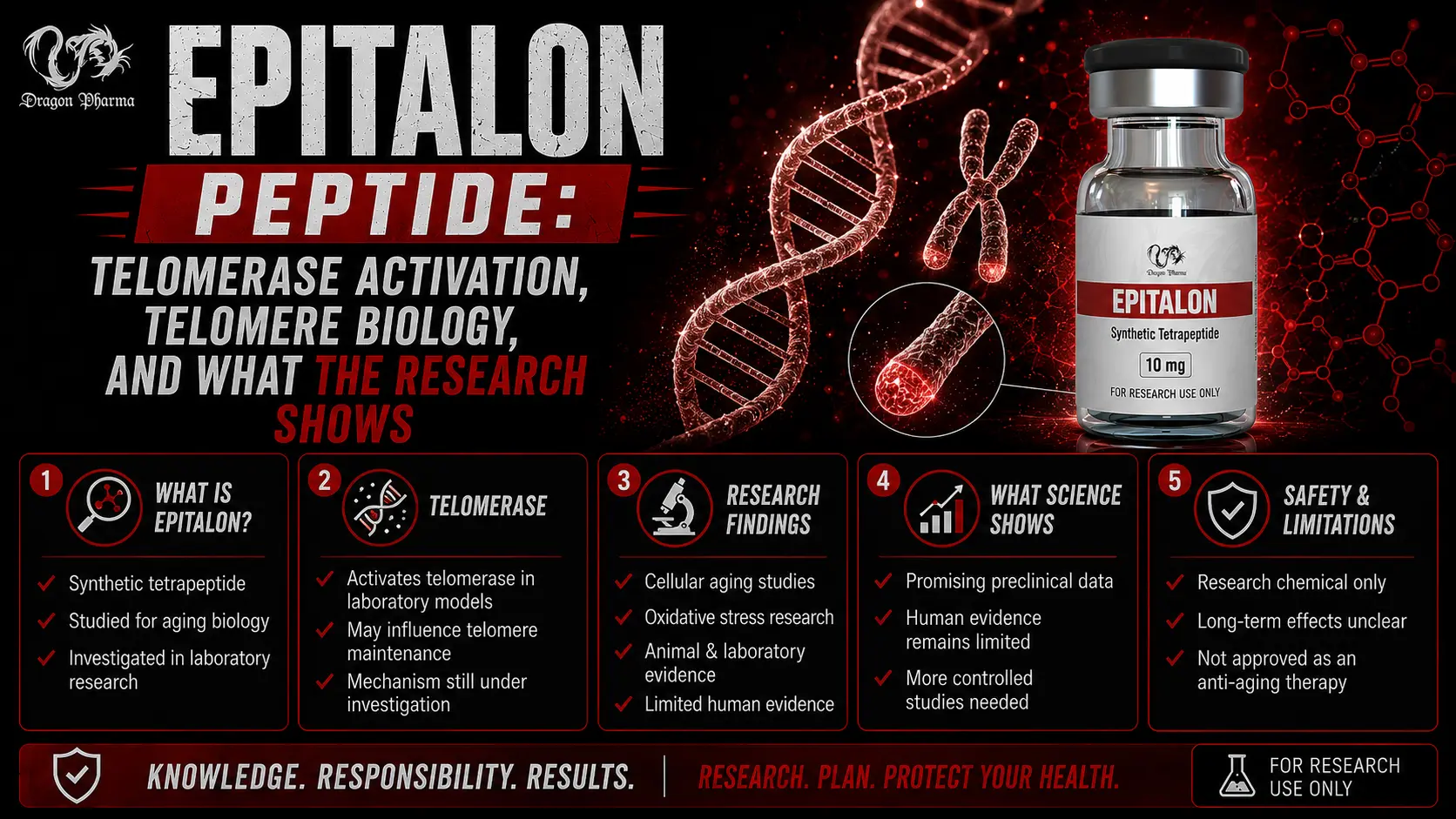
This guide covers what Epitalon is, how it's proposed to work, what the Khavinson research program actually demonstrated, and where the evidence gaps are — for anyone researching where to buy Epitalon peptide for laboratory use and wanting to understand the science before they do.
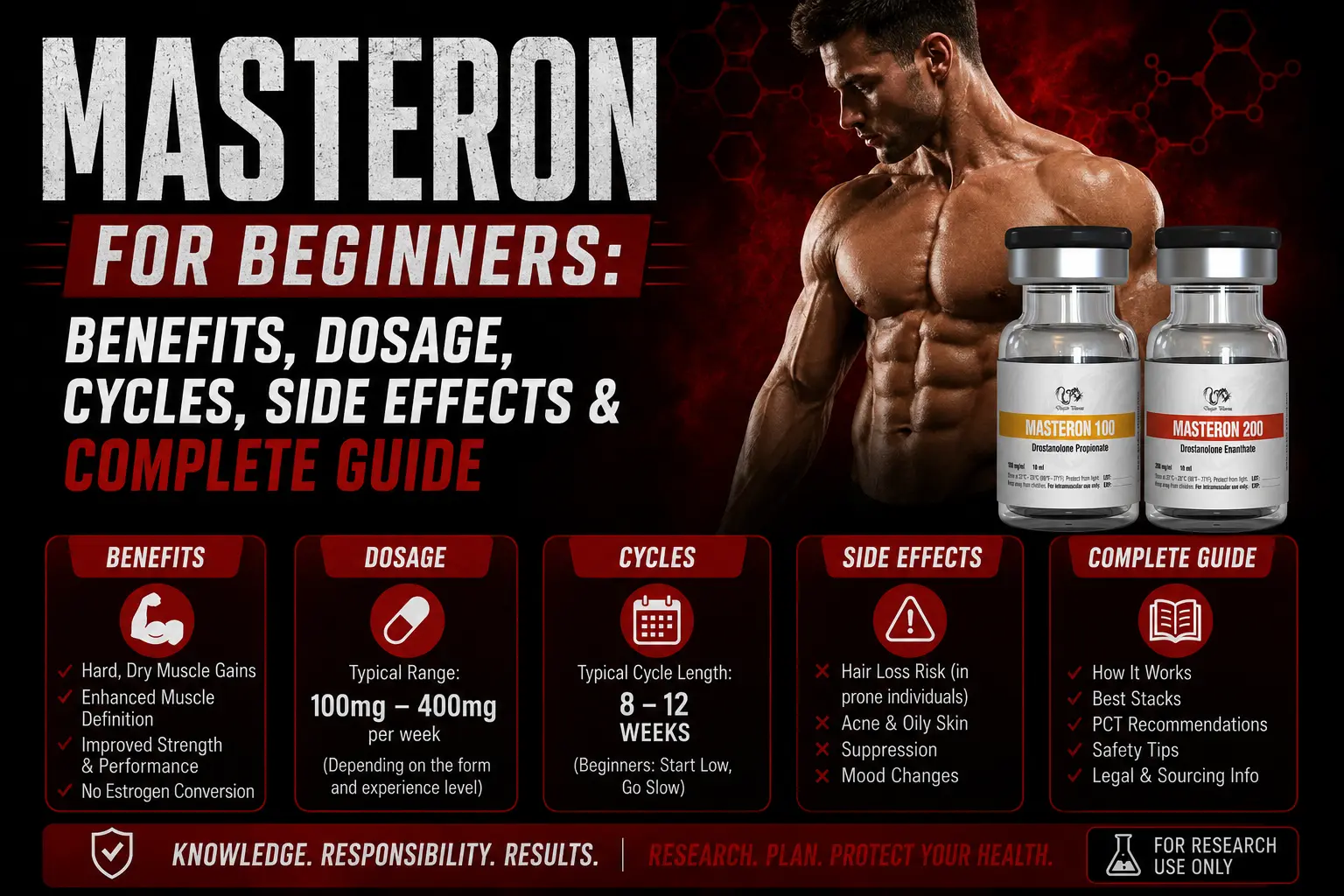
Unlike compounds designed primarily for rapid muscle growth, Masteron is valued for helping athletes achieve a leaner, harder, and more defined physique while minimizing water retention. These characteristics have made it a popular choice among experienced bodybuilders and competitors preparing for photoshoots or competitions.
Customer Reviews
Please leave your review on products or service below.
Thank you beforehand.