


Modified GRF 1-29 & GHRP-2 Blend: Receptor Research
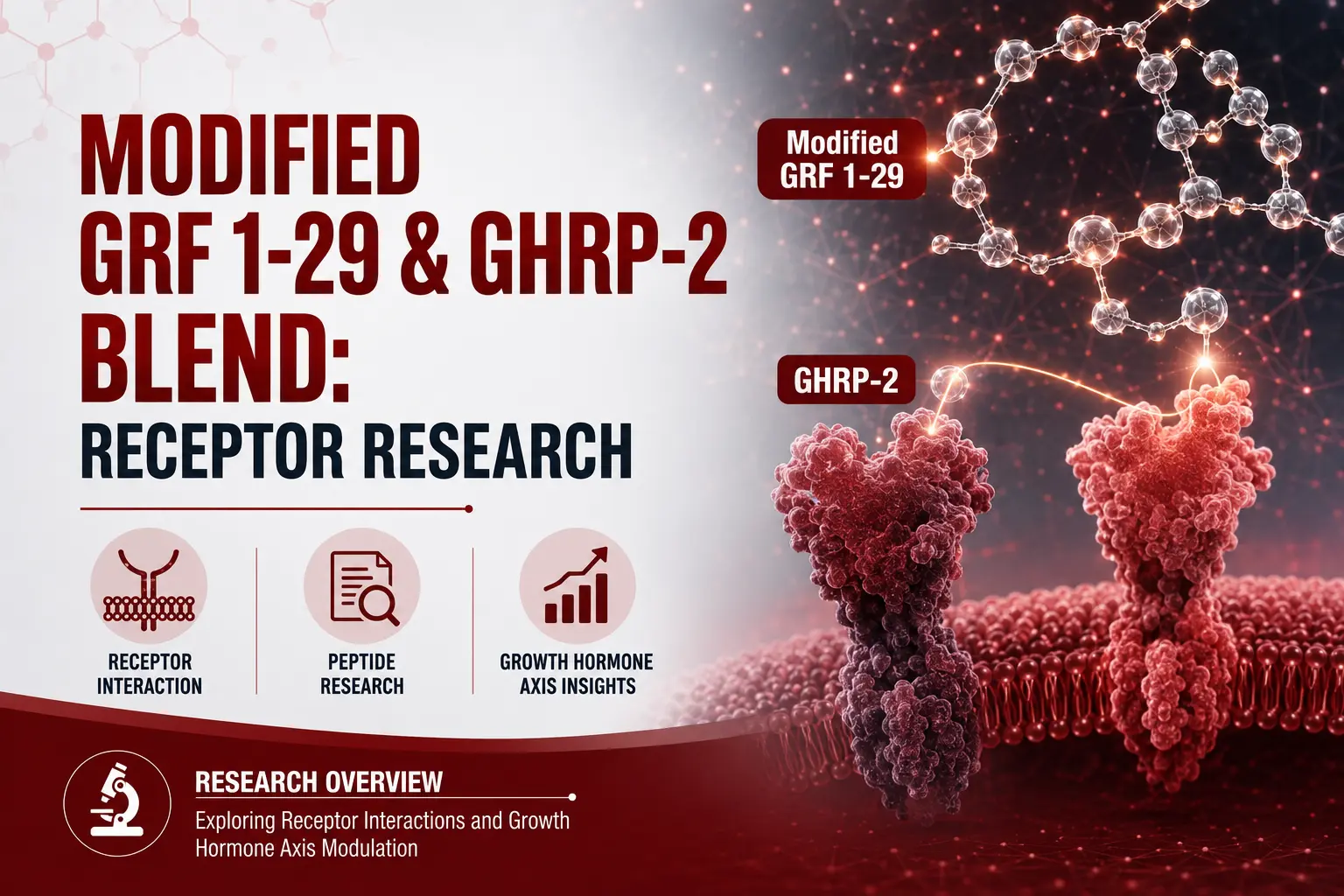
The Modified GRF 1-29 and GHRP-2 peptide blend is a dual-component research formulation combining a stabilized GHRH analogue with a synthetic ghrelin-mimetic hexapeptide. Modified GRF 1-29 targets the GHRH receptor on anterior pituitary somatotroph cells, while GHRP-2 (Pralmorelin; KP-102) activates the ghrelin receptor subtype GHS-R1a. Unlike many research peptides, GHRP-2 carries a substantial human clinical trial history — spanning GH-deficient children, adults with genetic GHRH-R mutations, and healthy-volunteer studies — though much of that history is obscured in secondary sources under vague "mammalian model" language. This article corrects that framing and organizes the mechanism and evidence by actual study population.
Table of Contents
- Key Facts at a Glance
- A Note on Evidence Quality: Human vs. Animal Data
- Historical Development and Structural Origins
- Receptor Mechanisms and Intracellular Signaling
- GHRP-2 Signal Transduction in Bovine Somatotrophs
- Combined GHRH and GHRP-2 Effects on Gene Expression
- General Pharmacological Profiling of GHRP-2
- GHS-R1a Agonism and Hunger Hormone Signaling (Human)
- Efficacy Profile of Growth Hormone Secretagogues
- GHRP-2 in Patients with Mutated GHRH Receptor
- GHRP-2 in GH-Deficient Children
- Multi-Hormone Axis Engagement: Age-Dependent Response
- Evidence Summary by Study
- Storage and Stability
- Frequently Asked Questions
- Key Takeaways
- References
Key Facts at a Glance
| Property | Detail |
|---|---|
| Blend components | Modified GRF 1-29 (GHRH-R agonist), GHRP-2 / Pralmorelin / KP-102 (GHS-R1a agonist) |
| GHRP-2 sequence | D-Ala-D-βNal-Ala-Trp-D-Phe-Lys-NH₂ |
| Modified GRF 1-29 substitutions | Position 2 (Ala→D-Ala), 8 (Asn→Ala), 15 (Gly→Ala), 27 (Met→Leu) of GRF(1–29) |
| Receptor targets | GHRH-R (Modified GRF 1-29); GHS-R1a (GHRP-2) |
| Evidence type | Bovine/ovine in vitro pituitary studies, animal general pharmacology, and multiple human clinical trials spanning three decades, including pediatric GH-deficiency and genetic GHRH-R mutation cohorts |
A Note on Evidence Quality: Human vs. Animal Data
Several studies referenced in secondary literature on GHRP-2 are actually human clinical trials, despite being described in vague terms like "mammalian research models" or simply "subjects." Cross-checking the primary citation titles clarifies this:
- Arvat et al. (1997) — published as "...on GH, prolactin, ACTH and cortisol levels in man" — a human aging-comparison study (young vs. elderly men).
- Mericq et al. (1998) — published as "...in GH-deficient children" — a pediatric human clinical trial.
- Gondo et al. (2001) — published as "...in GH-deficient patients with mutated GH-releasing hormone receptor" — a human cohort with a confirmed genetic mutation.
- Laferrère et al. (2005) — a study in seven healthy human male volunteers.
Only the Roh et al. (1997) bovine pituitary cell study and the Yan et al. (2004) ovine pituitary cell study represent genuine animal/in vitro data in this reference set. This article labels each study by its actual population throughout.
Historical Development and Structural Origins
Modified GRF 1-29 derives from the GRF(1–29) scaffold — the biologically active N-terminal fragment of the 44-residue endogenous GHRH polypeptide — with four amino acid substitutions designed to resist enzymatic degradation.
Substitutions at positions 2 (Ala→D-Ala), 8 (Asn→Ala), 15 (Gly→Ala), and 27 (Met→Leu) are proposed to confer resistance to DPP-IV-mediated cleavage at position 2, protect against oxidative degradation at position 8, and support receptor binding affinity, while preserving the short-acting, pulsatile pharmacokinetic profile of the GRF(1–29) class [1][3]. For a fuller discussion of how "Modified GRF 1-29" relates to the DAC-modified, long-acting form marketed as CJC-1295, see our companion article on the Tesamorelin/Modified GRF 1-29/Ipamorelin blend.
GHRP-2 was developed as a potent synthetic growth hormone secretagogue, designated KP-102 during early pharmacological characterization. Preclinical work established that GHRP-2 stimulates GH secretion from somatotroph cells through multiple intracellular signaling pathways, with primary activity localized to pituitary and hypothalamic tissue [6].
Receptor Mechanisms and Intracellular Signaling
Modified GRF 1-29 signals through GHRH-R via the Gαs/cAMP/PKA pathway, while GHRP-2 signals through GHS-R1a via the Gq/G11/PLC/calcium pathway — two mechanistically distinct routes that may converge on somatotroph GH release.
Modified GRF 1-29 engages GHRH-R through Gαs-mediated adenylate cyclase activation, converting ATP to cAMP and activating PKA. PKA-mediated phosphorylation of CREB and Pit-1 may promote GH gene transcription and increase pulsatile GH secretory amplitude [3][5].
GHRP-2 activates GHS-R1a, a constitutively active Gq/G11-coupled receptor. Activation triggers PLC-mediated PIP₂ hydrolysis, generating IP₃ and DAG; IP₃-driven calcium mobilization combined with DAG-mediated PKC activation culminates in GH vesicle exocytosis [4]. Research suggests cAMP-PKA pathway engagement may also contribute to GHRP-2-mediated GH release in some somatotroph populations, indicating potential cross-talk between calcium-dependent and cAMP-dependent mechanisms within individual cells [4][5].
GHRP-2 Signal Transduction in Bovine Somatotrophs
Roh et al. (1997) characterized GHRP-2's intracellular signaling in primary bovine pituitary cell cultures (in vitro), evaluating calcium channel modulation, cAMP activation, and PKC signaling contributions to GH release. Findings indicated GHRP-2 stimulates GH secretion through multiple, partially overlapping mechanisms, with contributions from both calcium-influx-dependent and cAMP-dependent effector pathways — suggesting GHS-R1a coupling in somatotrophs is not restricted to a single second-messenger pathway, and that the relative contribution of each may vary by cell type, ligand concentration, and experimental context [4].
Combined GHRH and GHRP-2 Effects on Gene Expression
Yan et al. (2004) examined GHRH, GHRP-2, and their combination in ovine somatotroph cultures (in vitro) over a 0.5–2 hour window, measuring mRNA for GH, Pit-1, GHRH-R, GHS-R, and somatostatin receptor subtypes sst-1/sst-2. All three conditions produced time-dependent GH mRNA and GH release increases; Pit-1, GHRH-R, and GHS-R mRNA rose within 30 minutes of exposure to either peptide. Somatostatin receptor regulation diverged: GHRH exposure raised sst-1 mRNA at 0.5–1 hour, while GHRP-2 exposure suppressed both sst-1 and sst-2 mRNA throughout — suggesting GHRH-R and GHS-R1a engage distinct transcriptional regulatory networks within somatotrophs [5].
General Pharmacological Profiling of GHRP-2
Furuta et al. (2004) characterized GHRP-2's (KP-102) systemic effects across multiple organ-system endpoints in animal preclinical models, including isolated guinea pig and rabbit gastrointestinal preparations, plus renal, respiratory, gastric secretion, and hemodynamic assessments. No significant central nervous system activity was found under tested conditions. Primary pharmacodynamic activity appeared in isolated GI preparations: GHRP-2 increased ileal motility in isolated rabbit tissue and heightened contractile response in isolated guinea pig ileum. No measurable effects on renal function, respiratory rate, gastric secretion, or hemodynamic parameters were reported at GH-releasing concentrations — suggesting GHRP-2's activity at these concentrations is largely localized to the somatotroph GH axis and GI tissue, without broad multi-organ engagement [6].
GHS-R1a Agonism and Hunger Hormone Signaling (Human)
This is a human clinical study — seven healthy male volunteers — not an animal model.
Laferrère et al. (2005) examined whether GHRP-2's GHS-R1a agonism produces ghrelin-like effects on food intake and GH concentrations. Seven healthy human male volunteers received either GHRP-2 or saline over a five-hour period, with food intake measured via standardized protocol afterward. The GHRP-2 group showed a 35% increase in food consumption relative to saline controls (normalized to body weight), alongside substantially elevated circulating GH concentrations — supporting GHRP-2's classification as a ghrelin-mimetic secretagogue with hunger-hormone-regulatory activity analogous to endogenous ghrelin [7].
Efficacy Profile of Growth Hormone Secretagogues
A 2018 systematic review by Sigalos and Pastuszak evaluated efficacy data across growth hormone secretagogues (GHRPs and GHRH analogues), synthesizing predominantly human clinical and translational literature. Findings pooled across the reviewed studies suggested associations between GHS exposure and increased lean mass, reduced fat mass, and improved exertion tolerance/maximal oxygen uptake; support for linear growth in GH-deficient children was also reported. Some populations showed reduced bone turnover markers and altered sleep architecture with GHS exposure. The review explicitly noted that long-term efficacy data for GH-axis-modulating agents remains inconclusive, underscoring the need for extended controlled investigation [8].
GHRP-2 in Patients with Mutated GHRH Receptor
This is a human clinical study in patients with a confirmed genetic mutation — a well-known cohort in GH-axis research, not an animal model.
Gondo et al. (2001) tested whether GHRP-2 could stimulate GH secretion independently of functional GHRH-R signaling, studying human patients with GH deficiency caused by a loss-of-function GHRH-R gene mutation. This design isolated GHS-R1a-mediated GH stimulation from any contribution of intact endogenous GHRH-R activity. GHRP-2 produced measurable GH secretory responses in these patients despite their non-functional GHRH-R, supporting a receptor mechanism independent of GHRH-R signaling — evidence that GHRH-R and GHS-R1a agonism may represent separable, rather than obligately interdependent, GH-stimulatory mechanisms [9].
GHRP-2 in GH-Deficient Children
This is a human pediatric clinical trial — six children with confirmed GH deficiency — not an animal study.
Mericq et al. (1998) evaluated a GH-releasing peptide's stimulatory capacity in six children with confirmed GH deficiency and growth failure, over an eight-month period with graded peptide exposures and serum GH monitoring. Findings showed consistent, sustained GH elevation throughout the study, with secretory responses persisting beyond the active observation period; the peptide was well tolerated with no significant adverse findings noted across the evaluated parameters [10].
Multi-Hormone Axis Engagement: Age-Dependent Response
This is a human clinical study in young and elderly men — published under the title "...on GH, prolactin, ACTH and cortisol levels in man" — not an animal study, despite secondary descriptions calling the subjects "mammalian research models."
Arvat et al. (1997) compared GHRP-2 and Hexarelin across multiple pituitary hormone endpoints in a younger and an older cohort of human men, monitoring GH, ACTH, cortisol, and prolactin against GHRH, TRH, and hCRH reference conditions. Both age groups showed increased GH following GHRP-2 exposure, with a statistically significant elevation in the younger cohort relative to the older cohort — suggesting age-dependent variability in somatotroph GHS-R1a responsiveness. Indirect ACTH and cortisol elevations occurred in both groups, more pronounced in younger subjects, alongside a mild prolactin elevation. These findings suggest GHRP-2 engages pituitary and hypothalamic receptor systems beyond the GH axis, potentially including HPA axis signaling, with somatotroph responsiveness varying by age [11].
Evidence Summary by Study
| Research Finding | Actual Population | Evidence Tier |
|---|---|---|
| GHRP-2 signal transduction, calcium/cAMP pathways | Bovine pituitary cells | In vitro (animal) |
| Combined GHRH/GHRP-2 gene expression | Ovine pituitary cells | In vitro (animal) |
| General pharmacology, GI/renal/respiratory profiling | Guinea pig, rabbit (isolated tissue preparations) | Animal |
| Food intake, GH elevation (ghrelin-mimetic effect) | 7 healthy human men | Human clinical |
| Lean mass, fat mass, growth, sleep architecture (pooled) | Systematic review, predominantly human literature | Human clinical (secondary literature) |
| GH stimulation independent of GHRH-R | Human patients, genetic GHRH-R mutation | Human clinical |
| Sustained GH elevation, tolerability (8 months) | 6 human children, GH deficiency | Human clinical (pediatric) |
| Multi-hormone (GH/ACTH/cortisol/prolactin), age effect | Human men, young and elderly cohorts | Human clinical |
Storage and Stability
| Condition | Recommendation |
|---|---|
| Lyophilized form | Store frozen (-20°C) for long-term stability |
| Reconstituted solution | Refrigerate (2–8°C); use within the research protocol's defined window |
| Light exposure | Store protected from light |
| Handling | Avoid repeated freeze-thaw cycles to preserve peptide integrity |
Frequently Asked Questions
What is the Modified GRF 1-29 and GHRP-2 blend?
It combines a GHRH-R agonist (Modified GRF 1-29) with a GHS-R1a agonist (GHRP-2), enabling research into complementary receptor pathways governing GH synthesis and secretion.
Does GHRP-2 have human clinical trial data?
Yes, extensively. Human studies include a genetic GHRH-R mutation cohort, GH-deficient children, healthy male volunteers, and age-comparison studies in young versus elderly men — a substantially larger human evidence base than most research peptides.
What receptor does GHRP-2 target?
GHRP-2 selectively activates GHS-R1a, the ghrelin receptor subtype, distinct from the GHRH-R targeted by Modified GRF 1-29.
Can GHRP-2 stimulate GH release without functional GHRH-R?
Yes. A study in human patients with a loss-of-function GHRH-R mutation found GHRP-2 still produced measurable GH secretion, indicating GHS-R1a can act independently of GHRH-R signaling.
Has GHRP-2 been studied in children?
Yes. An eight-month study in six children with confirmed GH deficiency found sustained GH elevation and good tolerability throughout the treatment period.
Does GHRP-2 affect appetite?
A study in seven healthy human men found GHRP-2 increased food consumption by approximately 35% relative to saline controls, alongside elevated GH concentrations, consistent with its classification as a ghrelin-mimetic secretagogue.
Does GHRP-2 affect hormones besides growth hormone?
A human study comparing young and elderly men found GHRP-2 also produced indirect ACTH, cortisol, and mild prolactin elevations, suggesting engagement with hypothalamic-pituitary-adrenal axis signaling beyond the GH axis.
Does age affect how the body responds to GHRP-2?
Human research found a statistically significant GH elevation in younger men compared to elderly men following GHRP-2 exposure, suggesting age-dependent somatotroph responsiveness to GHS-R1a stimulation.
How does Modified GRF 1-29 differ structurally from natural GHRH?
It carries four amino acid substitutions (positions 2, 8, 15, and 27) designed to resist enzymatic degradation while preserving GHRH-R binding affinity and the natural pulsatile secretion pattern.
Is Modified GRF 1-29 the same as CJC-1295?
They share the same tetra-substituted structural backbone, but naming conventions vary regarding the additional albumin-binding (DAC) modification; see our companion article on the Tesamorelin/Modified GRF 1-29/Ipamorelin blend for a full explanation of this distinction.
Key Takeaways
- This blend pairs a GHRH-R agonist (Modified GRF 1-29) with a GHS-R1a agonist (GHRP-2), targeting complementary cAMP and calcium signaling pathways in somatotroph cells.
- GHRP-2 carries an unusually extensive human clinical trial history for a research peptide — spanning genetic GHRH-R mutation patients, GH-deficient children, healthy-volunteer appetite studies, and age-comparison studies — much of it obscured in secondary sources under vague "mammalian model" language.
- Only two studies referenced here (bovine and ovine pituitary cell cultures) represent genuine animal/in vitro evidence; the remainder is either animal general-pharmacology work or human clinical data.
- Human data confirms GHRP-2 can stimulate GH secretion independently of functional GHRH-R, supporting GHS-R1a as a separable GH-regulatory mechanism.
- GHRP-2 also engages hormone systems beyond the GH axis (ACTH, cortisol, prolactin) in human studies, with somatotroph responsiveness varying by age.
References
- National Center for Biotechnology Information. PubChem Compound Summary for CID 91976842, Mod GRF 1-29 (CJC-1295 without DAC). 2024. https://pubchem.ncbi.nlm.nih.gov/compound/CJC1295-Without-DAC
- National Center for Biotechnology Information. PubChem Compound Summary for CID 6918245, Pralmorelin (GHRP-2). 2024. https://pubchem.ncbi.nlm.nih.gov/compound/Pralmorelin
- Jetté L, Léger R, Thibaudeau K, et al. Human growth hormone-releasing factor (hGRF)1-29-albumin bioconjugates activate the GRF receptor on the anterior pituitary in rats: identification of CJC-1295 as a long-lasting GRF analog. Endocrinology. 2005;146(7):3052-8. https://pubmed.ncbi.nlm.nih.gov/15817669/
- Roh SG, He ML, Matsunaga N, Hidaka S, Hidari H. Mechanisms of action of growth hormone-releasing peptide-2 in bovine pituitary cells. J Anim Sci. 1997;75(10):2744-8. https://pubmed.ncbi.nlm.nih.gov/9331879/
- Yan M, Hernandez M, Xu R, Chen C. Effect of GHRH and GHRP-2 treatment in vitro on GH secretion and levels of GH, Pit-1, GHRH-receptor, GH-secretagogue-receptor and somatostatin receptor mRNAs in ovine pituitary cells. Eur J Endocrinol. 2004;150(2):235-42. https://pubmed.ncbi.nlm.nih.gov/14763922/
- Furuta S, Shimada O, Doi N, et al. General pharmacology of KP-102 (GHRP-2), a potent growth hormone-releasing peptide. Arzneimittelforschung. 2004;54(12):868-80. https://pubmed.ncbi.nlm.nih.gov/15646371/
- Laferrère B, Abraham C, Russell CD, Bowers CY. Growth hormone releasing peptide-2 (GHRP-2), like ghrelin, increases food intake in healthy men. J Clin Endocrinol Metab. 2005;90(2):611-4. https://www.ncbi.nlm.nih.gov/pmc/articles/PMC2824650/
- Sigalos JT, Pastuszak AW. The Safety and Efficacy of Growth Hormone Secretagogues. Sex Med Rev. 2018;6(1):45-53. https://www.ncbi.nlm.nih.gov/pmc/articles/PMC5632578/
- Gondo RG, Aguiar-Oliveira MH, Hayashida CY, et al. Growth hormone-releasing peptide-2 stimulates GH secretion in GH-deficient patients with mutated GH-releasing hormone receptor. J Clin Endocrinol Metab. 2001;86(7):3279-83. https://doi.org/10.1210/jcem.86.7.7694
- Mericq V, Cassorla F, Salazar T, et al. Effects of eight months treatment with graded doses of a growth hormone (GH)-releasing peptide in GH-deficient children. J Clin Endocrinol Metab. 1998;83(7):2355-60. https://pubmed.ncbi.nlm.nih.gov/9661608/
- Arvat E, Di Vito L, Maccagno B, et al. Effects of GHRP-2 and Hexarelin, two synthetic GH-releasing peptides, on GH, prolactin, ACTH and cortisol levels in man. Comparison with the effects of GHRH, TRH and hCRH. Peptides. 1997;18(6):885-91. https://doi.org/10.1016/S0196-9781(97)00016-8
Articles
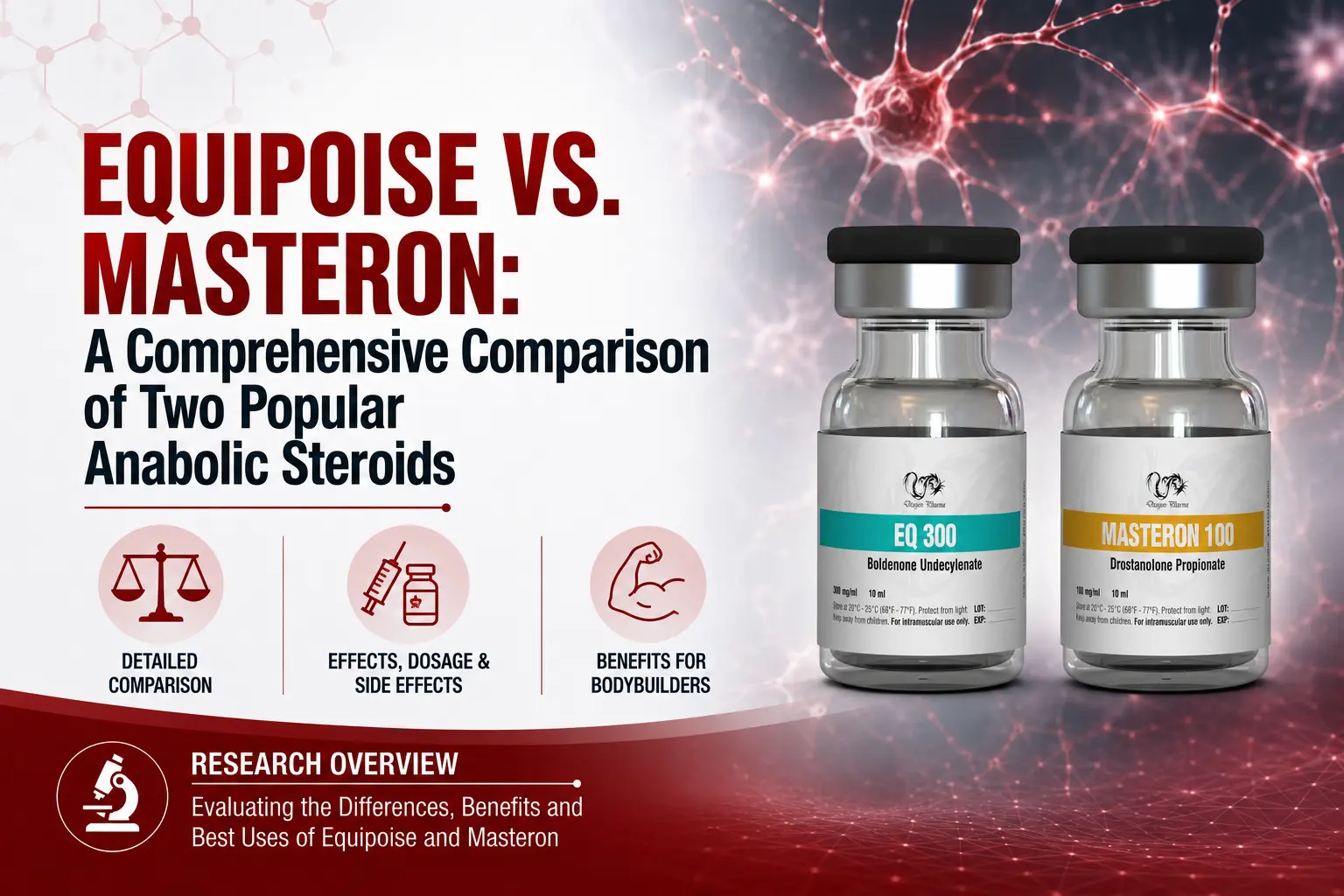
Although both compounds are designed to promote anabolic activity, they differ significantly in their chemical structure, effects on muscle development, and typical applications during training cycles.

Post Cycle Therapy (PCT) is the recovery phase following an anabolic steroid cycle. Its primary goal is to restore natural testosterone production, regulate estrogen levels, and help preserve muscle mass gained during the cycle.
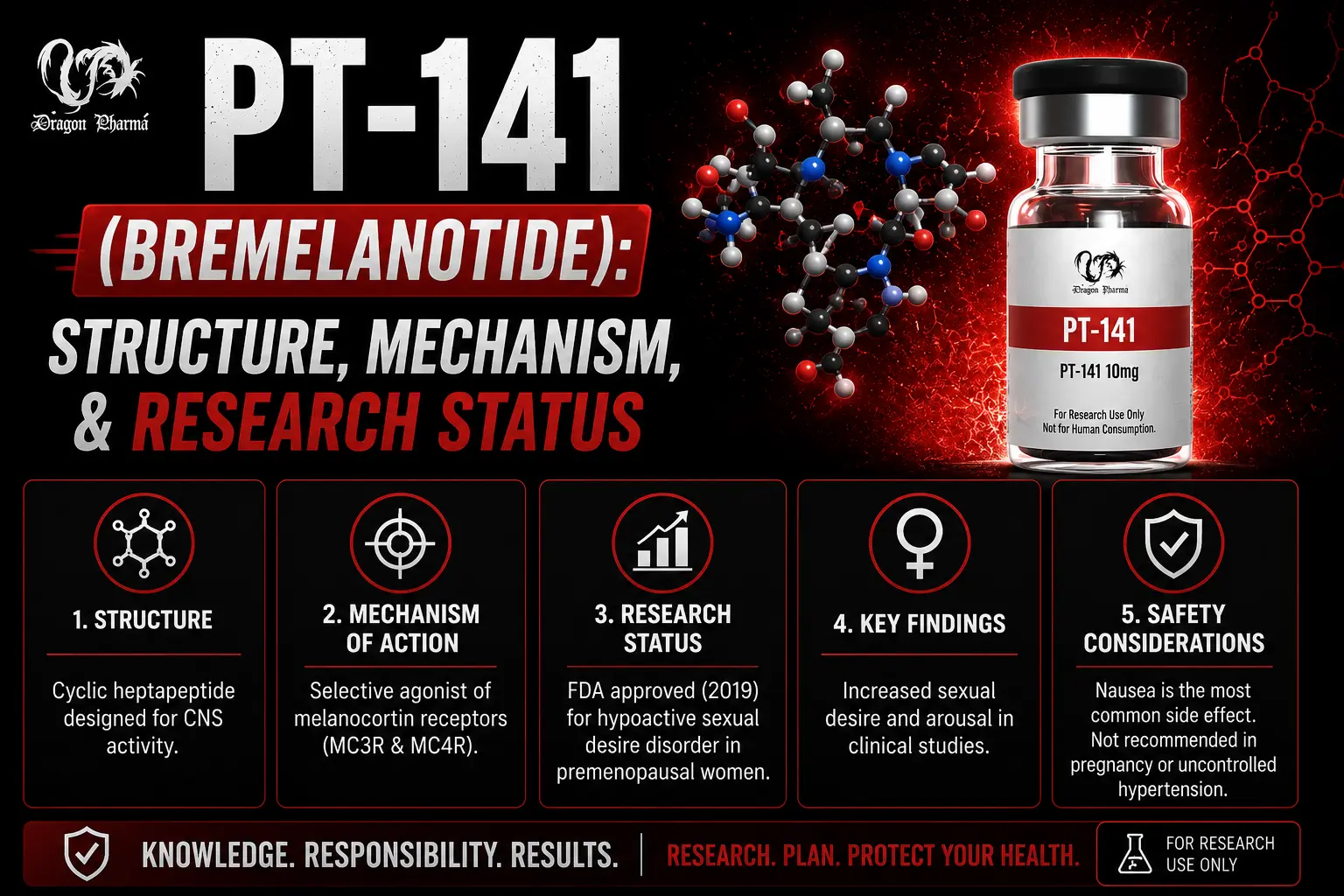
It was derived from Melanotan II and has been studied in both animal models and human clinical trials, distinguishing it from most research peptides, which lack human data. This article breaks down its chemistry, mechanism, evidence base, and how it compares to related compounds.
Customer Reviews
Please leave your review on products or service below.
Thank you beforehand.