


PT-141 Peptide (Bremelanotide): Structure, Mechanism, and Research Status
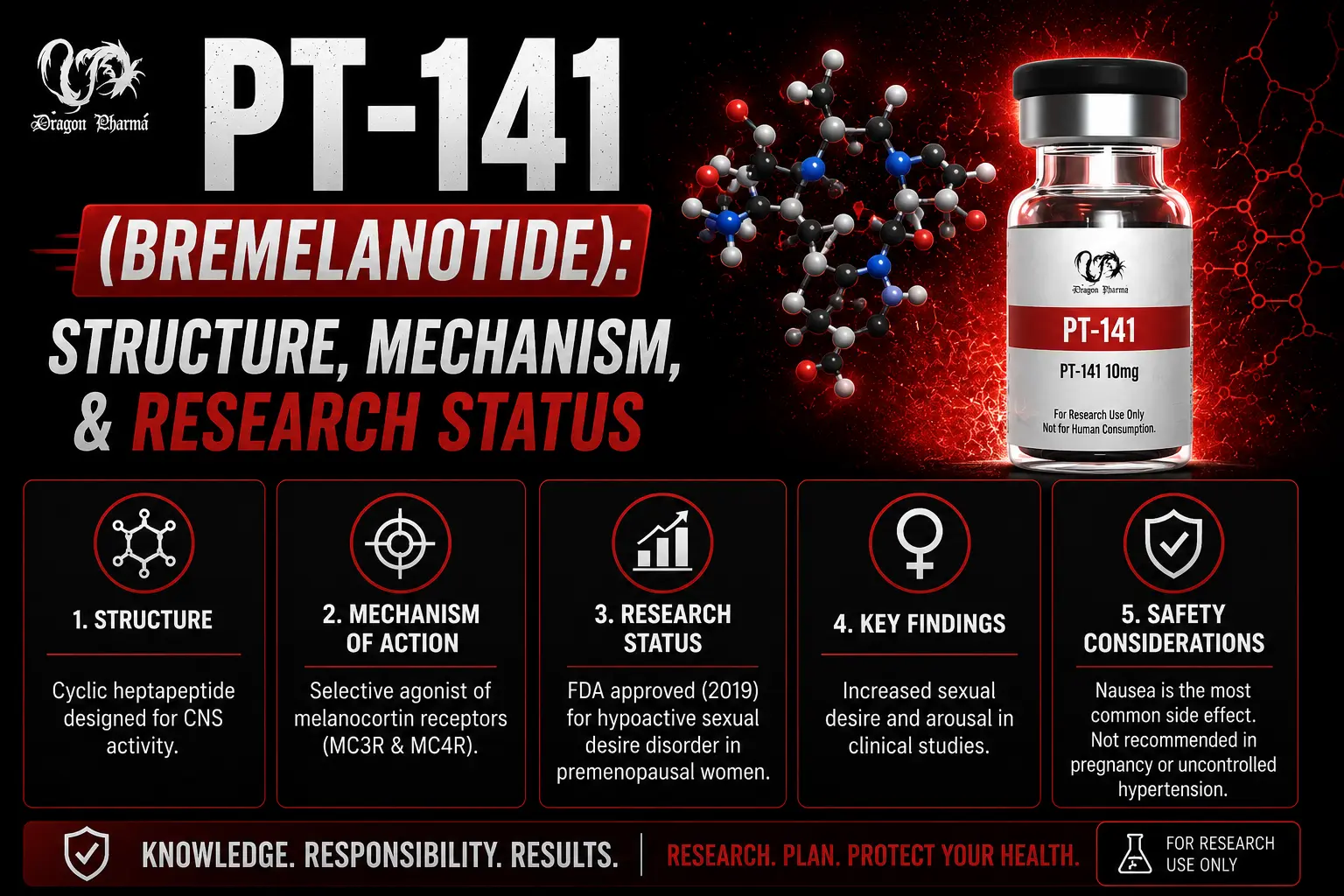
PT-141 peptide, also known as Bremelanotide, is a synthetic cyclic peptide that acts on melanocortin receptors (MC3R and MC4R) in the central nervous system. It was derived from Melanotan II and has been studied in both animal models and human clinical trials, distinguishing it from most research peptides, which lack human data. This article breaks down its chemistry, mechanism, evidence base, and how it compares to related compounds.
Key Facts at a Glance
| Property | Detail |
|---|---|
| Common name | PT-141, Bremelanotide |
| Molecular formula | C50H68N14O10 |
| Molecular weight | ~1025.2 g/mol |
| Structure type | Cyclic heptapeptide |
| Primary receptor targets | MC4R, MC3R (melanocortin receptors) |
| Estimated half-life | ~2–2.7 hours |
| Parent compound | Melanotan II derivative |
| Human clinical history | Yes — studied in Phase 2/3 trials; approved by the FDA (2019) |
| Research-grade product status | Sold strictly for laboratory/in-vitro research use, not for human or animal administration |
What Is PT-141?
PT-141 is a synthetic analog of alpha-melanocyte-stimulating hormone (α-MSH) that binds melanocortin receptors instead of altering blood flow directly. It is a cyclic peptide built from a seven-amino-acid backbone, cyclized through a lactam bridge, with an IUPAC name reflecting its complex ring structure.
Unlike vasodilator-based approaches to sexual response, Bremelanotide's activity is centered on the brain rather than the vascular system. This distinction is central to understanding both its proposed mechanism and its side-effect profile.
Origin From Melanotan II
Bremelanotide was developed from Melanotan II peptide, a peptide originally investigated for skin-pigmentation applications through melanocortin receptor activation. During early research, scientists observed unrelated effects on arousal-related behavior in both male and female animal subjects. This observation redirected a branch of melanocortin research toward what eventually became Bremelanotide.
Mechanism of Action
Bremelanotide is proposed to activate MC4R and, to a lesser extent, MC3R receptors in the hypothalamus, a brain region involved in regulating sexual arousal pathways. Receptor activation is theorized to modulate downstream neural signaling rather than acting peripherally on genital blood vessels.
In simplified terms, the proposed pathway works as follows:
- Bremelanotide binds to MC4R (and MC3R) receptors in the central nervous system.
- Receptor activation influences hypothalamic signaling circuits linked to sexual desire.
- Downstream neural output is modulated, which researchers have associated with changes in arousal-related behavior in study subjects.
- Because the mechanism is centrally mediated, effects are not dependent on direct vasodilation at the site of sexual response, unlike PDE5 inhibitor–based compounds.
This central mechanism is the key differentiator researchers cite when comparing Bremelanotide to peripheral-acting compounds.
Human Clinical Evidence vs. Animal Research
Bremelanotide is one of the few melanocortin-derived peptides with completed human clinical trials, not just animal data. This separates it from many peptides discussed in research contexts.
| Evidence Type | Findings Reported |
|---|---|
| Animal studies | Early work using Melanotan II analogs demonstrated spontaneous erectile response in male rodents and arousal-related behavioral changes in female rodents. |
| Human clinical trials | Phase 2b and Phase 3 trials evaluated Bremelanotide (subcutaneous, on-demand dosing) in premenopausal women diagnosed with HSDD, leading to FDA approval in 2019. |
| Cardiovascular findings | Clinical trial data noted transient increases in blood pressure and heart rate following administration, which is why the approved product carries contraindications for individuals with uncontrolled hypertension or cardiovascular disease. |
| Common reported effects | Nausea, flushing, headache, and injection-site reactions were the most frequently reported effects in trial populations. |
It's worth noting: the version of Bremelanotide sold as a research chemical is not the same regulated pharmaceutical product, is not quality-controlled to clinical standards, and is intended strictly for laboratory and in-vitro research.
Bremelanotide and Cardiovascular Signaling: What Research Shows
Because MC4R activation intersects with pathways that influence blood pressure, researchers have specifically studied Bremelanotide's cardiovascular signaling effects — including in models of hemorrhagic shock.
Hemorrhagic shock refers to reduced tissue perfusion from significant blood loss, broadly categorized as:
- Hypovolemic — from fluid/blood volume loss
- Cardiogenic — from impaired heart pumping function
- Septic (vasogenic) — from infection-driven vascular dysfunction
- Neurogenic — from disrupted autonomic nervous system signaling
Animal model research has explored whether melanocortin receptor activation could influence neural reflexes involved in blood pressure regulation during shock states. Findings in these controlled animal studies have been mixed, with some models showing unwanted increases in blood pressure following peptide exposure. This research remains in the preclinical stage and has not been validated in human trials for this specific application.
PT-141 vs. Melanotan II: Comparison Table
| Feature | PT-141 (Bremelanotide) | Melanotan II |
|---|---|---|
| Primary receptor affinity | MC4R (with MC3R activity) | MC1R, MC3R, MC4R (broader) |
| Pigmentation effect | Minimal to none | Notable skin-darkening effect |
| Human clinical trials | Yes | No approved human clinical pathway |
| Structural relationship | Cyclic peptide derived from MT-II | Parent cyclic heptapeptide |
| Primary research interest | Arousal-related neural signaling | Pigmentation, appetite, arousal signaling |
Storage and Stability
| Condition | Recommendation |
|---|---|
| Lyophilized (powder) form | Store frozen (-20°C) for long-term stability |
| Reconstituted solution | Refrigerate (2–8°C); use within the research protocol's defined window |
| Light exposure | Store away from direct light |
| Freeze-thaw cycles | Repeated cycles may degrade peptide integrity in research settings |
Frequently Asked Questions
What is PT-141 used for in research?
PT-141 (Bremelanotide) is studied for its effects on melanocortin receptor signaling, particularly MC4R activation and its downstream relationship to arousal-related neural pathways and cardiovascular signaling.
Is PT-141 the same as Bremelanotide?
Yes. PT-141 is the research and development code name for the compound now known generically as Bremelanotide.
Is Bremelanotide FDA-approved?
Yes. Bremelanotide is FDA-approved as the prescription medication for the treatment of hypoactive sexual desire disorder (HSDD) in premenopausal women. Research-grade PT-141 is a separate laboratory-use product and is not a pharmaceutical-grade medication.
How does PT-141 differ from PDE5 inhibitors like sildenafil?
PDE5 inhibitors primarily improve blood flow to genital tissue, while PT-141 is believed to act centrally by influencing melanocortin receptors involved in arousal-related brain pathways rather than vascular function.
What receptors does PT-141 target?
PT-141 primarily targets the MC4R receptor, with additional activity at MC3R. Both receptors are members of the melanocortin receptor family located primarily within the central nervous system.
Does PT-141 affect blood pressure?
Clinical studies have reported temporary increases in blood pressure and changes in heart rate following administration. These findings contribute to the prescribing precautions associated with the approved pharmaceutical formulation.
What is the half-life of Bremelanotide?
Based on published pharmacokinetic research, Bremelanotide has an approximate half-life of 2 to 2.7 hours.
Where did PT-141 originate from?
PT-141 was developed as a derivative of Melanotan II after researchers observed unexpected arousal-related effects while investigating peptides originally designed for pigmentation research.
Has PT-141 been studied in hemorrhagic shock models?
Yes. PT-141 has been investigated in preclinical animal models evaluating melanocortin receptor activity and blood pressure regulation during hemorrhagic shock. This remains an experimental research application and is not an approved clinical use.
Key Takeaways
- PT-141 (Bremelanotide) is a cyclic peptide that activates MC4R and MC3R melanocortin receptors, primarily studied for its central role in arousal-related signaling.
- Its mechanism is centrally mediated in the brain, distinguishing it from peripheral vasodilator-based compounds.
- Cardiovascular signaling effects, including transient blood pressure changes, have been documented in both animal and human research.
- Research-grade PT-141 is a distinct, non-pharmaceutical-grade product intended solely for laboratory research use.
- Researchers looking for Dragon Pharma Peptides Buy options should ensure they source research-grade materials from reputable suppliers and use them exclusively for laboratory research purposes.
Articles
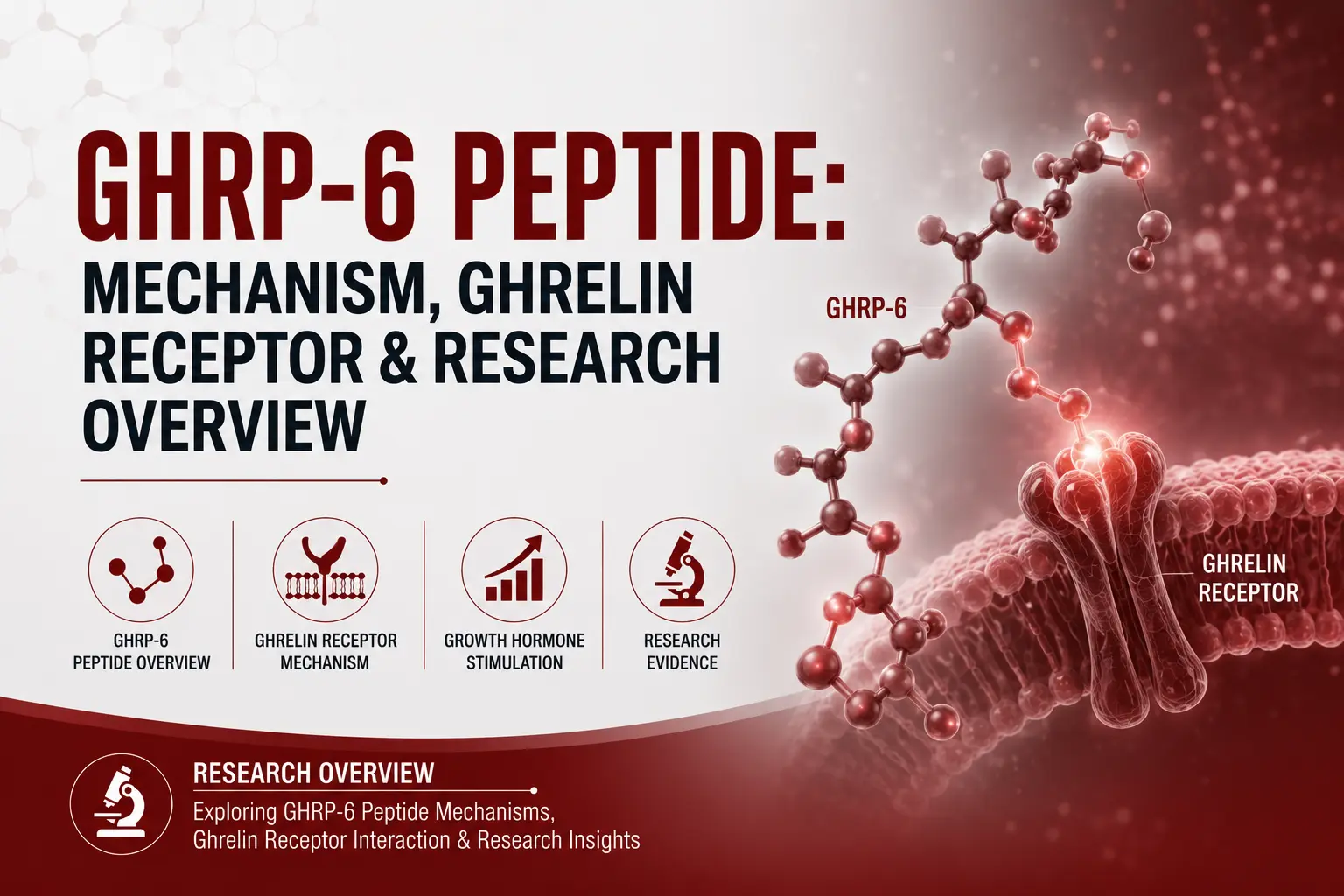
Research spans growth hormone/IGF-1 signaling, wound healing, antifibrotic liver studies, and broader cytoprotective effects. This article organizes GHRP-6's structure, proposed mechanism, and evidence base by research category.

If you are looking to buy Dragon Pharma with bitcoins then you found the right place.
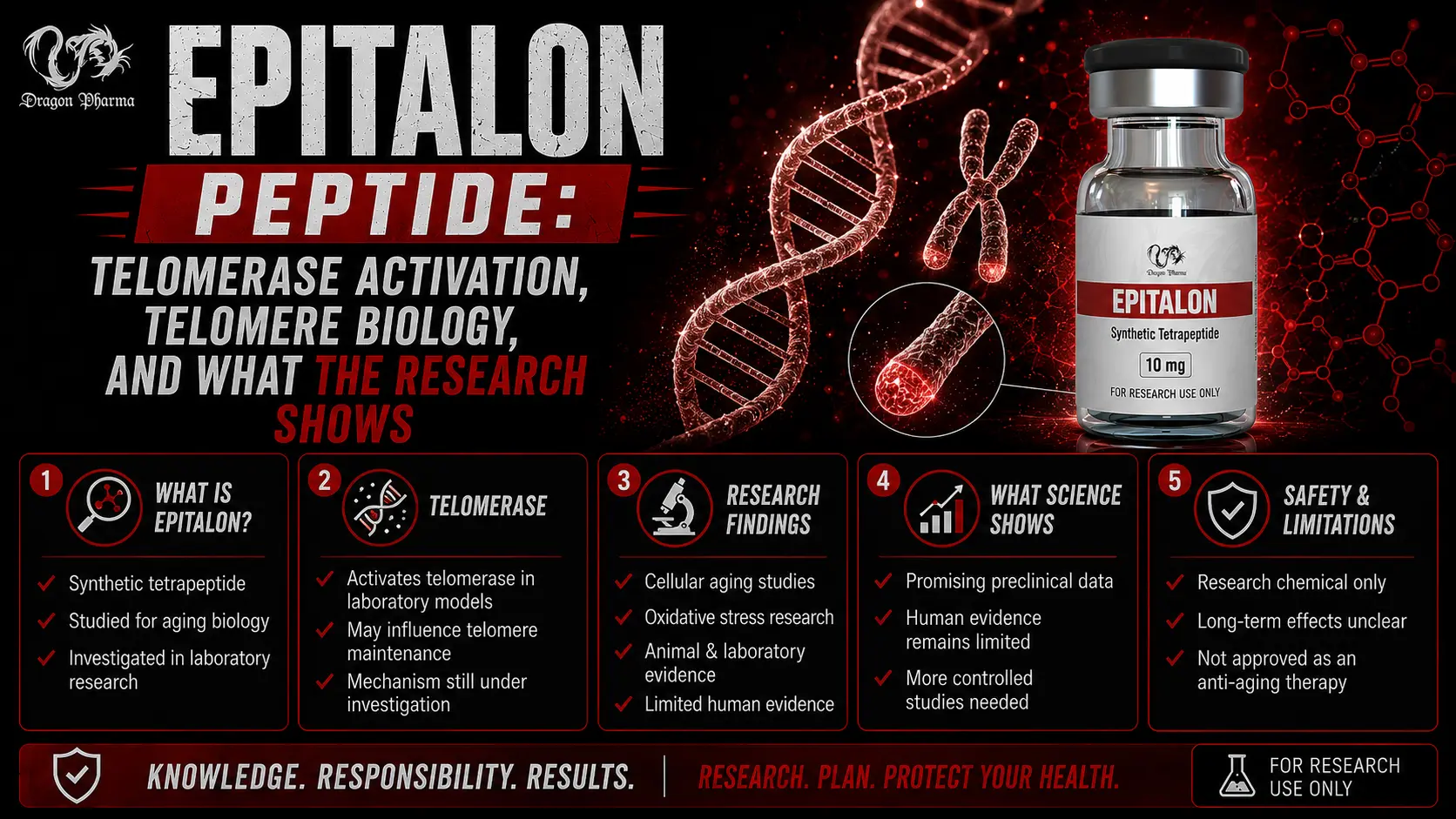
This guide covers what Epitalon is, how it's proposed to work, what the Khavinson research program actually demonstrated, and where the evidence gaps are — for anyone researching where to buy Epitalon peptide for laboratory use and wanting to understand the science before they do.
Customer Reviews
Please leave your review on products or service below.
Thank you beforehand.