


Thymalin and the Thymus Gland: Function, Peptides & Research
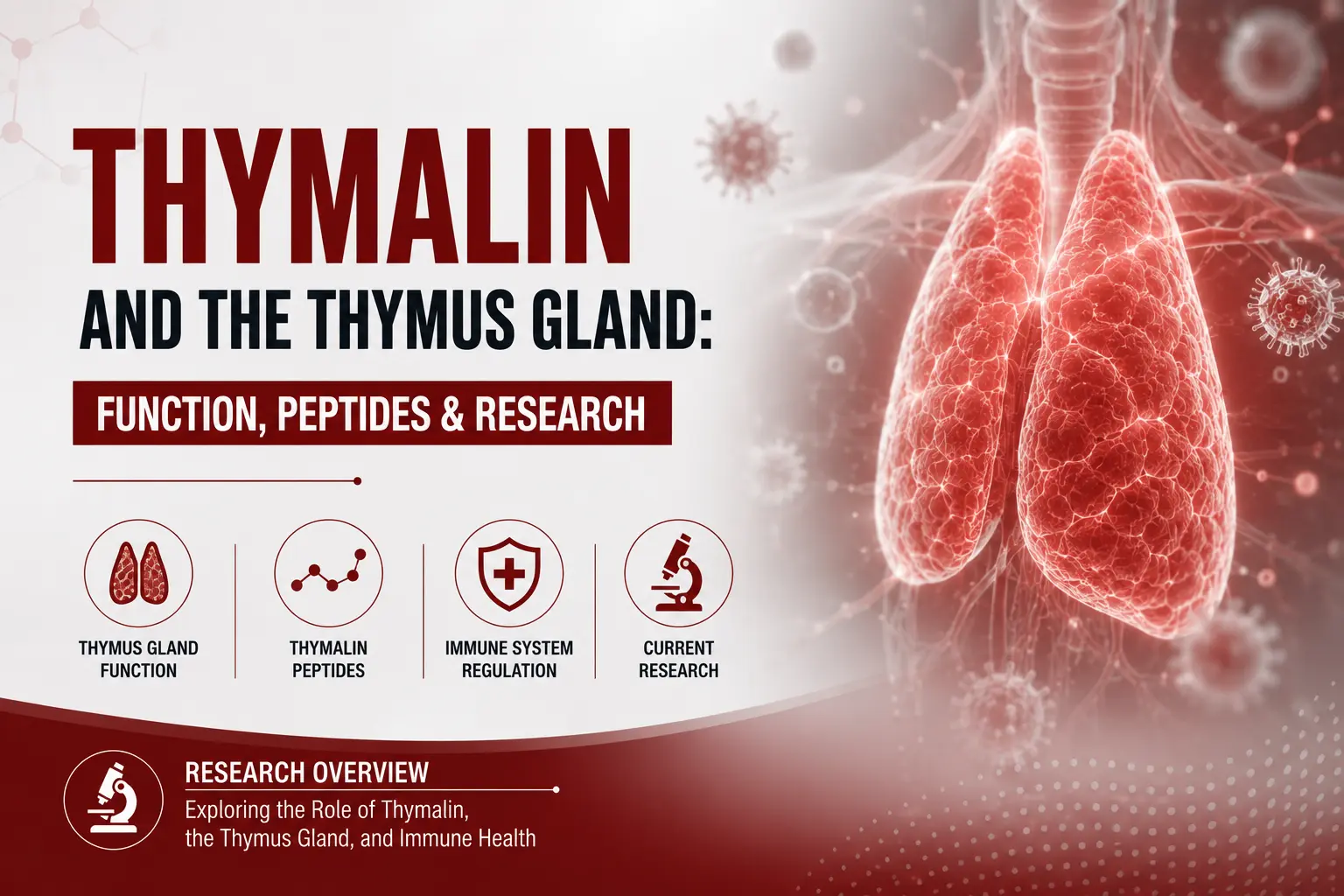
The thymus gland is the primary site of T-cell maturation in the immune system, and its natural decline with age is an active area of peptide research — with Thymalin being one of the most studied synthetic thymic peptides. This article organizes what's understood about thymus biology, what causes thymic decline, and how researched peptides like Thymalin, TB-500, and Thymosin Alpha-1 relate to thymic function, along with the evidence quality behind each.
Key Facts at a Glance
| Property | Detail |
|---|---|
| Gland function | Site of T-lymphocyte (T-cell) maturation |
| Structural units | Lobules within each lobe |
| Key hormones produced | Thymosins, thymopoietin, thymulin, interleukins |
| Assessment method | T-cell and B-lymphocyte lab testing |
| Age-related change | Natural thymic involution (shrinkage) beginning in early adulthood |
| Related synthetic peptide | Thymalin (synthetic analog of thymulin) |
| Evidence status | Mixture of animal and limited human research; largely preclinical for synthetic analogs |
What Does the Thymus Gland Do?
The thymus is an immune organ where immature T-cells, originating in the bone marrow, undergo a maturation process that determines their specialization and function. Each lobe of the thymus is divided into smaller lobules, which provide the structural environment for this maturation process, sometimes referred to as "thymic education."
During thymic maturation, cells are selected based on functional efficiency and differentiate into one of two major T-cell subtypes:
- CD4+ T-cells ("helper" cells) — coordinate immune responses by signaling other immune cells
- CD8+ T-cells ("killer" cells) — directly target and eliminate infected or abnormal cells
These T-cell populations are involved in vaccine response, viral resistance, allergic reactions, autoimmune regulation, inflammatory signaling, and tissue repair processes.
Hormones and Signaling Molecules Produced by the Thymus
| Molecule | Proposed Role |
|---|---|
| Thymosins | Broad immune regulation; some subtypes linked to cell-aging processes |
| Thymopoietin | Supports T-cell differentiation |
| Thymulin | Zinc-dependent hormone involved in T-cell maturation |
| Cytokines | Immune signaling molecules; excessive production is associated with "cytokine storm" events that can impair immune function |
Why the Thymus Declines With Age
The thymus undergoes a well-documented natural shrinkage process called involution, which begins in early adulthood and progressively reduces the gland's T-cell output capacity. This decline is one reason immune resilience — including response to new infections and vaccines — tends to decrease with age.
Researchers have investigated several nutritional and biochemical factors associated with supporting thymic tissue:
- Zinc: Required for multiple immune functions; deficiency has been associated with reduced T-cell activity and slower wound healing in research settings.
- Vitamin A: Studied for a supportive role in thymic tissue function and broader immune response.
- Vitamin C (high-dose research contexts): Some studies suggest a relationship between vitamin C status and thymic weight/T-cell counts in animal models.
- Selenium: Investigated for a possible immune-supportive role against viral and abnormal cell activity.
- Astragaloside IV: A plant-derived compound studied for antioxidant, anti-inflammatory, and telomerase-related activity in preclinical research.
Thymalin: Mechanism and Research Focus
Thymalin is a synthetic version of thymulin, a naturally occurring thymic hormone, and is researched for its potential to modulate T-cell activity and reduce inflammatory markers. In available research, proposed effects associated with Thymalin include:
- Modulation of T-cell activity levels
- Increases in immunoglobulin A (IgA) in study contexts
- Anti-inflammatory signaling effects
- Preliminary interest in neuroprotective properties
Most available data on Thymalin comes from a mixture of laboratory and limited clinical research contexts originating primarily from Eastern European research literature; broader Western human clinical trial data remains limited.
Researchers looking to Buy Peptides Online should ensure they obtain research-grade Thymalin from reputable suppliers and use it exclusively for laboratory and scientific research, as it is not approved for human consumption.
Comparison Table: Thymic-Related Research Peptides
| Peptide | Source/Analog Of | Primary Researched Role | Evidence Level |
|---|---|---|---|
| Thymalin | Synthetic analog of thymulin | T-cell modulation, anti-inflammatory, IgA support | Animal + limited human research |
| Thymosin Alpha-1 | Naturally occurring thymic peptide | Immune regulation against chronic viral/fungal infection | Animal + human research (including some approved clinical uses outside the U.S.) |
| TB-500 (Thymosin Beta-4 derivative) | Thymus-associated peptide fragment | Tissue regeneration, wound healing, bone remodeling | Primarily animal/preclinical research |
| Thymic Protein A (TPA) | Isolated from calf thymus | Immune modulation, antiviral support, reversing thymic atrophy in models | Animal research |
| IGF-1 / Growth Hormone | Systemic growth factors | Supporting thymic cell function and potential size restoration | Animal research |
Mechanism of Action Comparison
| Peptide | Proposed Mechanism |
|---|---|
| Thymalin | Zinc-dependent modulation of T-cell maturation signaling, similar to endogenous thymulin |
| Thymosin Alpha-1 | Enhances T-cell response and modulates cytokine signaling against pathogens |
| TB-500 | Promotes actin regulation involved in cell migration, supporting tissue repair |
| TPA | Modulates CD4+ helper T-cell activity and is studied for reversing thymic tissue atrophy |
Storage and Stability (Research Use Only)
| Condition | Recommendation |
|---|---|
| Lyophilized form | Store frozen (-20°C) for long-term stability |
| Reconstituted solution | Refrigerate (2–8°C); use within the research protocol's defined window |
| Light exposure | Store protected from light |
| Handling | Minimize freeze-thaw cycles to preserve peptide structure |
Frequently Asked Questions
What does the thymus gland do?
The thymus is the primary organ where immature T-cells mature and differentiate into CD4+ helper cells or CD8+ killer cells, both essential to adaptive immune function.
What is Thymalin?
Thymalin is a synthetic analog of thymulin, a naturally occurring thymic hormone, researched for its potential role in modulating T-cell activity and supporting immune balance.
Why does the thymus shrink with age?
This process, called thymic involution, is a natural age-related decline that reduces the gland's capacity to produce new, mature T-cells, contributing to weaker immune resilience over time.
How is thymus function measured?
Thymic function is generally assessed indirectly through T-cell and B-lymphocyte blood tests, since the gland itself is not routinely biopsied for functional assessment.
What nutrients are linked to thymus health in research?
Zinc, vitamin A, vitamin C, and selenium have all been studied for potential roles in supporting thymic tissue and T-cell function, primarily in animal or preclinical research.
Is Thymalin the same as Thymosin Alpha-1?
No. Thymalin is a synthetic analog of thymulin, while Thymosin Alpha-1 is a distinct, naturally occurring thymic peptide with its own separate research history and, in some countries, approved clinical uses.
What is TB-500 and how does it relate to the thymus?
TB-500 is a synthetic version of a fragment of Thymosin Beta-4, a thymus-associated peptide studied primarily for tissue regeneration and wound-healing properties rather than direct T-cell modulation.
What is a cytokine storm?
A cytokine storm refers to an excessive, dysregulated release of immune signaling molecules (cytokines), which can overwhelm normal immune function and cause tissue damage.
Has Thymalin been studied in human clinical trials?
Available human research on Thymalin is limited compared to animal studies and originates largely from research literature outside the U.S.; broader Western clinical trial data remains limited.
What is Thymic Protein A (TPA)?
TPA is a compound isolated from calf thymus tissue, studied in animal models for immune-modulating and antiviral properties, including potential effects on reversing thymic atrophy.
Can growth hormone or IGF-1 affect thymus size?
Animal studies suggest that boosting IGF-1 signaling may help restore thymic size and T-cell output in models of thymic atrophy, though this remains preclinical research.
Key Takeaways
- The thymus gland is the primary site of T-cell maturation, producing CD4+ helper and CD8+ killer T-cells essential to adaptive immunity.
- Natural age-related thymic involution reduces immune resilience over time, driving research interest in thymic-support peptides.
- Thymalin, a synthetic analog of thymulin, is researched for T-cell modulation and anti-inflammatory activity, though human clinical data remains limited relative to animal research.
- Related thymic peptides — including Thymosin Alpha-1, TB-500, and Thymic Protein A — target different aspects of immune function and tissue repair, with varying evidence strength.
- Certain nutrients (zinc, vitamin A, vitamin C, selenium) have documented research links to thymic tissue support, primarily from animal and preclinical studies.
Articles
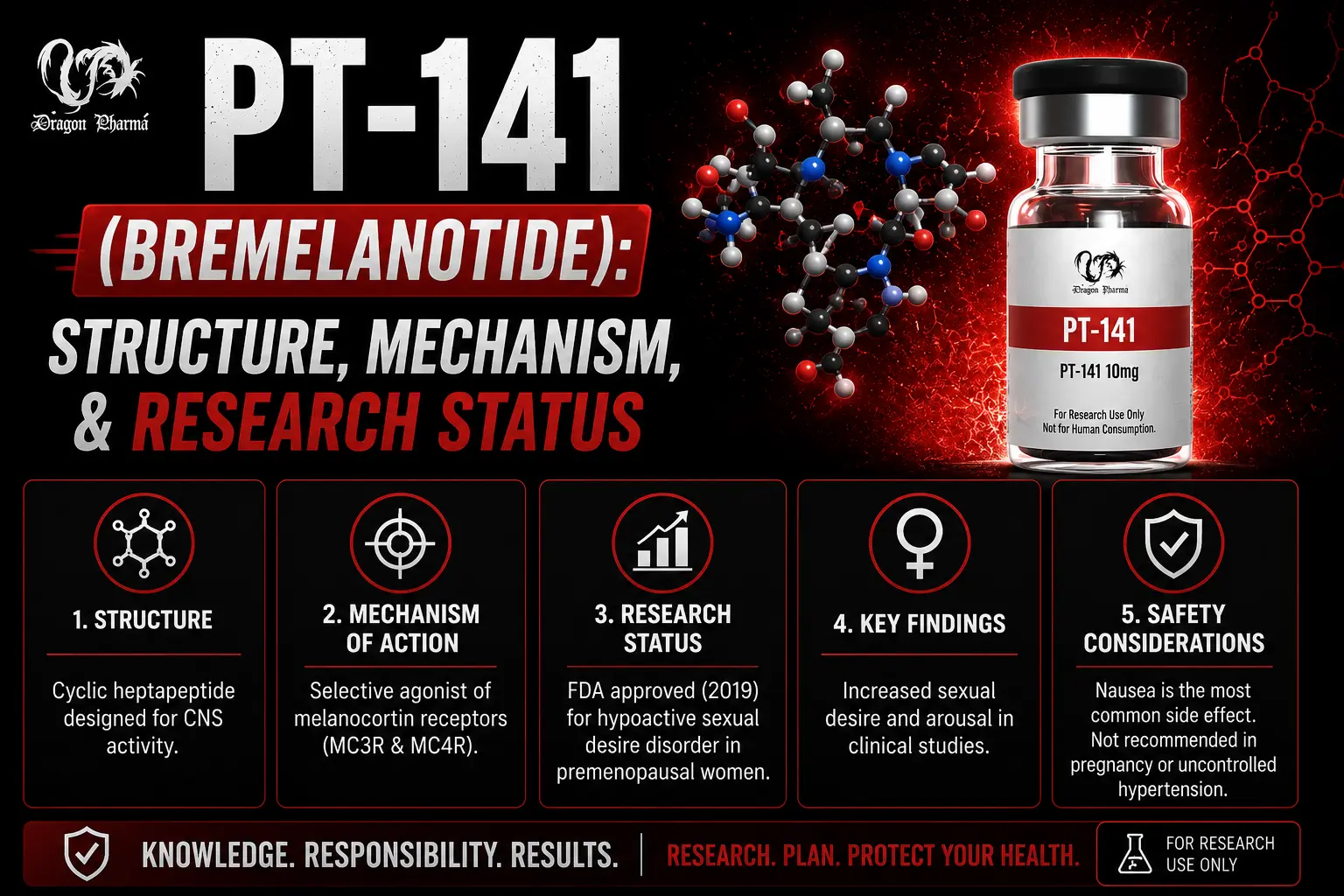
It was derived from Melanotan II and has been studied in both animal models and human clinical trials, distinguishing it from most research peptides, which lack human data. This article breaks down its chemistry, mechanism, evidence base, and how it compares to related compounds.
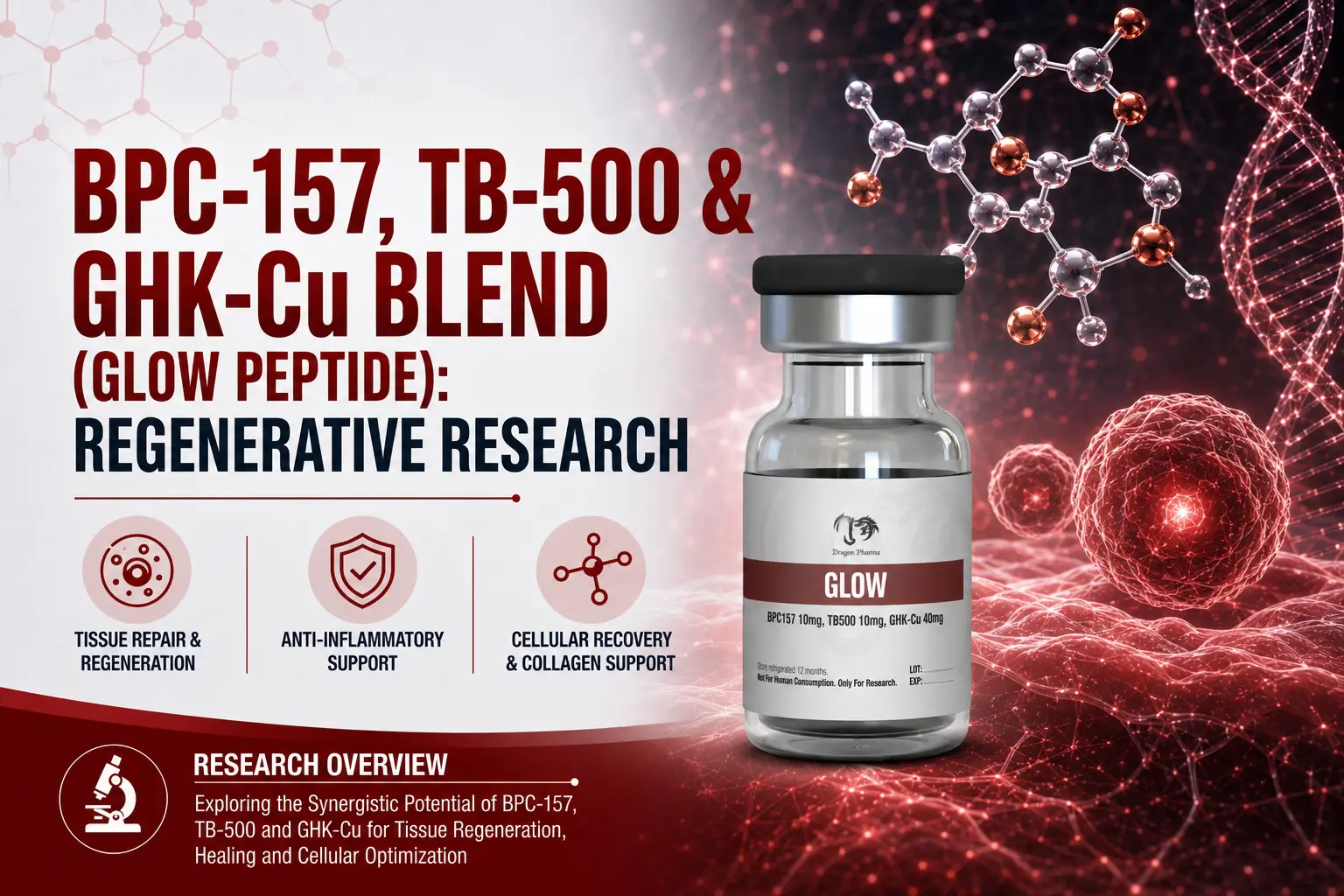
This article covers each component's proposed mechanism and research findings, and flags several citation and terminology issues found in secondary source material on this blend. It is part of the broader peptide research library maintained by Dragon Pharma Peptides.
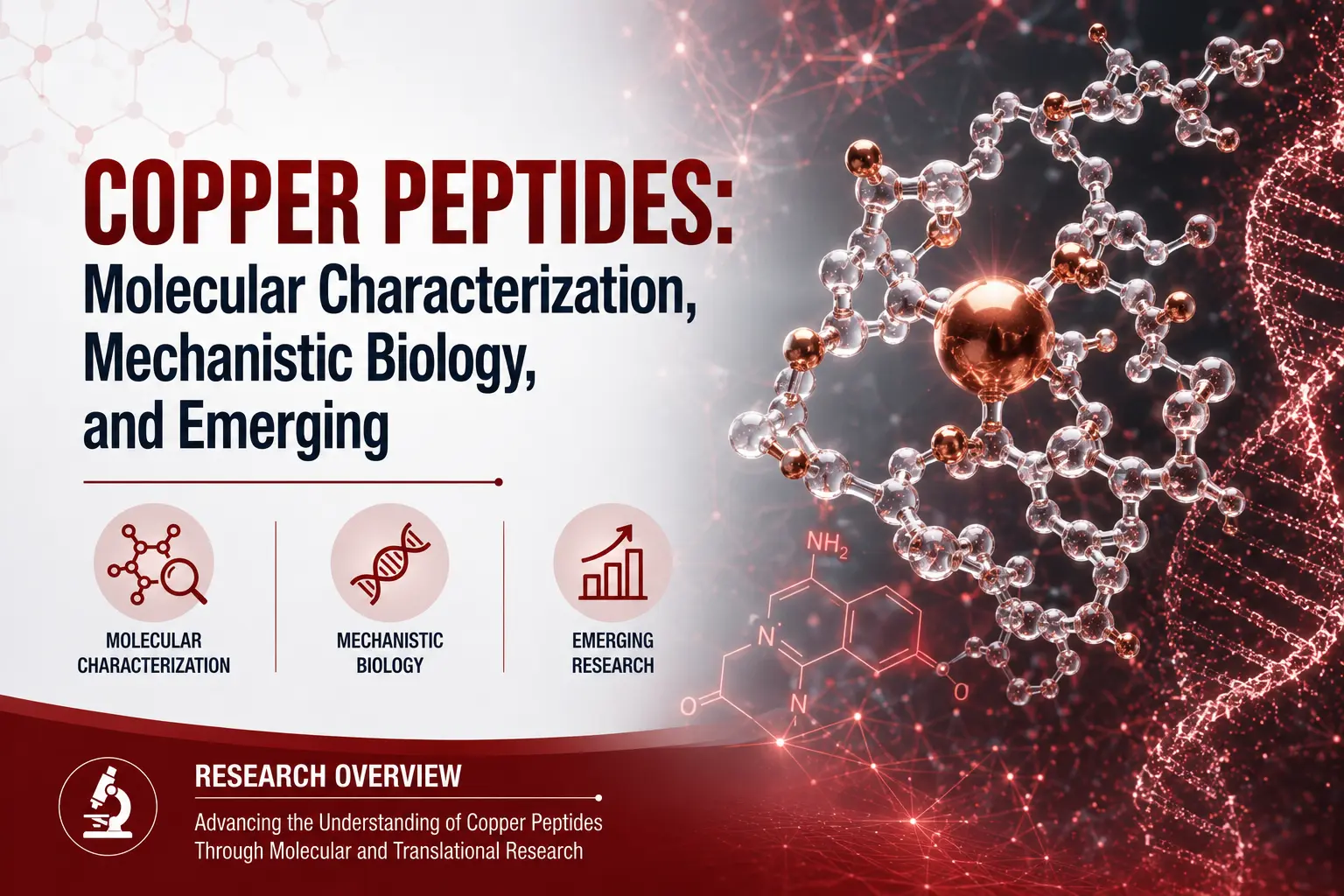
This article covers their coordination chemistry, proposed mechanisms, and research findings across evidence tiers — including one genuine human clinical trial that source material often obscures under vague "subjects" language.
Customer Reviews
Please leave your review on products or service below.
Thank you beforehand.