


Sermorelin, GHRP-6, and GHRP-2 Peptide Blend: Receptor Pharmacology and Neuroendocrine Research Overview
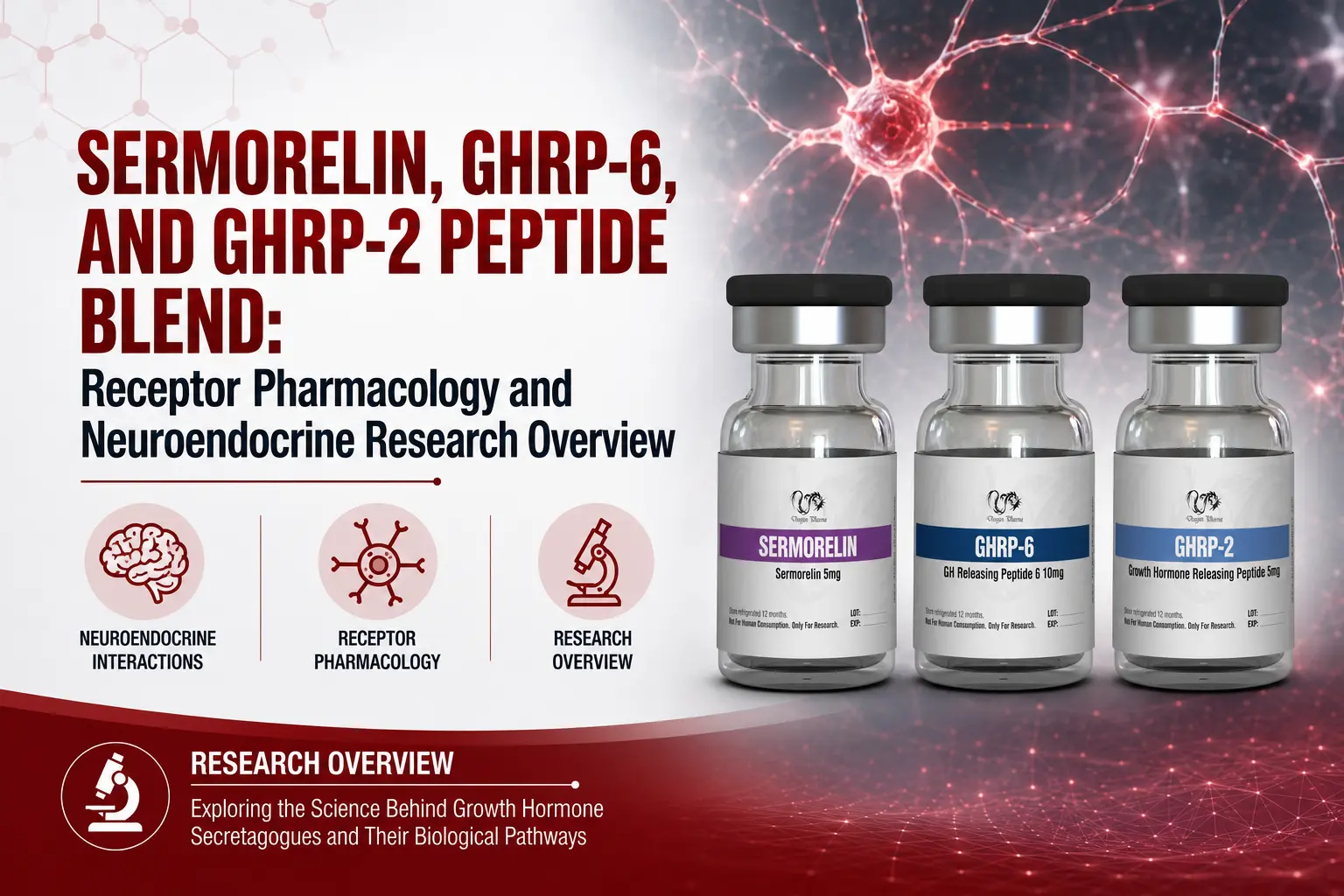
The Sermorelin & GHRP-6 & GHRP-2 peptide blend is a research-grade formulation designed to facilitate the study of integrated signaling within the somatotropin and ghrelin-related regulatory axes. It combines a growth hormone-releasing hormone (GHRH) analogue with two growth hormone secretagogue receptor (GHS-R) agonists, enabling examination of parallel receptor engagement and downstream signaling coordination. This article organizes the receptor pharmacology, intracellular signaling pathways, and evidence base for each component and their combined use, distinguishing human, animal, and in vitro findings throughout.
Key Facts at a Glance
| Property | Detail |
|---|---|
| Blend components | Sermorelin (GHRH-R agonist), GHRP-6 (GHS-R1a agonist), GHRP-2 (GHS-R1a agonist) |
| Sermorelin alternate names | Sermorelinum, Growth Hormone-Releasing Factor (1–29)Amide |
| GHRP-2 alternate name | Pralmorelin, a synthetic ghrelin-mimetic hexapeptide |
| Receptor targets | GHRH-R (Sermorelin); GHS-R1a (GHRP-6 and GHRP-2) |
| Primary research focus | Receptor cross-talk, second-messenger integration, GH-axis and ghrelin-axis regulation |
| Evidence type | Mixed — in vitro cell culture, animal models (swine, yak, ovine/rat), and limited human clinical data |
Sermorelin: Molecular Profile and Receptor Interaction
Sermorelin is a synthetic peptide corresponding to the biologically active N-terminal region of endogenous GHRH, spanning residues 1–29, with selective affinity for GHRH-R on pituitary somatotroph cells. GHRH-R is a Class B G protein-coupled receptor (GPCR) [2].
Receptor engagement is associated with activation of adenylate cyclase and elevation of intracellular cyclic AMP (cAMP). Downstream signaling may involve protein kinase A (PKA)-mediated phosphorylation of transcriptional regulators implicated in growth hormone (GH) gene expression in receptor-expressing cellular models [7].
GHRP-6 and GHRP-2: Molecular Profile and Receptor Interaction
GHRP-2 and GHRP-6 are synthetic hexapeptides that function as agonists of GHS-R1a, distinct in receptor target from Sermorelin despite a shared downstream connection to GH release.
Activation of GHS-R1a has been associated in research models with Gq/G11-mediated phospholipase C (PLC) signaling, inositol trisphosphate (IP₃) production, and intracellular calcium mobilization, which may further engage downstream MAPK and ERK kinase cascades [7]. Although GHRP-2 and GHRP-6 share structural similarities as hexapeptides, research suggests they may exhibit divergent intracellular signaling profiles [3][4].
Why Combine GHRH-R and GHS-R1a Ligands? Receptor Interdependence Research
Research indicates GHRP-6 may require concurrent endogenous GHRH-R engagement to elicit maximal GH-related signaling responses, providing the mechanistic basis for studying these peptide classes in combination.
A controlled investigation examined whether endogenous GHRH signaling is required for the GH-axis response to GHRP-6, using a selective GHRH antagonist to block endogenous GHRH-R engagement [9]. Findings indicated that pharmacological blockade of endogenous GHRH substantially attenuated the GH-axis response to GHRP-6, suggesting that concurrent GHRH-R activation may be necessary for maximal GHS-R1a-mediated signaling output. This points to GHRP-6 and GHRH analogues such as Sermorelin acting through functionally interdependent, rather than simply additive, mechanisms [9].
GHRP-2 and Ghrelin-Axis Receptor Biology
A human clinical study found that GHRP-2 produces GHS-R1a-mediated effects comparable in certain respects to endogenous ghrelin, including increased food intake in healthy men.
This comparative investigation evaluated similarities between GHRP-2 and ghrelin in GHS-R1a-mediated signaling, with focus on downstream neuroendocrine responses [6]. Because this study was conducted in human participants rather than animal or in vitro models, it represents one of the stronger evidence points within this research area, supporting GHRP-2's characterization as a ghrelin-mimetic ligand within GHS-R1a signaling pathways.
Intracellular Signaling Differences: GHRP-2 vs. GHRP-6 in Somatotroph Models
In vitro studies using isolated ovine and rat pituitary somatotroph cultures found that GHRP-2 raised intracellular cAMP comparably to endogenous GRF, while GHRP-6 stimulated GH release without measurable cAMP increases.
When applied concurrently at maximal concentrations, GHRP-2 and GHRP-6 exhibited additive interactions on GH secretion, suggesting non-redundant receptor engagement and distinct signaling outputs within the same cellular system [7]. Blockade of extracellular calcium influx reduced secretagogue-induced hormone release across both ligands, and somatostatin attenuated cAMP accumulation and hormone release under all tested conditions — pointing to distinct but overlapping contributions of cAMP-dependent and calcium-dependent signaling in somatotroph populations [7].
Combined GHRH and GHRP-2 Effects on Pituitary Gene Expression
In vitro research using ovine somatotroph cell cultures evaluated the molecular effects of combined GHRH and GHRP-2 exposure on gene expression associated with GH regulation. Exposure to GHRH alone, GHRP-2 alone, and the combination of both resulted in time-dependent increases in GH-encoding mRNA levels. Concurrent increases in mRNA for pituitary transcription factor-1 (Pit-1), the GHRH receptor, and the GH secretagogue receptor were detected within the first hour of exposure, suggesting coordinated modulation of receptor and transcription factor gene expression [8].
Differential patterns were noted for somatostatin receptor subtypes: GHRH was associated with subtype-specific mRNA elevation, while GHRP-2 exposure was associated with suppression of both subtypes over the experimental interval — suggesting direct transcriptional interactions of secretagogues on somatotroph gene networks [8].
IGF-1 as a Downstream Marker of Combined Secretagogue Exposure
A retrospective human study found that combined Sermorelin, GHRP-2, and GHRP-6 exposure was associated with a statistically significant rise in circulating IGF-1, a recognized surrogate marker of GH-axis activity.
The review identified a subgroup of 14 subjects meeting strict compliance criteria from an initial cohort of 105 records. Mean baseline IGF-1 concentrations were reported at 159.5 ng/mL, with post-exposure measurements averaging 239.0 ng/mL [10]. The investigators proposed that the largest increases in GH-axis activity may occur through synergistic receptor engagement, where GHS-R1a agonists and GHRH-R ligands act through complementary rather than purely additive pathways — supporting the investigational relevance of multi-ligand formulations in mechanistic endocrine research [10].
Evidence Summary: Study Type and Model by Research Area
| Research Finding | Species/Model | Evidence Tier |
|---|---|---|
| GHRP-2 growth performance effects | Swine | Animal |
| GHRP-2 effects on growth-retarded animals | Yak | Animal |
| GHRP-2 and food intake (ghrelin-mimetic effect) | Healthy men | Human clinical |
| GHRP-2 vs. GHRP-6 cAMP/calcium signaling | Ovine and rat somatotroph cultures | In vitro (animal-derived cells) |
| Combined GHRH + GHRP-2 gene expression | Ovine pituitary cell cultures | In vitro (animal-derived cells) |
| GHRP-6 dependence on endogenous GHRH | Human subjects (GHRH antagonist study) | Human clinical |
| IGF-1 elevation with combined secretagogue exposure | Hypogonadal men (retrospective review) | Human clinical (retrospective) |
Sermorelin vs. GHRP-6 vs. GHRP-2: Mechanism Comparison
| Feature | Sermorelin | GHRP-6 | GHRP-2 |
|---|---|---|---|
| Receptor | GHRH-R | GHS-R1a | GHS-R1a |
| Primary second messenger | cAMP/PKA | Calcium mobilization (minimal cAMP) | Both cAMP and calcium mobilization |
| Ghrelin-mimetic activity | No | Yes | Yes, with human data supporting food-intake effects |
| Dependence on other axis | N/A (acts directly on GHRH-R) | Requires endogenous GHRH-R activity for maximal effect | Engages cAMP pathway independently of GHRH-R |
Storage and Stability
| Condition | Recommendation |
|---|---|
| Lyophilized form | Store frozen (-20°C) for long-term stability |
| Reconstituted solution | Refrigerate (2–8°C); use within the research protocol's defined window |
| Light exposure | Store protected from light |
| Handling | Avoid repeated freeze-thaw cycles to preserve peptide integrity |
Frequently Asked Questions
What is the Sermorelin, GHRP-6, and GHRP-2 blend?
It is a research-grade formulation combining a GHRH-R agonist (Sermorelin) with two GHS-R1a agonists (GHRP-6 and GHRP-2), designed to study integrated receptor signaling within the somatotropin and ghrelin-related regulatory axes.
Why combine Sermorelin with GHRP-6 and GHRP-2?
Research suggests GHRP-6 requires concurrent endogenous GHRH-R activation for maximal GH-axis signaling, providing a mechanistic rationale for studying GHRH-R and GHS-R1a ligands together rather than in isolation.
What receptor does Sermorelin target?
Sermorelin selectively targets GHRH-R, a Class B G protein-coupled receptor expressed predominantly on pituitary somatotroph cells.
How do GHRP-6 and GHRP-2 differ mechanistically?
In vitro research found GHRP-2 raises intracellular cAMP comparably to endogenous GRF, while GHRP-6 stimulates GH release primarily through calcium mobilization without measurable cAMP increases.
Is GHRP-2 the same as Pralmorelin?
Yes. Pralmorelin is an alternate designation for GHRP-2, reflecting its classification as a synthetic ghrelin-mimetic hexapeptide.
Does GHRP-2 mimic ghrelin?
A human clinical study found GHRP-2 produced GHS-R1a-mediated effects comparable in certain respects to endogenous ghrelin, including increased food intake in healthy men.
What happens when GHRH and GHRP-2 are combined at the gene expression level?
In vitro ovine pituitary cell studies found combined GHRH and GHRP-2 exposure produced coordinated, time-dependent increases in GH mRNA and related receptor/transcription factor mRNA within the first hour of exposure.
Does this blend affect IGF-1 levels?
A retrospective human study in hypogonadal men found combined Sermorelin, GHRP-2, and GHRP-6 exposure was associated with a statistically significant increase in circulating IGF-1, from a baseline mean of 159.5 ng/mL to 239.0 ng/mL post-exposure.
Is most of the research on this blend from animal or human studies?
Evidence is mixed: several key mechanistic studies used swine, yak, or ovine/rat cell culture models, while two notable studies — on GHRP-2's ghrelin-mimetic effects and on combined-peptide IGF-1 elevation — were conducted in human subjects.
What is GTPL1093?
GTPL1093 is a compound identifier under which GHRP-6 is catalogued in pharmacological reference databases.
Key Takeaways
- This blend combines a GHRH-R agonist (Sermorelin) with two GHS-R1a agonists (GHRP-6, GHRP-2), enabling research into receptor cross-talk within GH-axis and ghrelin-axis signaling.
- Human research indicates GHRP-6 requires concurrent endogenous GHRH-R activity for maximal GH-axis response, supporting a mechanistic rationale for combined-ligand study designs.
- GHRP-2 and GHRP-6 show distinct intracellular signaling profiles despite structural similarity — GHRP-2 engages cAMP alongside calcium mobilization, while GHRP-6 relies primarily on calcium signaling.
- Evidence spans swine, yak, and ovine/rat in vitro models, alongside two notable human clinical findings: GHRP-2's ghrelin-mimetic effect on food intake, and combined-peptide IGF-1 elevation in a retrospective study.
References
- Phuong LT, Inoue H, Nou V, et al. The effects of growth hormone-releasing peptide-2 (GHRP-2) on the release of growth hormone and growth performance in swine. Domest Anim Endocrinol. 2000;18(3):279-91. https://pubmed.ncbi.nlm.nih.gov/10793268/
- National Center for Biotechnology Information. PubChem Compound Summary for CID 16132413, Sermorelin. https://pubchem.ncbi.nlm.nih.gov/compound/Sermorelin
- National Center for Biotechnology Information. PubChem Compound Summary for CID 4345065, GHRP-6. https://pubchem.ncbi.nlm.nih.gov/compound/Ghrp-6
- National Center for Biotechnology Information. PubChem Compound Summary for CID 6918245, Pralmorelin (GHRP-2). https://pubchem.ncbi.nlm.nih.gov/compound/Pralmorelin
- Hu R, Wang Z, Peng Q, et al. Effects of GHRP-2 and Cysteamine Administration on Growth Performance, Somatotropic Axis Hormone and Muscle Protein Deposition in Yaks (Bos grunniens) with Growth Retardation. PLoS One. 2016;11(2):e0149461. https://pmc.ncbi.nlm.nih.gov/articles/PMC4760683/
- Laferrère B, Abraham C, Russell CD, Bowers CY. Growth hormone releasing peptide-2 (GHRP-2), like ghrelin, increases food intake in healthy men. J Clin Endocrinol Metab. 2005;90(2):611-4. https://pubmed.ncbi.nlm.nih.gov/15699539/
- Wu D, Chen C, Zhang J, Bowers CY, Clarke IJ. The effects of GH-releasing peptide-6 (GHRP-6) and GHRP-2 on intracellular cAMP levels and GH secretion in ovine and rat somatotrophs. J Endocrinol. 1996;148(2):197-205. https://pubmed.ncbi.nlm.nih.gov/8699133/
- Yan M, Hernandez M, Xu R, Chen C. Effect of GHRH and GHRP-2 treatment in vitro on GH secretion and levels of GH, Pit-1, GHRH-receptor, GH-secretagogue-receptor and somatostatin receptor mRNAs in ovine pituitary cells. Eur J Endocrinol. 2004;150(2):235-42. https://pubmed.ncbi.nlm.nih.gov/14763922/
- Pandya N, DeMott-Friberg R, Bowers CY, Barkan AL, Jaffe CA. Growth hormone (GH)-releasing peptide-6 requires endogenous hypothalamic GH-releasing hormone for maximal GH stimulation. J Clin Endocrinol Metab. 1998;83(4):1186-9. https://pubmed.ncbi.nlm.nih.gov/9543138/
- Sigalos JT, Pastuszak AW, Allison A, et al. Growth Hormone Secretagogue Treatment in Hypogonadal Men Raises Serum IGF-1 Levels. Am J Mens Health. 2017;11(6):1752-1757. https://pubmed.ncbi.nlm.nih.gov/28830317/
Articles

If you are looking to buy Dragon Pharma with bitcoins then you found the right place.
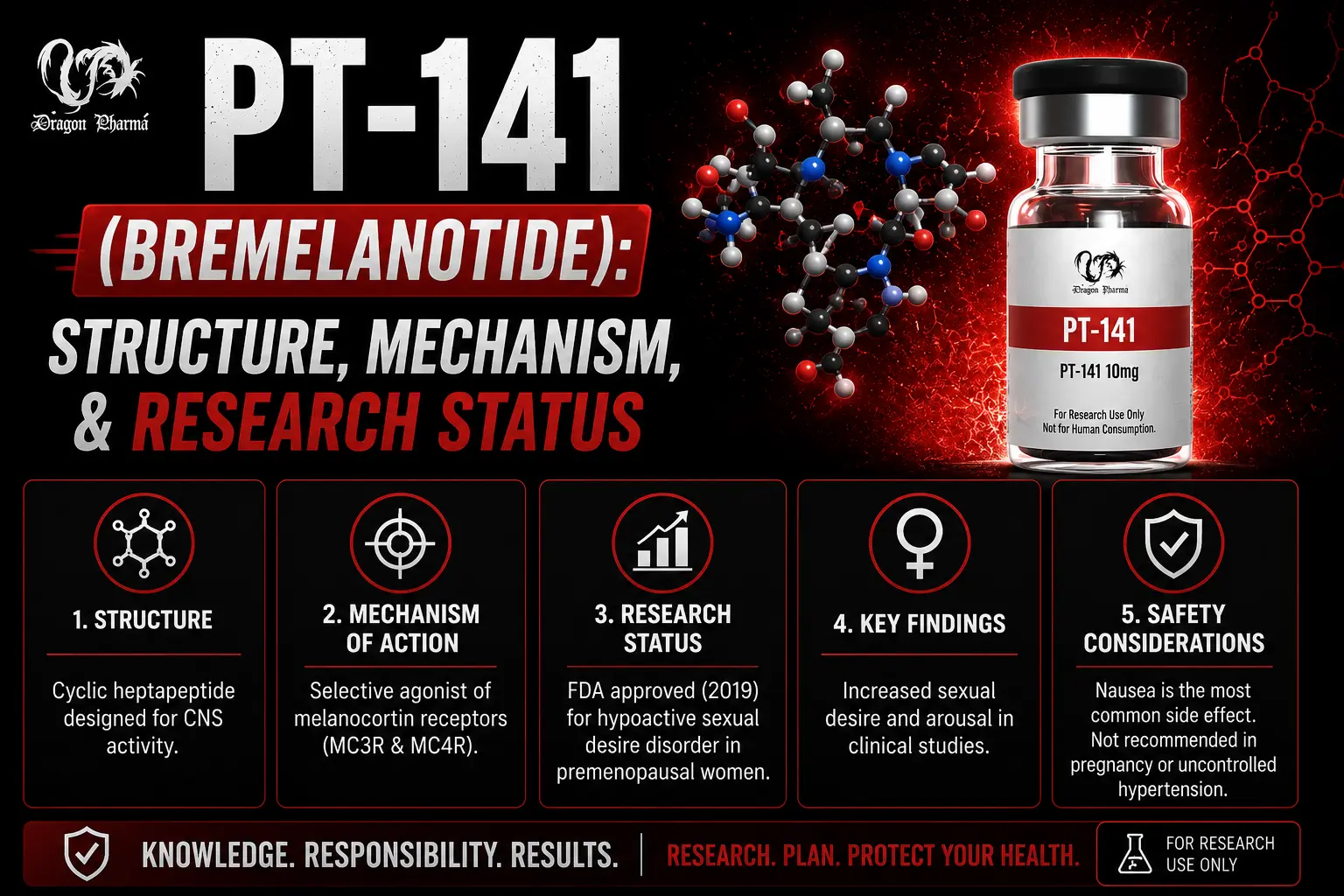
It was derived from Melanotan II and has been studied in both animal models and human clinical trials, distinguishing it from most research peptides, which lack human data. This article breaks down its chemistry, mechanism, evidence base, and how it compares to related compounds.
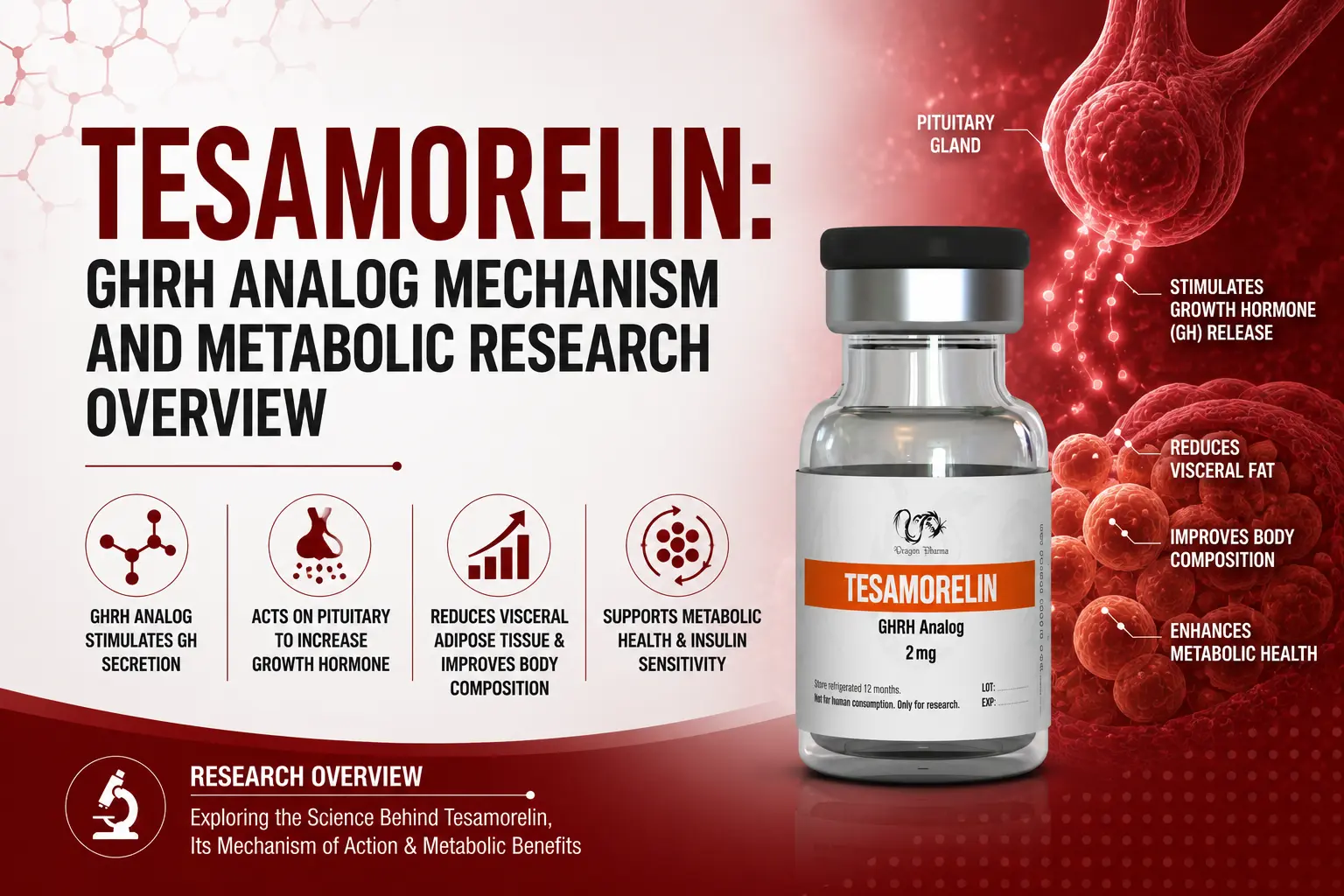
It is distinguished from most research peptides by an unusually strong human clinical trial record, including multiple Phase III studies. This article organizes its molecular identity, proposed mechanism, and clinical research findings, with direct links to the primary literature.
Customer Reviews
Please leave your review on products or service below.
Thank you beforehand.