


Fragment 176-191 (AOD9604): Fat Metabolism Research Overview
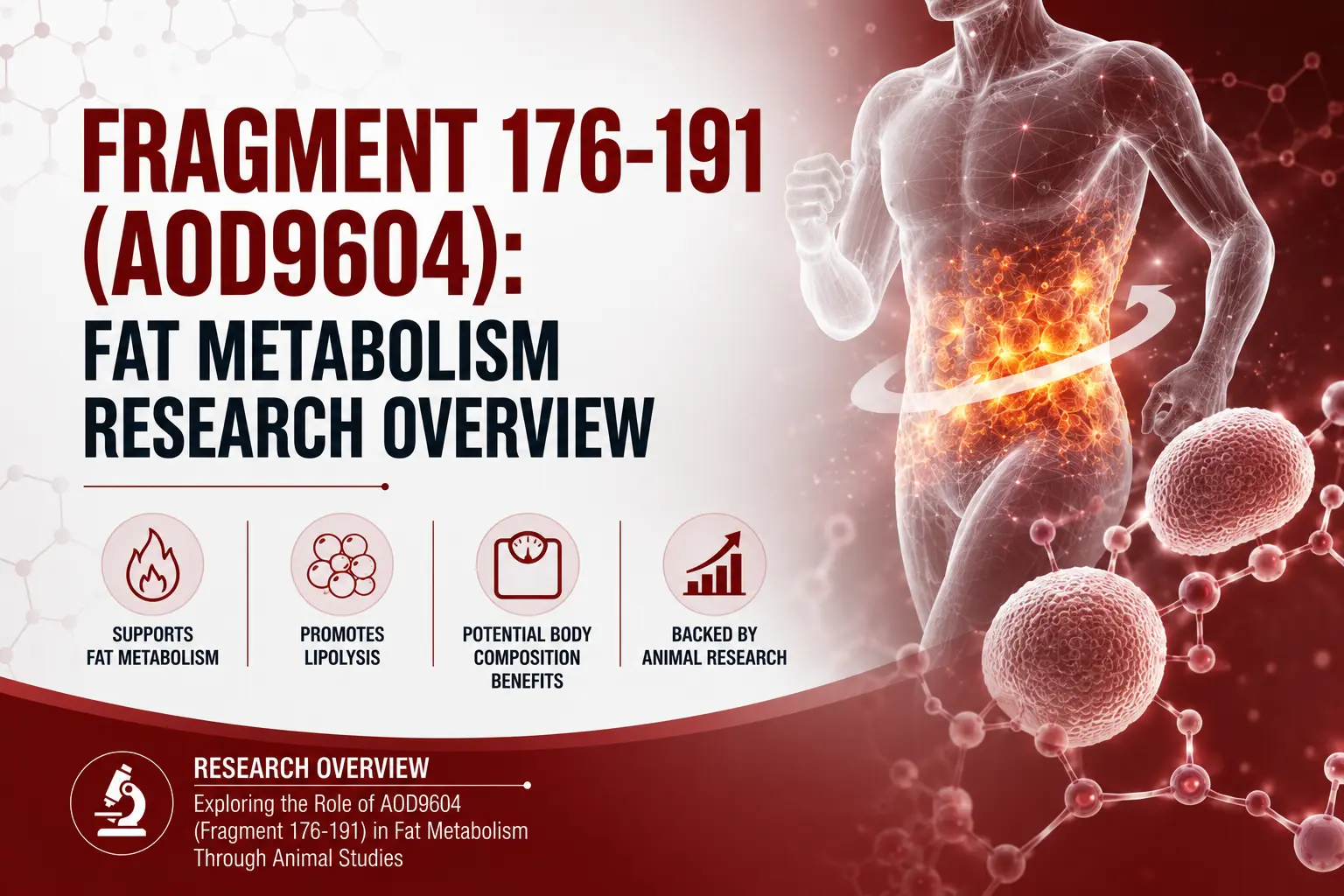
Fragment 176-191 is a synthetic peptide corresponding to the C-terminal region of human growth hormone (hGH), studied for its effects on adipose tissue metabolism independent of hGH's broader growth-promoting activity. It is also widely known by the name AOD9604 peptide — a naming overlap that causes frequent confusion in research literature. This article clarifies that relationship and organizes what's known about its proposed mechanism, evidence quality, and secondary research areas in cardiovascular and joint health.
Key Facts at a Glance
| Property | Detail |
|---|---|
| Common names | Fragment 176-191, hGH Frag 176-191, AOD9604 |
| Structural origin | C-terminal fragment of human growth hormone (residues 177–191), with an added N-terminal tyrosine for synthesis stability |
| Primary researched target | Beta-3 adrenergic receptors on white adipose tissue |
| Primary research area | Fat metabolism (lipolysis) without the growth-promoting or insulin-antagonist effects of full-length hGH |
| Secondary research areas | Cardiovascular/metabolic research, cartilage and joint research (osteoarthritis models) |
| Evidence type | Primarily animal research (rodent models); limited human clinical trial data |
Fragment 176-191 vs. AOD9604: Clarifying the Naming
Fragment 176-191 and AOD9604 refer to the same synthetic peptide in most current research literature, not two related-but-distinct compounds. AOD9604 is the peptide's development code name; "Fragment 176-191" describes its structural origin as a fragment of hGH with an additional tyrosine residue attached to the N-terminus for stability during synthesis. Some older or inconsistent sources present them as separate molecules being compared to one another, which is a common source of confusion in secondary literature — but structurally, they describe the same research compound.
Mechanism of Action: Fat Metabolism
Fragment 176-191 is proposed to stimulate lipolysis (fat breakdown) by binding beta-3 adrenergic receptors on white adipose tissue, mimicking the fat-metabolizing region of native hGH while avoiding its growth-promoting and blood-sugar-related effects.
The proposed downstream pathway, based on animal research, works as follows:
- Fragment 176-191 binds to beta-3 adrenergic receptors on the surface of white adipocytes (fat cells).
- Receptor binding is theorized to trigger downstream signaling that mobilizes stored fat for use as energy, increasing local metabolic rate.
- Research also suggests the peptide may inhibit lipogenesis (the conversion of dietary fat into stored fat), compounding the metabolic effect.
- Notably, studies in mice genetically lacking beta-3 adrenergic receptors still showed fat loss following exposure, suggesting an additional, receptor-independent mechanism — possibly involving apoptosis (programmed cell death) of white adipose tissue — that is not yet fully characterized.
Evidence Summary: What Animal Studies Show
| Research Context | Reported Findings |
|---|---|
| Standard mouse models | Reduced fat mass and induced weight loss following peptide exposure |
| Beta-3 adrenergic receptor knockout mice | Fat loss still observed, suggesting a receptor-independent mechanism, possibly involving adipose tissue apoptosis |
| Human clinical trials | Limited data available; not comprehensively established relative to the animal literature |
Fragment 176-191 and Cardiovascular Research
Because obesity is an established contributor to cardiovascular disease risk, researchers have studied whether Fragment 176-191's fat-mobilizing effects extend to secondary cardiovascular and metabolic benefits. These pathways are proposed to act independently of the beta-3 adrenergic mechanism and are theorized to support general metabolic and cardiac function as a downstream consequence of reduced fat burden, rather than through a direct cardiac mechanism. This research remains preclinical and exploratory.
Fragment 176-191 and Joint/Cartilage Research
Separate from its metabolic research, Fragment 176-191 has been studied for potential effects on cartilage cell proliferation and joint function in rat models of osteoarthritis.
- Direct injection into arthritic joints in rats was associated with reduced pain-related behavior and decreased movement disability in study models.
- Microscopic analysis of cartilage structure in affected joints reportedly showed positive structural changes following peptide exposure.
- This research direction is distinct from the fat-metabolism mechanism and represents an early-stage, separate area of investigation.
Fragment 176-191 vs. Full-Length hGH: Comparison Table
| Feature | Fragment 176-191 (AOD9604) | Full-Length hGH |
|---|---|---|
| Fat metabolism effect | Studied as a primary research focus | Present, but secondary to broader growth effects |
| Growth-promoting activity | Not present; isolated fragment excludes this region | Primary function |
| Effect on blood glucose/insulin signaling | Proposed to be minimal in research models | Known insulin-antagonist effects |
| Structural size | Short fragment (16 amino acids) | Full 191-amino-acid protein |
Storage and Stability (Research Use Only)
| Condition | Recommendation |
|---|---|
| Lyophilized form | Store frozen (-20°C) for long-term stability |
| Reconstituted solution | Refrigerate (2–8°C); use within the research protocol's defined window |
| Light exposure | Store protected from light |
| Handling | Avoid repeated freeze-thaw cycles to preserve peptide integrity |
Frequently Asked Questions
Is Fragment 176-191 the same as AOD9604?
Yes, in most current research literature these names refer to the same synthetic hGH-derived peptide. Older or inconsistent sources sometimes describe them as separate compounds, which is a common naming confusion rather than a structural distinction.
What is Fragment 176-191 studied for?
It is primarily studied for its effects on fat metabolism (lipolysis) in adipose tissue, with secondary research interest in cardiovascular/metabolic outcomes and joint/cartilage function in osteoarthritis models.
How does Fragment 176-191 differ from full-length growth hormone?
It isolates the region of hGH associated with fat metabolism while excluding the regions responsible for growth-promoting and insulin-antagonist effects, based on current research models.
What receptor does Fragment 176-191 target?
Research suggests it primarily binds beta-3 adrenergic receptors on white adipose tissue, though fat loss has also been observed in animal models lacking this receptor, pointing to an additional, not-yet-fully-understood mechanism.
Has Fragment 176-191 been tested in humans?
Human clinical trial data is limited compared to the available animal research; most mechanistic findings come from rodent studies.
Does Fragment 176-191 affect blood sugar?
Research suggests it is designed to isolate the fat-metabolizing activity of hGH while minimizing the insulin-antagonist effects associated with the full-length hormone, though this is based on preclinical research models.
Has Fragment 176-191 been studied for joint health?
Yes. In rat models of osteoarthritis, direct joint injection was associated with reduced pain-related behavior, decreased movement disability, and positive changes in cartilage structure on microscopic analysis.
Is Fragment 176-191 related to cardiovascular research?
Indirectly. Because obesity is a known contributor to cardiovascular disease risk, researchers have explored whether the peptide's fat-metabolizing effects produce downstream cardiovascular or metabolic benefits, independent of its receptor-based mechanism.
Key Takeaways
- Fragment 176-191 and AOD9604 peptide refer to the same synthetic hGH-derived peptide in current research literature, despite occasional naming confusion in secondary sources.
- Its primary researched mechanism involves beta-3 adrenergic receptor binding on white adipose tissue, promoting fat mobilization and metabolism.
- Fat loss has also been observed in receptor-knockout animal models, suggesting an additional, not-yet-fully-characterized mechanism.
- Secondary research areas include cardiovascular/metabolic outcomes tied to reduced fat burden, and joint/cartilage effects in rat osteoarthritis models.
- Most available evidence is preclinical and animal-based; human clinical trial data remains limited.
Articles
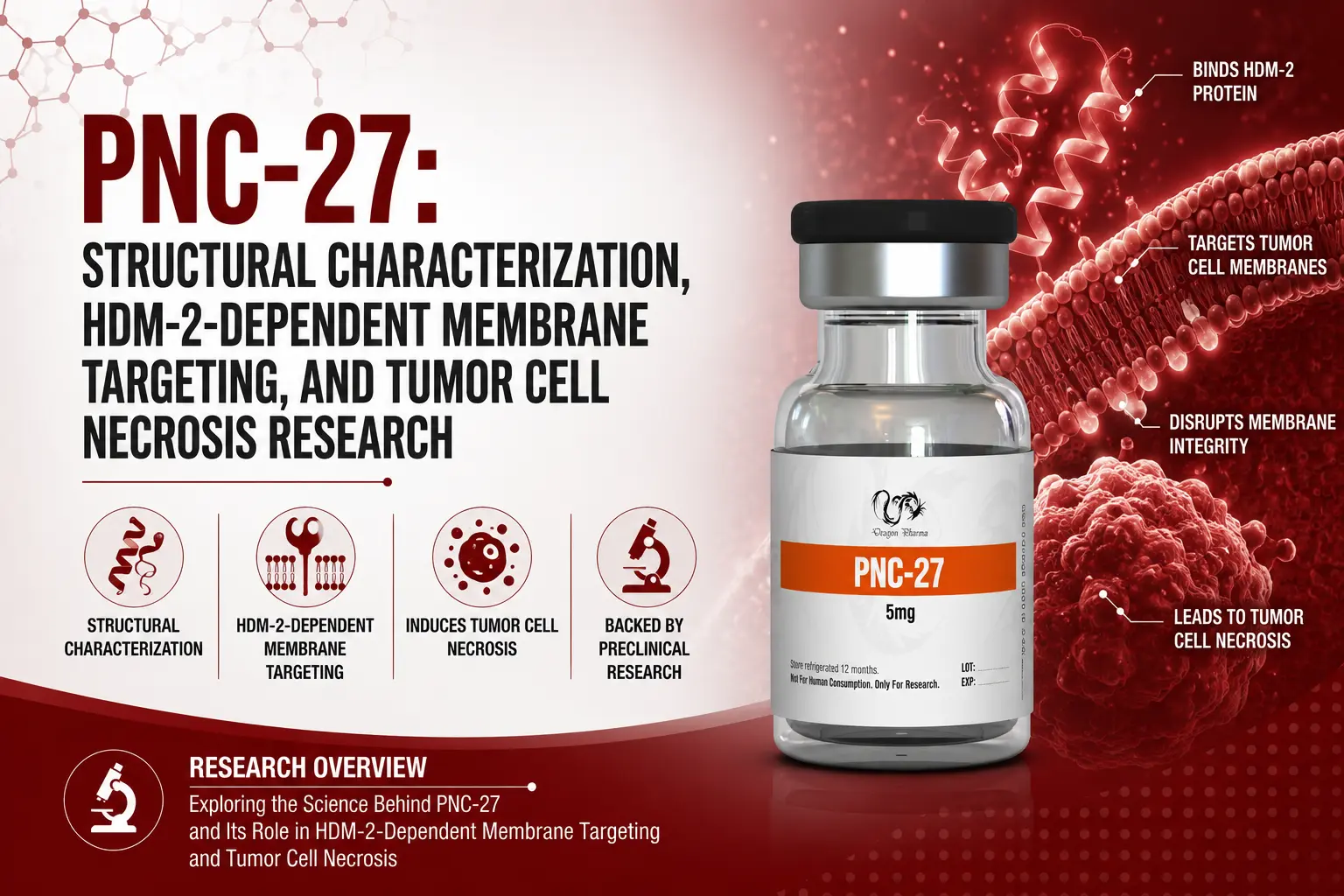
It combines an HDM-2-binding sequence from the p53 tumor suppressor protein (residues 12–26) with a cell-penetrating leader sequence derived from the Drosophila Antennapedia homeodomain protein.
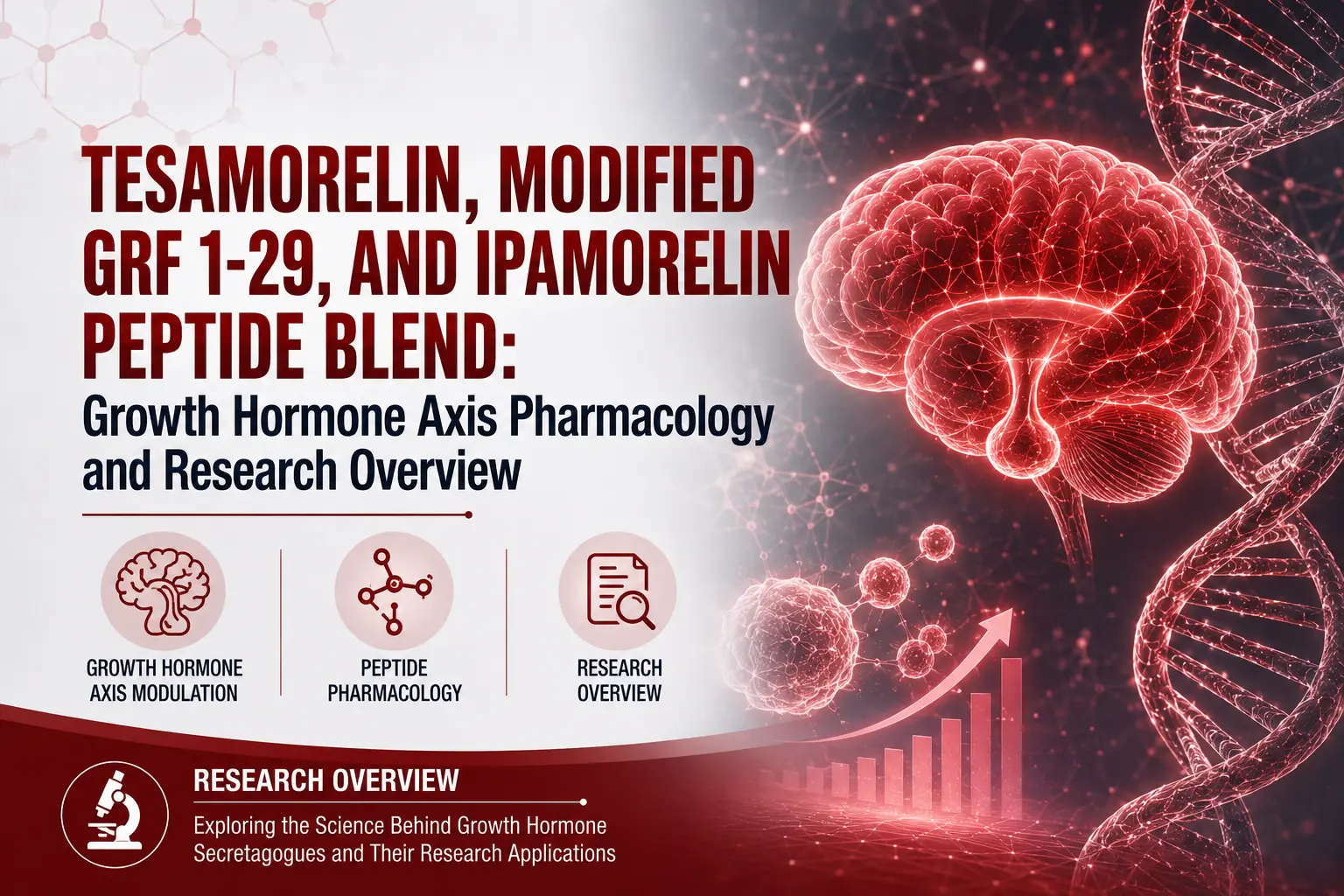
This article organizes the receptor pharmacology, signaling mechanisms, and evidence base for each component, clarifies a common naming confusion in this compound class, and distinguishes human, animal, and in vitro findings throughout.
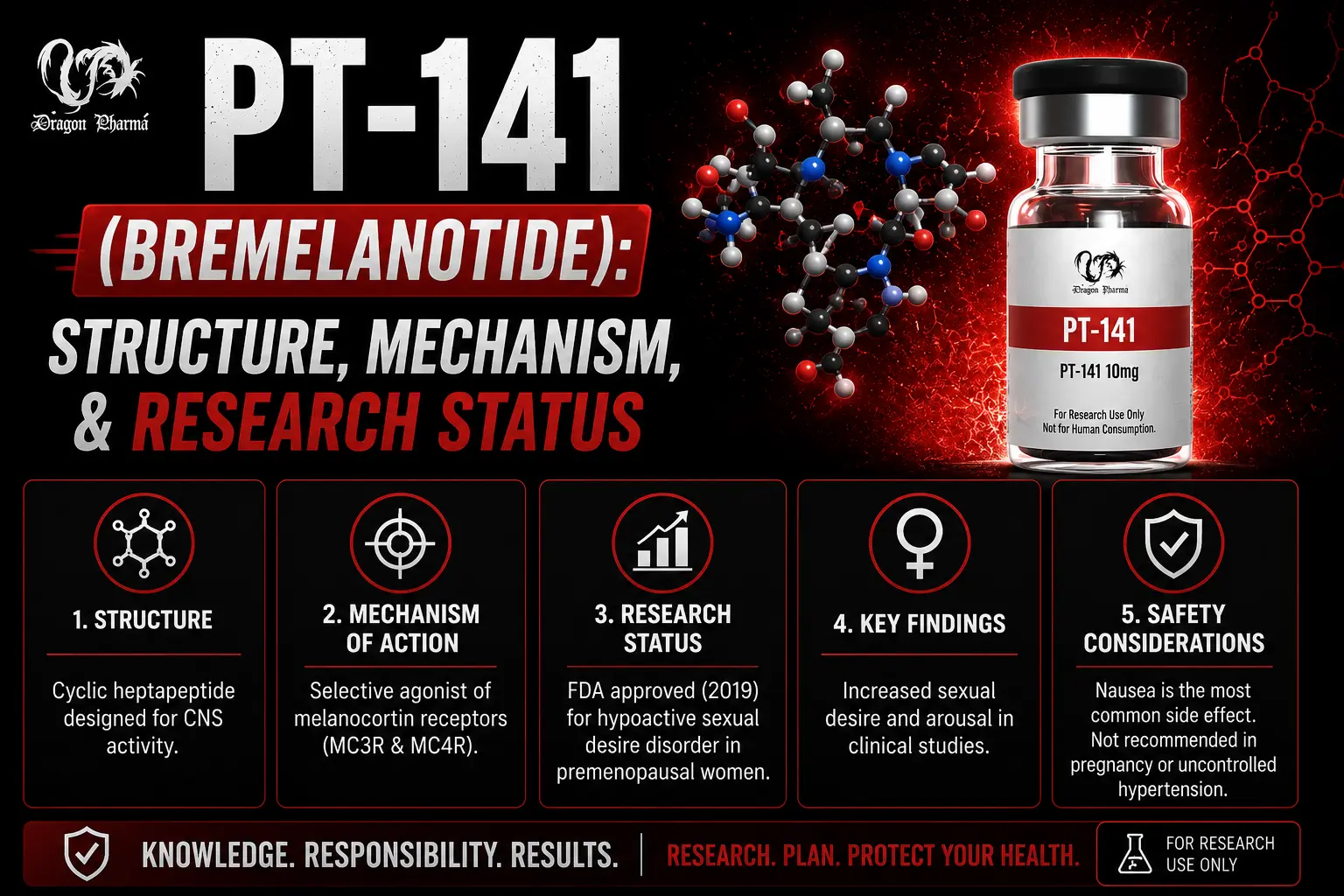
It was derived from Melanotan II and has been studied in both animal models and human clinical trials, distinguishing it from most research peptides, which lack human data. This article breaks down its chemistry, mechanism, evidence base, and how it compares to related compounds.
Customer Reviews
Please leave your review on products or service below.
Thank you beforehand.