


GHRP-6 Peptide: Mechanism, Ghrelin Receptor & Research Overview
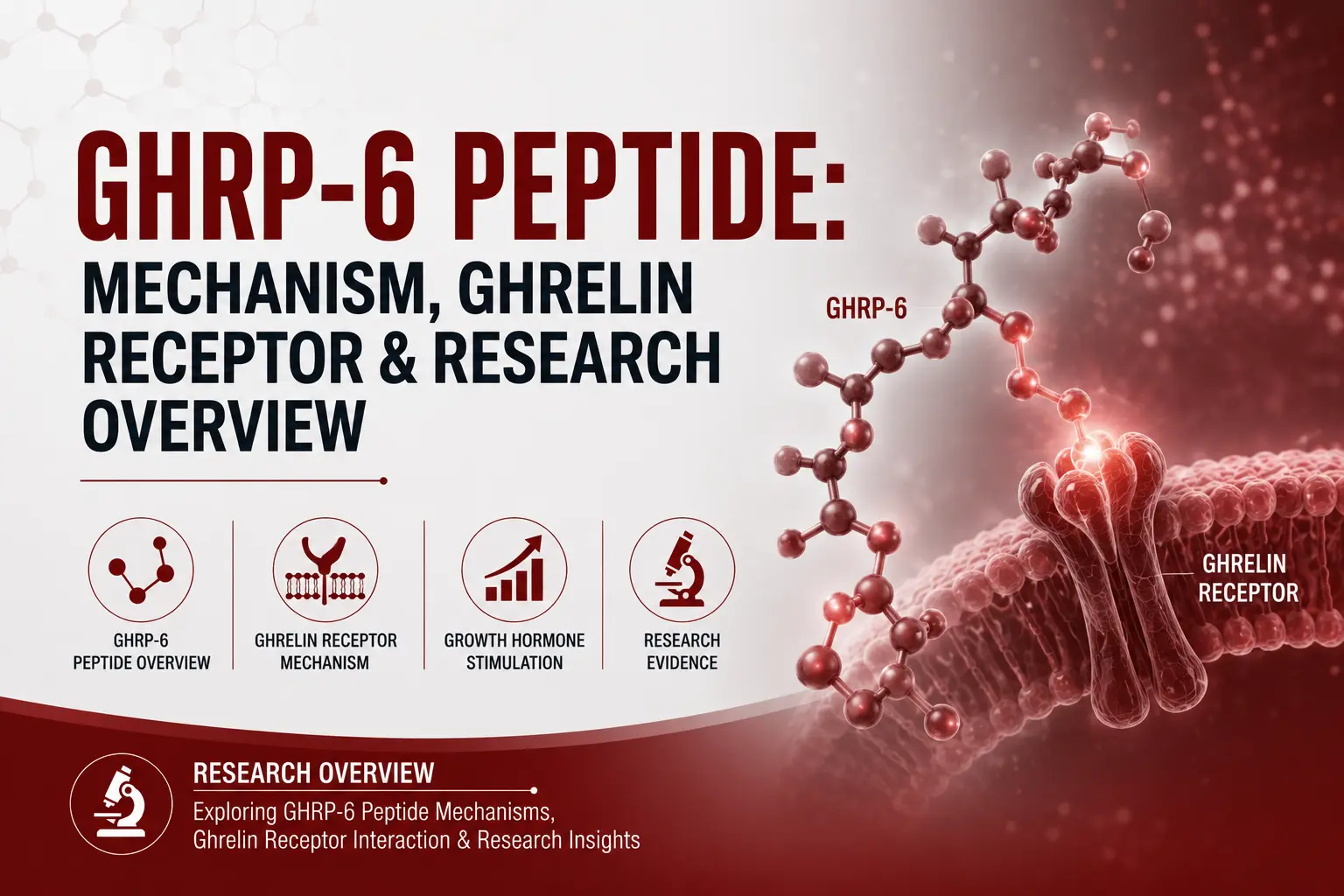
GHRP-6 (Growth Hormone Releasing Peptide-6) is a synthetic hexapeptide studied as a ghrelin receptor agonist, distinct in structure and pathway from Growth Hormone Releasing Hormone (GHRH). Research spans growth hormone/IGF-1 signaling, wound healing, antifibrotic liver studies, and broader cytoprotective effects. This article organizes GHRP-6's structure, proposed mechanism, and evidence base by research category.
Key Facts at a Glance
| Property | Detail |
|---|---|
| Classification | Synthetic hexapeptide, Growth Hormone Secretagogue (GHS) family |
| Sequence | His-D-Trp-Ala-Trp-D-Phe-Lys-NH₂ |
| Molecular formula | C46H56N12O6 |
| Molecular weight | ~873 g/mol |
| CAS number | 87616-84-0 |
| Primary receptor target | Ghrelin receptor (GHS-R), at the hypothalamic and pituitary level |
| Structural relationship to GHRH | None — GHRP-6 is structurally unrelated to Growth Hormone Releasing Hormone despite a related downstream effect |
| Evidence type | Primarily animal research (rodent models); some research spans several decades of study |
What Is GHRP-6?
GHRP-6 is a synthetic hexapeptide derived from met-enkephalin research, composed of a mix of L- and D-configured amino acids: L-Histidine, D-Tryptophan, L-Alanine, L-Tryptophan, D-Phenylalanine, and L-Lysine. It belongs to the Growth Hormone Secretagogue (GHS) family — compounds studied for their ability to stimulate release of another hormone, in this case growth hormone (GH).
Despite its name, GHRP-6 shares no structural similarity with Growth Hormone Releasing Hormone (GHRH). Instead, research indicates it acts through a separate receptor system tied to ghrelin signaling. Studies have also identified GHRP-6 receptor activity in peripheral tissues including the adrenal glands, heart, testis, ovary, skeletal muscle, and lung — suggesting research relevance beyond the pituitary axis.
GHRP-6 vs. GHRH: How They Differ
| Feature | GHRP-6 | GHRH |
|---|---|---|
| Structural class | Synthetic hexapeptide, GHS family | Native hypothalamic releasing hormone |
| Receptor targeted | Ghrelin receptor (GHS-R) | GHRH receptor |
| Structural relationship | Unrelated to GHRH structurally | N/A (native hormone) |
| Downstream effect studied | GH release, IGF-1 production, ghrelin-mimetic effects | GH release via its own dedicated pathway |
Mechanism of Action: Ghrelin Receptor Pathway
Animal research suggests GHRP-6 stimulates growth hormone release by acting as a ghrelin receptor agonist at the hypothalamic and pituitary level, distinct from the GHRH signaling pathway.
- GHRP-6 binds to the ghrelin receptor (GHS-R), mimicking the action of ghrelin, the endogenous "hunger hormone."
- Receptor activation at the hypothalamic/pituitary level signals increased growth hormone (GH) production and release.
- In response to elevated GH, the liver is believed to increase production of insulin-like growth factor-1 (IGF-1).
- IGF-1 is proposed to support cell proliferation and reduce cell death (apoptosis) in various tissue research models.
Research Findings by Area
| Research Area | Reported Findings | Evidence Level |
|---|---|---|
| Wound healing | Reduced wound inflammation, accelerated closure, improved aesthetic outcome in rat models | Animal research |
| Liver fibrosis | Prevention of fibrotic induration and reduction of accumulated fibrotic material in a rat cirrhosis model | Animal research |
| Cytoprotection (cardiac/extracardiac) | Antiapoptotic effects reported in ischemia/reperfusion research models | Animal research |
| Muscle protein synthesis | Associated with increased GH/IGF-1 signaling linked to anabolic activity | Animal/mechanistic research |
| Fat metabolism | Proposed association with improved metabolic rate in research models | Preliminary/mechanistic research |
| Tissue/collagen support | Speculative association with collagen production and tissue repair capacity | Early-stage/speculative |
Wound Healing Research in Detail
In rat models using clean, full-thickness controlled wounds, GHRP-6 was associated with changes in extracellular matrix protein accumulation, attenuated wound inflammation, and improved aesthetic healing outcomes. Proposed contributing mechanisms include:
- Reduced immunoinflammatory mediator and effector cell activity at the wound site
- Decreased expression of fibrosis-inducing cytokines, modulating fibroblast response to injury
- Inhibition of NF-κB activity, a pathway associated with pro-inflammatory cytokine expression, with GHRP-6 also proposed to act as a chemokine receptor antagonist in this context
Researchers noted these mechanisms did not appear to interfere with angiogenic repopulation or reepithelialization — two processes essential to normal wound healing — suggesting the anti-inflammatory effects were not broadly immunosuppressive in these models.
Liver Fibrosis Research in Detail
In a rat model of liver cirrhosis, GHRP-6 exposure was associated with prevention of parenchymal fibrotic induration in more than 85% of the study cohort, with removal of previously accumulated fibrotic material observed in 75% of subjects. Microarray gene expression analysis in this research also indicated modulation of genes associated with redox metabolism following GHRP-6 exposure.
GHRP-6 vs. Ipamorelin: Comparison Table
| Feature | GHRP-6 | Ipamorelin |
|---|---|---|
| Receptor mechanism | Ghrelin receptor (GHS-R) agonist | Ghrelin receptor (GHS-R) agonist |
| Reported ghrelin/hunger-related effects | Associated with increased appetite in research models | Reported to have a more selective GH-release profile with less pronounced appetite effect |
| Non-GH research interest | Extensive: wound healing, antifibrotic, cytoprotective research | Primarily focused on GH/IGF-1 axis research |
Storage and Stability
| Condition | Recommendation |
|---|---|
| Lyophilized form | Store frozen (-20°C) for long-term stability |
| Reconstituted solution | Refrigerate (2–8°C); use within the research protocol's defined window |
| Light exposure | Store protected from light |
| Handling | Avoid repeated freeze-thaw cycles to preserve peptide integrity |
Frequently Asked Questions
What is GHRP-6 used for in research?
GHRP-6 is studied for its ability to stimulate growth hormone release via the ghrelin receptor, along with broader research interest in wound healing, antifibrotic liver effects, and cytoprotection.
Is GHRP-6 related to GHRH?
No. Despite the similar naming convention, GHRP-6 shares no structural similarity with Growth Hormone Releasing Hormone and acts through a separate receptor pathway (the ghrelin receptor).
What receptor does GHRP-6 activate?
GHRP-6 acts as an agonist at the ghrelin receptor (GHS-R), primarily studied at the hypothalamic and pituitary level.
Does GHRP-6 increase IGF-1?
GHRP-6-stimulated GH release leads to increased hepatic production of IGF-1, a growth factor associated with cell proliferation and reduced cell death.
What is the amino acid sequence of GHRP-6?
His-D-Trp-Ala-Trp-D-Phe-Lys-NH₂, a hexapeptide combining both L- and D-configured amino acids.
Has GHRP-6 been studied for wound healing?
Yes. In rat models using controlled full-thickness wounds, GHRP-6 was associated with reduced inflammation, accelerated wound closure, and improved aesthetic healing outcomes, without apparent interference with normal repair processes like reepithelialization.
What did the liver cirrhosis research find?
In a rat model of liver cirrhosis, GHRP-6 was associated with prevention of fibrotic induration in over 85% of subjects and reduction of existing fibrotic material in 75% of subjects.
Does GHRP-6 affect appetite?
Because GHRP-6 mimics ghrelin, the "hunger hormone," research models have associated it with appetite stimulation, a known characteristic of ghrelin receptor agonists.
How does GHRP-6 compare to Ipamorelin?
Both act on the ghrelin receptor, but GHRP-6 has a more pronounced association with appetite stimulation and a broader non-GH research profile (wound healing, antifibrotic effects), while Dragon Pharma Ipamorelin is generally studied for a more selective GH-release effect.
Key Takeaways
- GHRP-6 is a synthetic hexapeptide that stimulates growth hormone release via the ghrelin receptor, structurally and mechanistically distinct from GHRH.
- Its research profile extends well beyond the GH/IGF-1 axis, with notable animal data on wound healing, liver antifibrotic effects, and cytoprotection.
- Because it mimics ghrelin, GHRP-6 is also associated with appetite stimulation in research models — a key differentiator from more GH-selective secretagogues like Ipamorelin.
- Liver fibrosis research in rat models reported fibrotic prevention in over 85% of subjects and material reduction in 75%.
- Available evidence is primarily preclinical and animal-based; findings should not be interpreted as established human outcomes.
- Researchers looking for a peptide for sale should ensure GHRP-6 is sourced as research-grade material from reputable suppliers and used exclusively for laboratory research purposes.
Articles

This article clarifies that relationship and organizes what's known about its proposed mechanism, evidence quality, and secondary research areas in cardiovascular and joint health.

Steroid cycles can be an essential part of bodybuilding, helping athletes achieve their desired physique. However, the approach varies significantly depending on whether the goal is to bulk up or cut down. Understanding these differences and the implications of steroid use is crucial for anyone considering this path.
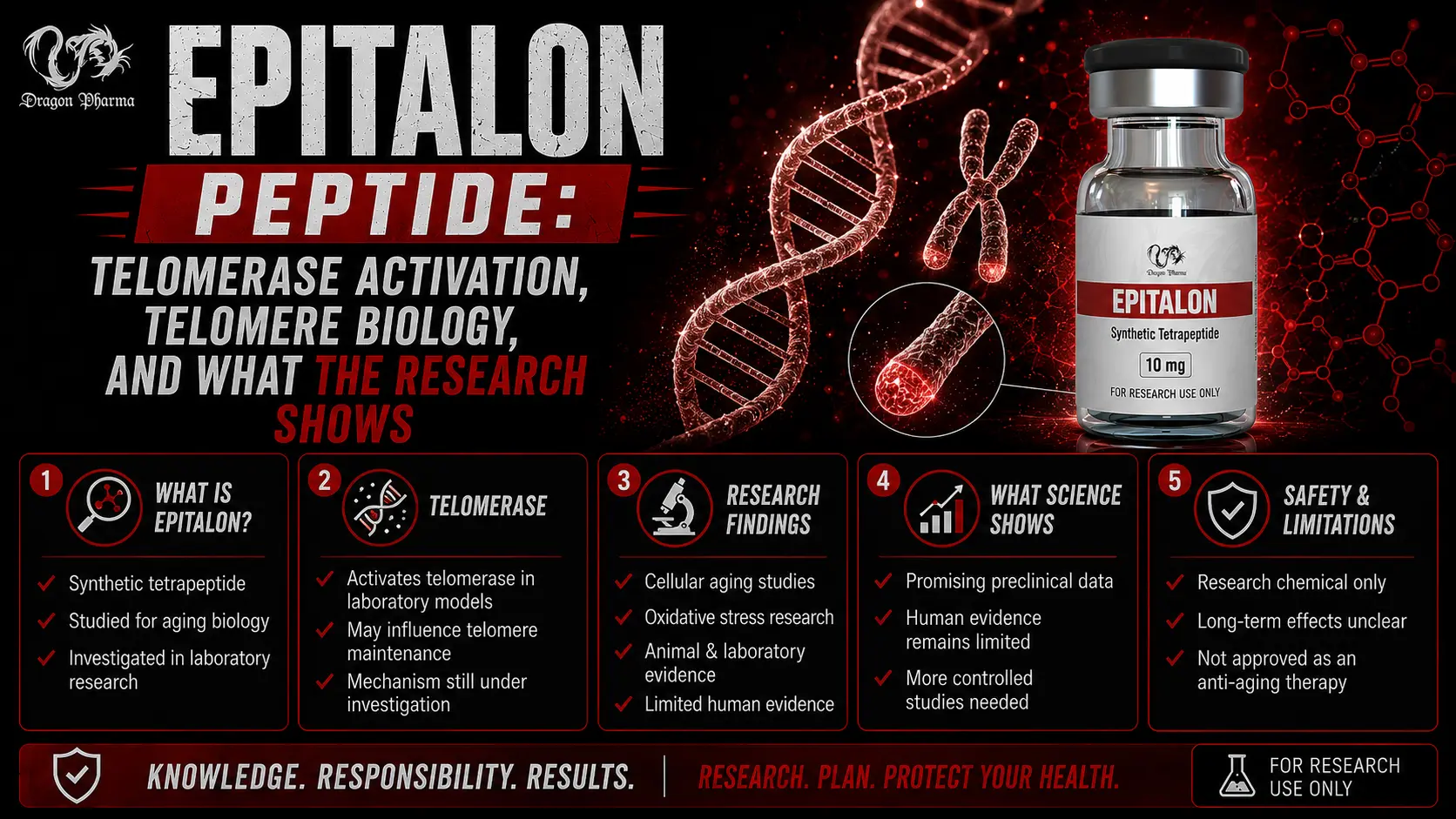
This guide covers what Epitalon is, how it's proposed to work, what the Khavinson research program actually demonstrated, and where the evidence gaps are — for anyone researching where to buy Epitalon peptide for laboratory use and wanting to understand the science before they do.
Customer Reviews
Please leave your review on products or service below.
Thank you beforehand.