


KP-10 (Kisspeptin-10): Studies on Neuroprotection, Gonadotropin Regulation, and Emotional Processing
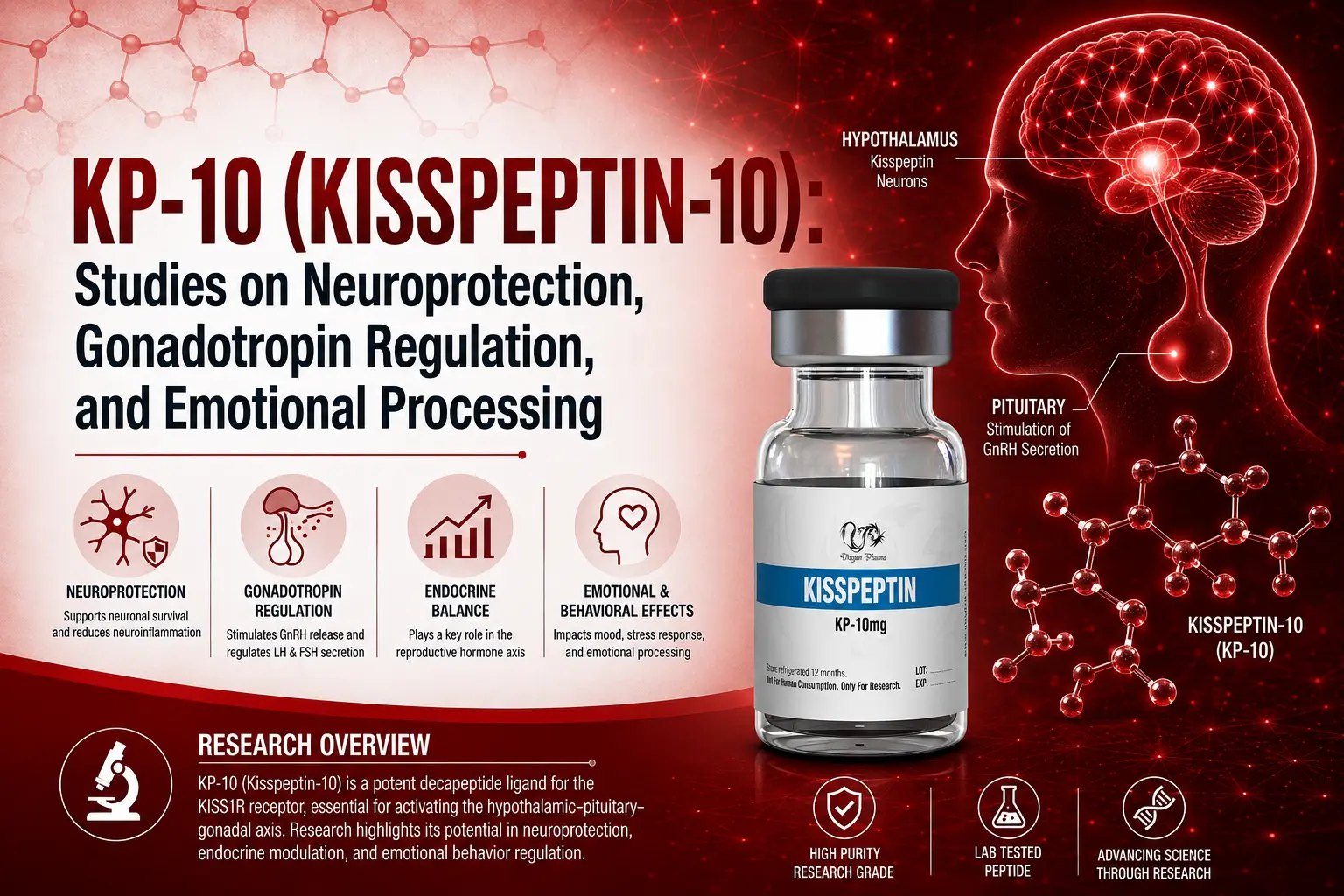
Kisspeptin-10 (KP-10) is a short bioactive decapeptide derived from proteolytic processing of the KISS1 gene product, corresponding to the C-terminal segment of kisspeptin-54. Researchers and institutions looking to buy Kisspeptin for laboratory research often seek a better understanding of its biological activity before sourcing it. This article covers its role as an endogenous GPR54 (KISS1R) ligand regulating the hypothalamic-pituitary-gonadal axis, its emerging neuroprotective research, and its studied effects on appetite and emotional/sexual brain processing—including a correction where human clinical data was found labeled as "murine models" in the source material, alongside a species contradiction (mice don't have a menstrual cycle) that revealed the mislabeling.
Table of Contents
- Key Facts at a Glance
- Origin and the KISS1 Gene
- Mechanisms of Action: GPR54 and the HPG Axis
- KP-10 and the Gonadal Axis (Uncited Study)
- KP-10 and Neuroprotection (Amyloid-Beta, Alpha-Synuclein)
- Metabolic Dysregulation in KP-10-Deficient Models
- KP-10 and Caloric Intake Regulation
- Behavioral Patterns and Emotional Modulation (Human)
- Reproductive Hormone Secretion (Human, Corrected)
- Evidence Summary by Study
- Storage and Stability
- Frequently Asked Questions
- Key Takeaways
- References
Key Facts at a Glance
| Property | Detail |
|---|---|
| Origin | Proteolytic fragment of the 145-aa KISS1 gene product; C-terminal segment of kisspeptin-54 |
| Receptor target | GPR54 (KISS1R), a G-protein-coupled receptor |
| Primary physiological axis | Hypothalamic-pituitary-gonadal (HPG) axis; upstream regulator of GnRH release |
| Other research areas | Amyloid-beta/alpha-synuclein neuroprotection, appetite regulation, emotional/sexual brain processing |
| Evidence type | Rodent studies, human neuroblastoma cell-line (SH-SY5Y) work, and human clinical neuroimaging/endocrine research |
Origin and the KISS1 Gene
KP-10 originates from sequential cleavage of the KISS1 gene product, which also yields kisspeptin-54, -14, and -13; KP-10 appears to retain full biological activity relevant to reproductive signaling.
KISS1 was initially characterized as a metastasis suppressor gene in animal research models, particularly in malignant melanoma and breast tissue carcinoma contexts [1]. Its expression profile and tissue-specific activity subsequently drove interest in its peptide products' neuroendocrine roles, particularly hypothesized effects on the hypothalamic-pituitary axis [2].
Mechanisms of Action: GPR54 and the HPG Axis
KP-10 is proposed to act as an endogenous GPR54 ligand in hypothalamic neurons, triggering calcium mobilization and ERK phosphorylation that depolarizes Kisspeptin and GnRH neurons, ultimately driving gonadotropin release.
GnRH neuron activation is central to release of FSH and LH from the anterior pituitary, which regulate gonad function and reproductive hormone synthesis [4]. Deficiencies in this axis, such as in hypogonadotropic hypogonadism, have been linked to impaired Kisspeptin signaling [3]. In animal models with reduced fertility, exogenous Kisspeptin analogs may stimulate endogenous gonadotropin release via GnRH-dependent mechanisms; conversely, sustained or elevated KP-10 exposure may produce a desensitization response that suppresses further HPG axis activity, though this remains under investigation.
KP-10 and the Gonadal Axis (Uncited Study)
Important: this specific study has no citation number anywhere in the source material provided. It should not be published without locating and verifying the actual primary source.
The source material describes a study examining KP-10 in models with delayed reproductive maturation, comparing KP-10 exposure against a reference GnRH concentration, with all subjects subsequently exposed to GnRH over a six-day observation period. Approximately 47% of the KP-10-exposed group reportedly showed elevated LH levels, with an additional 6% showing a partial/intermediate response and the remainder showing no measurable change — interpreted as possible sensitization or activation of GnRH neurons. Without a valid citation, these specific figures should be treated as unconfirmed.
KP-10 and Neuroprotection: Amyloid-Beta and Alpha-Synuclein
In vitro research, including work in a human-derived neuroblastoma cell line (SH-SY5Y), suggests KP-10 may reduce amyloid-beta and alpha-synuclein-associated neurotoxicity through mechanisms that appear independent of GPR54 receptor signaling.
KP-10 has been proposed to interact directly with extracellular amyloid-beta (Aβ), potentially mitigating its pathological actions through competitive binding or conformational interference. Experimental findings suggest KP-10 may neutralize neurotoxicity associated with Aβ, prion protein, and islet amyloid polypeptide independently of GPR54 or NPFF receptor antagonism, pointing to a physicochemical rather than canonical receptor-signaling mechanism [6].
Given structural homology between the NAC region of alpha-synuclein and the C-terminal region of Aβ, researchers hypothesized similar antagonistic activity against alpha-synuclein aggregation. In vitro work in SH-SY5Y cells (a human-derived neuroblastoma cell line) differentiated toward a cholinergic phenotype found low nanomolar KP-10 concentrations associated with attenuated alpha-synuclein-induced cytotoxicity, including toxicity from the pathogenic E46K mutation, while supraphysiological KP-10 levels were associated with increased cellular stress — suggesting a concentration-dependent, biphasic effect. Molecular dynamics simulations supported formation of stable KP-10/alpha-synuclein C-terminal complexes potentially interfering with oligomerization or fibril formation [7].
Testing KP-10 in SH-SY5Y cells overexpressing wild-type or mutant alpha-synuclein, with and without the GPR54 antagonist KP-234, found reduced apoptotic markers and mitochondrial damage following KP-10 exposure regardless of receptor blockade — supporting a receptor-independent neuroprotective mechanism, possibly via direct protein-protein interactions or membrane-associated pathways. KP-10 also reduced alpha-synuclein and choline acetyltransferase (ChAT) expression in cells expressing both wild-type and mutant constructs, consistent with interference in aggregation-prone protein stability or accumulation [7].
Metabolic Dysregulation in KP-10-Deficient Models
A comparative mouse study evaluated energetic and glycoregulatory consequences of disrupted KP-10 signaling in both sexes. Female mice with impaired KP-10 signaling showed significant mass gain and more pronounced glucose intolerance despite reduced caloric intake versus controls, alongside increased adiposity, reduced locomotor activity, and altered respiratory exchange ratios — indicating impaired metabolic flexibility. Male mice with comparable KP-10 disruption showed no statistically significant differences in mass or glucose tolerance versus male controls, suggesting a sex-dependent role for KP-10 in metabolic regulation [8].
KP-10 and Caloric Intake Regulation
KP-10 has been identified in multiple mouse brain regions, including the hippocampus, cerebellum, posterior hypothalamus, and septum, with notable distribution in the arcuate nucleus (a region implicated in energy homeostasis). In adult male mice (6–8 weeks), centrally administered KP-10 suppressed caloric intake during the initial 3–12 hour post-fast period in fasted animals, though this anorexigenic effect appeared transient, with cumulative intake becoming comparable to controls by 12–16 hours. Behavioral analysis found reduced meal frequency and duration with increased inter-meal intervals, without significant changes in the amount or rate of intake [9].
In Hypo-E22 hypothalamic cell studies, KP-10 exposure was associated with upregulated neuropeptide Y (NPY, an orexigenic peptide) and downregulated BDNF (generally associated with satiety signaling), alongside reduced intracellular dopamine and serotonin with relatively unchanged norepinephrine, and increased DOPAC/dopamine and 5-HIAA/serotonin turnover ratios. The study authors noted: "this study shows in mice that KP-10 acts centrally to reduce the light phase food intake response to an overnight fast with a delayed onset, whereas the nocturnal food intake is not altered... indicative of a stimulatory impact on satiety, which was not related to alterations in gastric emptying" [10].
Behavioral Patterns and Emotional Modulation (Human)
This is genuine human clinical neuroimaging research — Comninos et al. (2017), published under the title "Kisspeptin modulates sexual and emotional brain processing in humans."
Using neuroimaging and standardized psychometric assessments, this study examined central human responses to exogenous KP-10. KP-10 exposure was associated with increased activation within limbic structures "specifically in response to sexual and couple-bonding stimuli," with this enhancement correlating with psychometric measures of reward, drive, mood, and sexual aversion; the study also reported that "Kisspeptin exposure attenuated negative behavioral patterns" [11].
Reproductive Hormone Secretion (Human, Corrected)
Correction: the source material described this section as studying "male and female murine models" while also discussing menstrual cycle phases — mice have an estrous cycle, not a menstrual cycle, so this internal contradiction indicates the data is actually human. This is very likely the same Comninos et al. (2017) human study cited above, though this specific endocrine sub-analysis should be verified against the full paper.
In human subjects, KP-10 exposure was associated with marked elevation in circulating FSH and LH, supporting its hypothesized stimulatory role on the HPG axis. Baseline FSH/LH in women remained largely unaffected across most of the menstrual cycle, but during the preovulatory phase — when gonadotropin sensitivity is heightened — KP-10 introduction was associated with significant FSH and LH elevation, suggesting a phase-dependent modulatory effect on human reproductive endocrine activity [11].
Evidence Summary by Study
| Research Finding | Model | Evidence Tier |
|---|---|---|
| Delayed puberty, LH response (47%) | Unspecified | Uncited — no valid source |
| Amyloid-beta neurotoxicity mitigation | In vitro | In vitro |
| Alpha-synuclein toxicity attenuation | SH-SY5Y (human neuroblastoma cell line) | In vitro (human cell line) |
| Sex-specific metabolic dysregulation | Mice | Animal |
| Caloric intake suppression, meal microstructure | Mice; Hypo-E22 hypothalamic cell line | Animal / in vitro |
| Limbic activation, mood/reward correlation | Human subjects | Human clinical |
| FSH/LH elevation by menstrual cycle phase | Human subjects (corrected from "murine models") | Human clinical |
Storage and Stability
| Condition | Recommendation |
|---|---|
| Lyophilized form | Store frozen (-20°C) for long-term stability |
| Reconstituted solution | Refrigerate (2–8°C); use within the research protocol's defined window |
| Light exposure | Store protected from light |
| Handling | Avoid repeated freeze-thaw cycles to preserve peptide integrity |
Frequently Asked Questions
What is KP-10 (Kisspeptin-10)?
KP-10 is a decapeptide fragment derived from the KISS1 gene product, acting as an endogenous ligand for GPR54 (KISS1R), a key upstream regulator of the hypothalamic-pituitary-gonadal axis.
Has KP-10 been studied in humans?
Yes. A human neuroimaging study found KP-10 exposure increased limbic brain activation in response to sexual/couple-bonding stimuli and correlated with mood and reward measures; the same research program also documented human FSH/LH changes by menstrual cycle phase.
What receptor does KP-10 act on?
KP-10 primarily acts as an endogenous ligand for GPR54 (KISS1R), though some of its neuroprotective effects appear to occur independently of this receptor.
Does KP-10 have neuroprotective properties?
In vitro research, including in a human-derived neuroblastoma cell line, suggests KP-10 may reduce amyloid-beta and alpha-synuclein-associated neurotoxicity through mechanisms that appear independent of GPR54 signaling.
Does KP-10 affect appetite?
Mouse studies found centrally administered KP-10 transiently suppressed food intake after fasting by altering meal frequency and inter-meal intervals, associated with changes in hypothalamic NPY, BDNF, dopamine, and serotonin signaling.
Does KP-10 affect metabolism differently in males and females?
A mouse study found female animals with impaired KP-10 signaling developed significant mass gain and glucose intolerance, while males with comparable disruption showed no significant metabolic differences from controls.
Does KP-10 affect mood or emotional processing?
A human neuroimaging study found KP-10 exposure enhanced limbic brain activation correlating with reward, drive, and mood measures, and appeared to attenuate certain negative behavioral patterns.
Is KP-10's role in puberty well established?
The general GPR54/GnRH mechanism linking Kisspeptin to puberty onset is well supported by review literature, but a specific delayed-puberty study cited in some secondary sources lacks a valid citation and should be treated as unconfirmed.
What is GPR54?
GPR54, also called KISS1R, is the G-protein-coupled receptor that binds KP-10 and other Kisspeptin fragments, serving as a key upstream regulator of hypothalamic GnRH release.
Key Takeaways
- KP-10 is a KISS1-derived decapeptide acting on GPR54 to regulate the HPG axis, with additional research into GPR54-independent neuroprotective effects against amyloid-beta and alpha-synuclein toxicity.
- A species mislabeling was identified and corrected: reproductive hormone data described as "murine models" also referenced "menstrual cycle" phases — an internal contradiction confirming this is actually human data, likely from the same Comninos et al. 2017 human study cited elsewhere in the article.
- Genuine human clinical neuroimaging research shows KP-10 modulates limbic brain activation tied to sexual/emotional processing and reward.
- A delayed-puberty/LH-response study has no valid citation in the source material and should not be published without verification.
- Metabolic and appetite-regulation research shows sex-specific effects in mice, with KP-10-deficient females but not males developing significant metabolic dysregulation.
References
- KISS1 KiSS-1 metastasis suppressor. National Center for Biotechnology Information. https://www.ncbi.nlm.nih.gov/gene/3814
- Mead EJ, Maguire JJ, Kuc RE, Davenport AP. Kisspeptin: a multifunctional peptide system with a role in reproduction, cancer, and the cardiovascular system. Br J Pharmacol. 2007;151(8):1143-1153. https://www.ncbi.nlm.nih.gov/pmc/articles/PMC2189831/
- Hussain MA, et al. There is Kisspeptin – And Then There is Kisspeptin. Trends Endocrinol Metab. 2015;26(10):564-572. https://www.ncbi.nlm.nih.gov/pmc/articles/PMC4587393/
- Rønnekleiv OK, Kelly MJ. Kisspeptin excitation of GnRH neurons. Adv Exp Med Biol. 2013;784:113-131. https://www.ncbi.nlm.nih.gov/pmc/articles/PMC4019505/
- Milton NG, Chilumuri A, Rocha-Ferreira E, Nercessian AN, Ashioti M. Kisspeptin prevention of amyloid-β peptide neurotoxicity in vitro. ACS Chem Neurosci. 2012;3(9):706-19. https://pmc.ncbi.nlm.nih.gov/articles/PMC3447396/
- Simon C, Soga T, Ahemad N, Bhuvanendran S, Parhar I. Kisspeptin-10 (KP-10) Rescues Cholinergic Differentiated SHSY-5Y Cells from α-Synuclein-Induced Toxicity In Vitro. Int J Mol Sci. 2022;23(9):5193. https://doi.org/10.3390/ijms23095193
- Tolson KP, et al. Impaired kisspeptin signaling decreases metabolism and promotes glucose intolerance and obesity. J Clin Invest. 2014. (Note: this paper was duplicated as a separate, unused reference entry in the source material; consolidated here.)
- Stengel A, Wang L, Goebel-Stengel M, Taché Y. Centrally injected kisspeptin reduces food intake by increasing meal intervals in mice. Neuroreport. 2011;22(5):253-257. https://www.ncbi.nlm.nih.gov/pmc/articles/PMC3063509/
- Orlando G, Leone S, Ferrante C, et al. Impacts of Kisspeptin-10 on Hypothalamic Neuropeptides and Neurotransmitters Involved in Appetite Control. Molecules. 2018;23(12):3071. https://pmc.ncbi.nlm.nih.gov/articles/PMC6321454/
- Comninos AN, Wall MB, Demetriou L, et al. Kisspeptin modulates sexual and emotional brain processing in humans. J Clin Invest. 2017;127(2):709-719. https://www.ncbi.nlm.nih.gov/pmc/articles/PMC5272173/
Articles
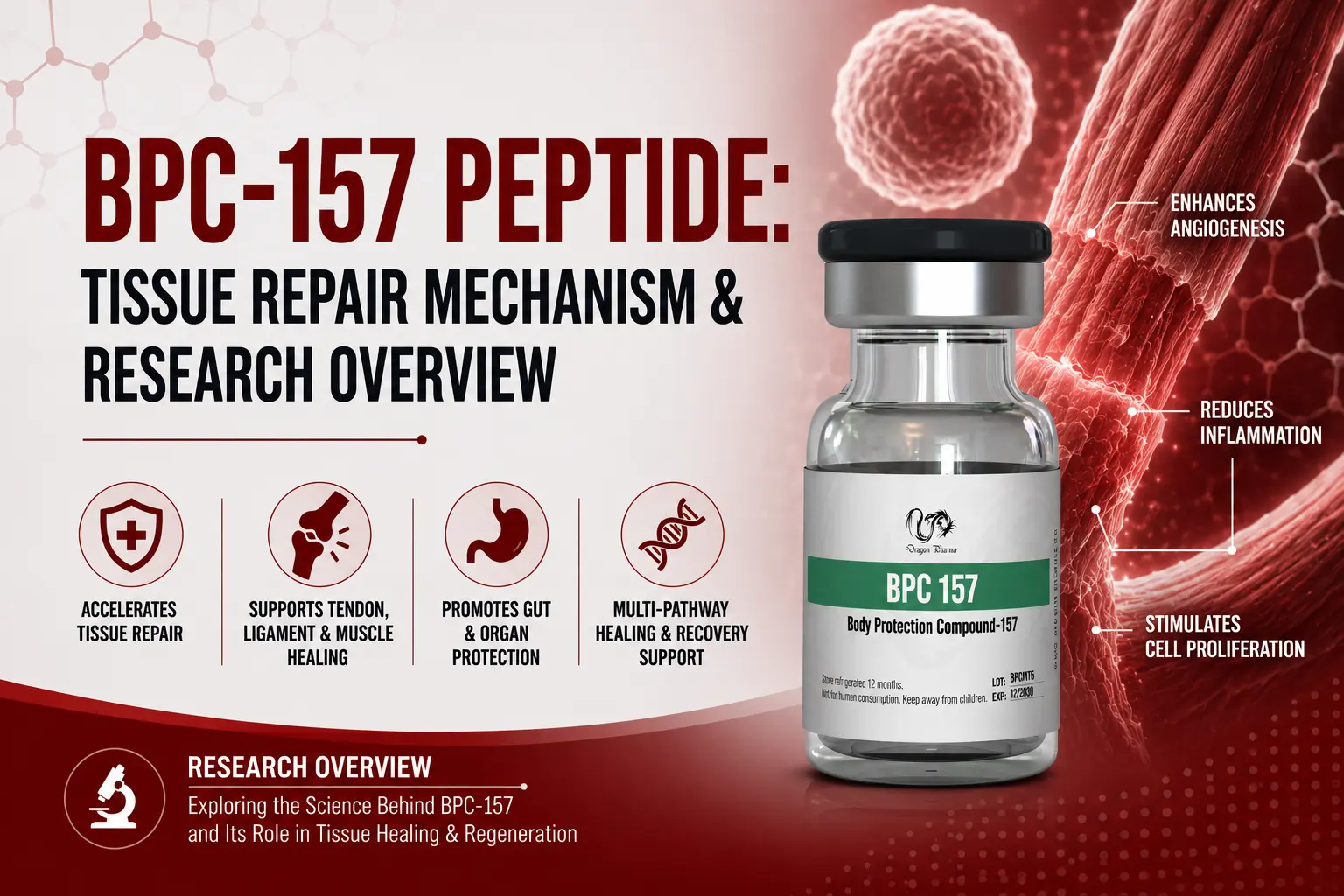
BPC-157 is a stable synthetic peptide developed from a naturally occurring protective compound found in human gastric juice, studied for reparative effects that extend well beyond the digestive tract.
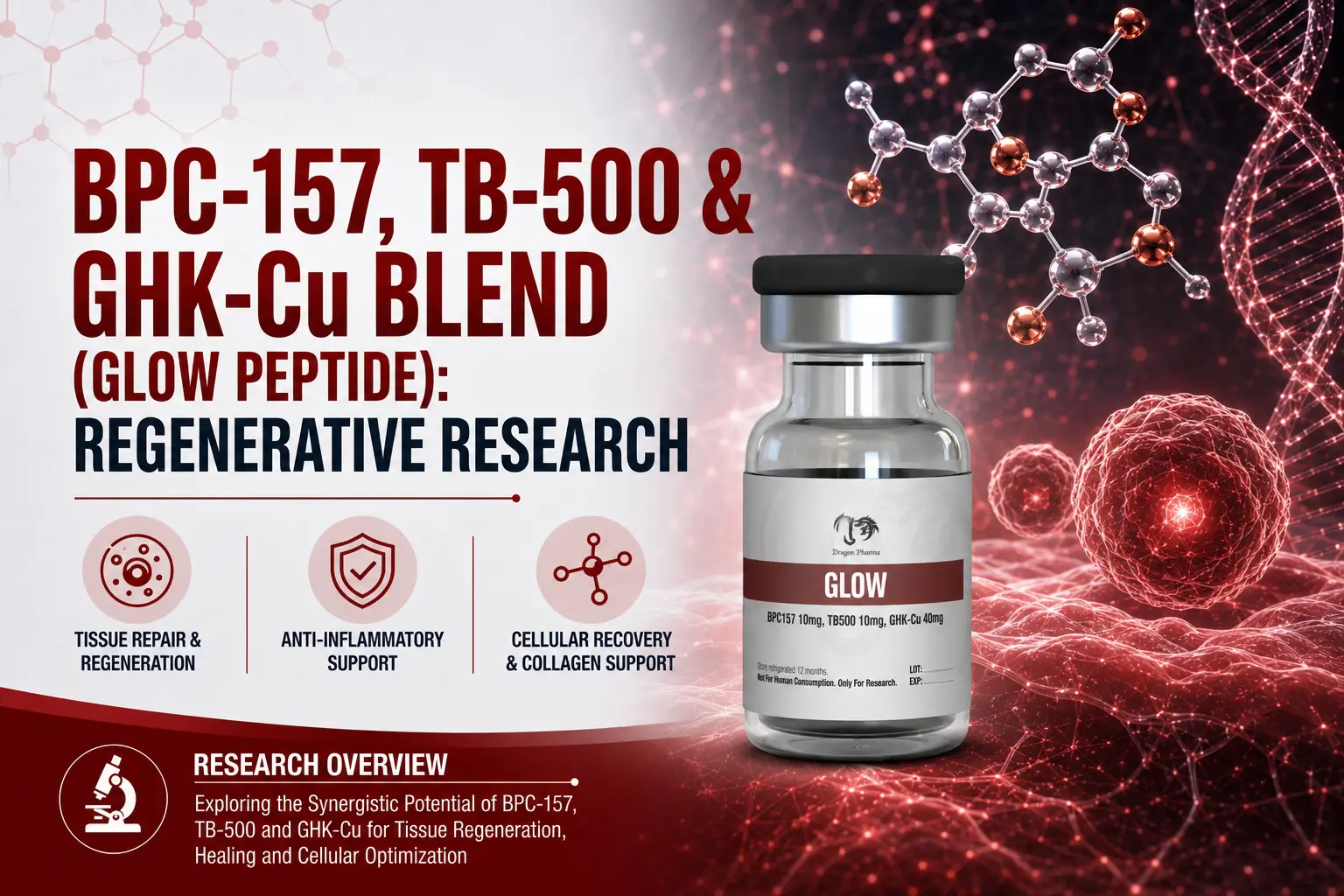
This article covers each component's proposed mechanism and research findings, and flags several citation and terminology issues found in secondary source material on this blend. It is part of the broader peptide research library maintained by Dragon Pharma Peptides.
This article organizes the receptor pharmacology, signaling mechanisms, and evidence base for each component, clarifies a common naming confusion in this compound class, and distinguishes human, animal, and in vitro findings throughout.
Customer Reviews
Please leave your review on products or service below.
Thank you beforehand.
- ordered more than 10 orders from this site, thanks for Lab test section, good work, will buy again. thanks
- Make it easier to find specific compounds regardless of manufacturer.