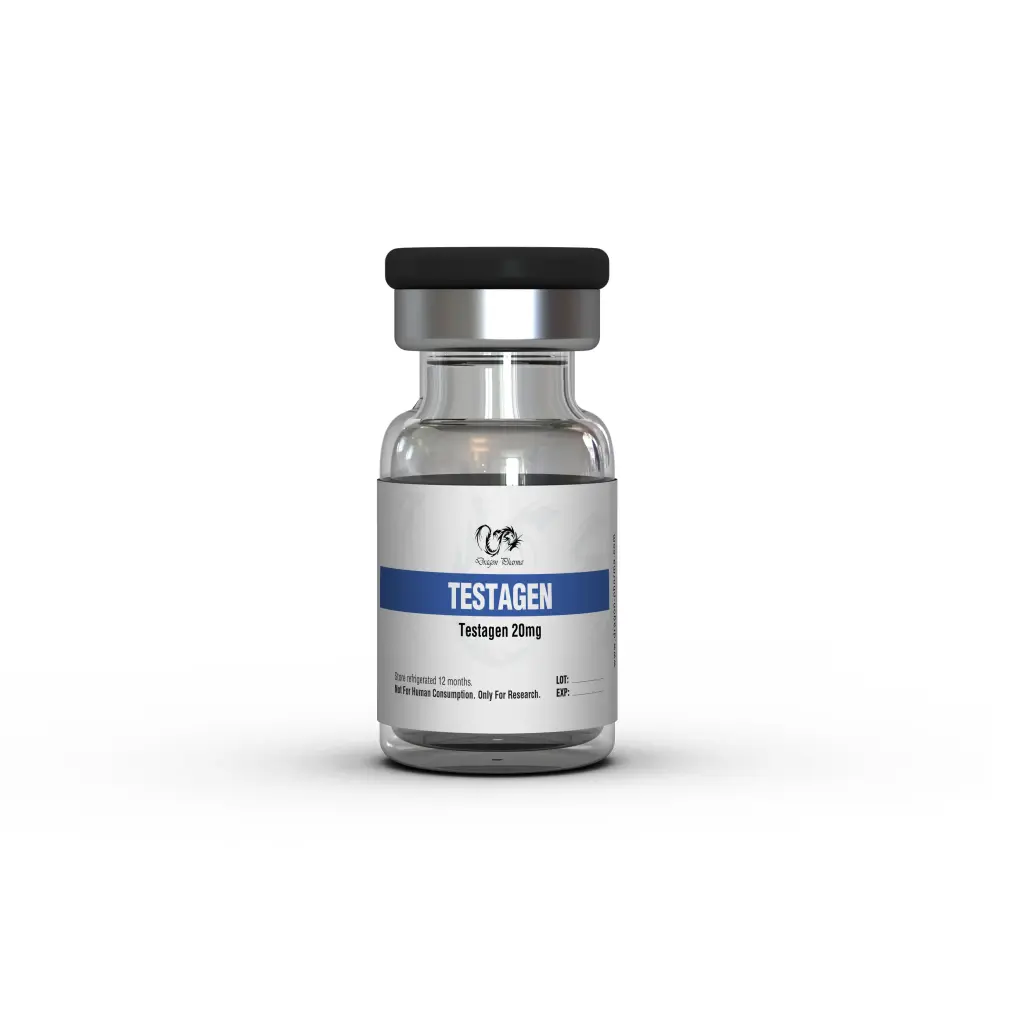
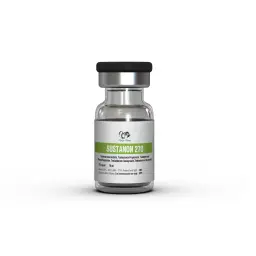
Manufacturer
Brand Dragon Pharma
Last Lab Tested None
Core Information
Substance Testagen
Classification Testosterone booster / peptide analog
Active Half-Life Variable
Typical Dosage (Men) 500–1000 mg/week
Effects & Properties
Water Retention Low–Moderate
Aromatization Low
Hepatotoxicity Low
Hair Loss Risk (HBR) Low
Acne Low
KEDG Anterior Pituitary Tetrapeptide
The anterior pituitary gland sits at the top of the endocrine hierarchy — the master control center that regulates thyroid, adrenal, gonadal, and growth axes through trophic hormone secretion. Dragon Pharma Testagen is the Khavinson cytogen peptide derived from this tissue: a four-amino-acid sequence (Lys-Glu-Asp-Gly) proposed to function as an endogenous molecular signal that maintains pituitary-dependent biological programs through direct nuclear gene regulatory mechanisms rather than classical receptor-hormone signaling.
Within the Khavinson short peptide bioregulator framework developed over four decades at the St. Petersburg Institute of Bioregulation and Gerontology, each organ generates characteristic ultrashort peptides that preserve tissue-specific gene expression throughout the organism's lifespan. Dragon Pharma Testagen (KEDG) is the anterior pituitary member of this family — studied for its documented effects on thyroid morphology preservation, immunomodulation in hypophysectomy models, high-affinity interaction with LAT1/LAT2/PEPT1 cellular transporters, and nuclear localization and DNA binding activity consistent with the broader Khavinson bioregulator model.
Dragon Pharma manufactures Testagen to research-grade standards with ≥99% HPLC purity and LC-MS sequence confirmation per batch. Every Dragon Pharma Testagen vial ships with an independent third-party Certificate of Analysis. For research use only.
Dragon Pharma Testagen — Product Specifications
| Parameter |
Detail |
| Brand |
Dragon Pharma |
| Product Name |
Dragon Pharma Testagen |
| Abbreviation |
KEDG |
| Other Names |
APP (Anterior Pituitary Peptide), Testagen KEDG |
| Sequence |
H-Lys-Glu-Asp-Gly-OH |
| Peptide Family |
Khavinson cytogen series — anterior pituitary |
| Molecular Formula |
C17H29N5O9 |
| Molecular Weight |
447.2 g/mol |
| CAS Number |
75007-24-8 |
| Primary Mechanisms |
LAT1/LAT2/PEPT1 transporter uptake; nuclear localization; DNA interaction; HPT axis modulation |
| Form |
Lyophilized powder |
| Purity |
≥99% (HPLC, Dragon Pharma batch standard) |
| Identity Verification |
LC-MS (Lys-Glu-Asp-Gly sequence + 447.2 g/mol confirmed) |
| COA |
Independent third-party, per Dragon Pharma batch |
| Storage (dry) |
-20°C, protect from light; 24+ months |
| Storage (reconstituted) |
2–8°C, 28 days |
| Research Use |
In vitro research only |
| Manufacturer |
Dragon Pharma |
Five Research Angles for Dragon Pharma Testagen
1. Transporter Biology — LAT1, LAT2, and PEPT1 Uptake
A 2023 Biomolecules study examined binding feasibility of 26 ultrashort Khavinson peptides across LAT and PEPT family transporter proteins — the cellular amino acid and small peptide uptake systems. Dragon Pharma Testagen's KEDG sequence ranked among the highest-affinity binders across all three transporters modeled: LAT1, LAT2, and PEPT1. The charge distribution of the KEDG sequence — positively charged lysine at position 1, two negatively charged acidic residues at positions 2 and 3, and a small neutral glycine at the C-terminus — creates an electrostatic profile particularly well-suited to transporter binding pocket accommodation.
This transporter characterization has two research implications: it defines the cellular uptake pathway delivering Dragon Pharma Testagen to nuclear interaction sites, and it identifies KEDG as a potential LAT transporter modulator relevant to cancer biology, since LAT1 and LAT2 are frequently overexpressed in tumor cells as amino acid supply lines for rapid proliferation.
2. Nuclear Localization and DNA Interaction
Published work by Fedoreyeva, Kireev, Khavinson, and Vanyushin demonstrated that short fluorescence-labeled Khavinson peptides penetrate HeLa cell nuclei and interact specifically with DNA structures in vitro. Dragon Pharma Testagen's charge distribution and compact four-residue architecture support nuclear localization consistent with this documented mechanism in the broader cytogen peptide family.
The closest structural reference for Dragon Pharma Testagen's DNA interaction comes from KEDW — a tetrapeptide differing by only one C-terminal residue (Trp instead of Gly). Physical characterization of KEDW using UV-visible absorption spectroscopy and circular dichroism confirmed stable DNA complex formation with binding along the major groove — the primary site of sequence-specific gene regulatory protein interaction. KEDW was further shown to modulate expression of pancreatic differentiation factors PDX1, NGN3, PAX6, and FOXA2 at the gene level. The single-residue KEDG/KEDW difference makes KEDW the most relevant published structural comparator for understanding how Dragon Pharma Testagen may engage DNA in nuclear research models.
3. Hypothalamic-Pituitary-Thyroid Axis Research
As the Khavinson anterior pituitary bioregulator, Dragon Pharma Testagen has been studied in the context of hypothalamic-pituitary-thyroid (HPT) axis regulation. Research in neonatally hypophysectomized chicken models demonstrated that KEDG treatment preserved thyroid gland structural integrity, counteracting the pathological changes that develop following pituitary removal — including enlarged follicles, colloid accumulation, and altered thyrocyte structure. KEDG operates through direct tissue-specific interaction with thyroid tissue rather than HPT feedback restoration, functioning as an endogenous molecular signal capable of maintaining thyroid structural programs independently of pituitary trophic input.
4. Immunomodulation Research
In the same neonatally hypophysectomized avian research models, Dragon Pharma Testagen normalized immune parameters that become dysregulated following pituitary removal. The immunomodulatory effects were particularly pronounced in neonatal subjects compared to mature animals — an age-dependent response pattern suggesting that the KEDG regulatory signal engages developmental pathways that remain more accessible in younger biological systems. The mechanism involves direct interaction with immune system components rather than indirect hormonal signaling, consistent with Dragon Pharma Testagen's proposed mode of action as a direct nuclear gene regulatory agent.
5. Stem Cell Differentiation Research
Caputi et al. (2019) investigated short peptide effects on neuronal differentiation in stem cell models, finding that the closely related KED sequence increases Nestin expression — a neurofilament protein characteristically expressed in early neuronal precursors — in human periodontal ligament stem cells. This differentiation-promoting activity positions Dragon Pharma Testagen as relevant for research investigating short peptide-mediated epigenetic control of stem cell fate decisions along neural lineage pathways, extending its utility beyond classical endocrine biology into regenerative research contexts.
Dragon Pharma Testagen in Context: The Khavinson Cytogen Series
Dragon Pharma offers multiple Khavinson cytogen series peptides from consistent pharmaceutical-grade manufacturing, enabling comparative multi-tissue bioregulator research from a single verified source. Dragon Pharma Testagen sits within this catalog as the anterior pituitary-derived compound.
| Dragon Pharma Product |
Sequence |
Tissue |
Research Focus |
| Testagen (KEDG) |
Lys-Glu-Asp-Gly |
Anterior pituitary |
HPT axis, thyroid, endocrine, transporter biology |
| Epitalon (AEDG) |
Ala-Glu-Asp-Gly |
Pineal gland |
Telomere biology, melatonin, longevity |
| Livagen (KEDA) |
Lys-Glu-Asp-Ala |
Liver |
Hepatoprotection, chromatin remodeling |
| Ovagen (EDL) |
Glu-Asp-Leu |
Liver / GI |
Hepatic and GI epithelial biology |
| Cartalax (AED) |
Ala-Glu-Asp |
Cartilage |
Senescence, SIRT6, collagen signaling |
The structural proximity of Dragon Pharma Testagen (KEDG) to Livagen (KEDA) — three of four identical residues — and to Epitalon (AEDG) creates a natural framework for comparative research examining how single amino acid variation at the C-terminal position affects DNA binding specificity, transporter affinity, and tissue selectivity within the KED- peptide family. Dragon Pharma's consistent manufacturing standards across all five compounds ensures that experimental comparisons reflect genuine peptide biology rather than batch-to-batch quality variation.
Key Features of Dragon Pharma Testagen
- ✔ Dragon Pharma pharmaceutical-grade manufacturing — consistent production standards applied across the full Dragon Pharma Khavinson cytogen catalog
- ✔ LC-MS identity confirmation per batch — confirms Lys-Glu-Asp-Gly sequence at 447.2 g/mol; critical for distinguishing Dragon Pharma Testagen from structurally adjacent KEDA (Livagen) and AEDG (Epitalon)
- ✔ ≥99% Dragon Pharma purity standard — exceeds standard research-grade threshold for in vitro applications
- ✔ Highest LAT1/LAT2/PEPT1 transporter affinity among ultrashort peptides modeled — published molecular modeling confirms KEDG as one of the most effective transporter ligands in the 26-peptide Khavinson analysis
- ✔ KEDW one-residue comparative framework — the closest published structural reference for DNA major groove binding provides a mechanistic research anchor for Dragon Pharma Testagen nuclear interaction studies
- ✔ Multi-axis research utility — transporter biology, HPT axis, DNA interaction, immunomodulation, and stem cell differentiation research applications from a single Dragon Pharma compound
- ✔ Comparative cytogen series availability — Dragon Pharma supplies Testagen alongside Livagen, Ovagen, Epitalon, and Cartalax for systematic KED-family comparative research
- ✔ Independent third-party COA per Dragon Pharma batch — lot-traceable documentation; not reused across production runs
Research Benefits
Dragon Pharma Testagen's transporter affinity profile is a research differentiator no other Khavinson peptide in this catalog has been specifically characterized for. The 2023 Biomolecules transporter modeling study places KEDG among the highest-affinity ultrashort peptide binders for LAT1, LAT2, and PEPT1 — creating a research platform at the intersection of endocrine peptide biology and cancer biology that is unique to this compound within the cytogen series.
One-residue comparative research is built into the Dragon Pharma catalog. Dragon Pharma Testagen (KEDG) and Dragon Pharma Livagen (KEDA) differ by a single C-terminal amino acid. The availability of both compounds from Dragon Pharma's consistent manufacturing platform enables systematic structure-activity research examining how Gly-to-Ala C-terminal substitution affects DNA binding specificity, transporter affinity, and tissue-directed activity — research questions that require both compounds to be available at equivalent quality standards from the same source.
The KEDW DNA binding characterization provides Dragon Pharma Testagen research with a published mechanistic anchor. Researchers using Dragon Pharma Testagen for nuclear interaction studies can contextualize their findings within the published KEDW major groove binding data — a reference framework that distinguishes Testagen research from investigations using peptides with no published DNA interaction characterization in adjacent sequences.
Seven peer-reviewed publications across multiple research domains. Dragon Pharma Testagen's literature base spans transporter biology (2023), thyroid morphology (2008, 2010, 2011), DNA interaction (2011), adjacent DNA binding/gene regulation (2015), and stem cell differentiation (2019) — each publication opening a distinct research thread for laboratory investigation.
Dragon Pharma Quality — Why LC-MS Matters for Testagen
At four residues and 447.2 g/mol, Dragon Pharma Testagen is one of the shorter compounds in the Dragon Pharma research catalog. This brevity creates a specific quality challenge: KEDG is structurally adjacent to multiple other Khavinson cytogen peptides sharing three of its four residues. KEDA (Livagen) and AEDG (Epitalon) would each show similar HPLC retention times while being pharmacologically distinct compounds with different tissue origins and gene regulatory specificities.
Dragon Pharma addresses this through LC-MS identity verification per batch — confirming the Lys-Glu-Asp-Gly sequence at exactly 447.2 g/mol, distinguishing Dragon Pharma Testagen unambiguously from its structurally adjacent family members. Combined with ≥99% HPLC purity, sterility and endotoxin testing, and independent third-party batch-specific COA documentation, Dragon Pharma Testagen delivers complete chemical traceability at every step from production to laboratory receipt.
Product Summary
Dragon Pharma Testagen is a synthetic tetrapeptide bioregulator (H-Lys-Glu-Asp-Gly-OH / KEDG, CAS 75007-24-8, MW 447.2 g/mol) belonging to the Khavinson cytogen series as the anterior pituitary-derived compound. Characterized by high-affinity LAT1/LAT2/PEPT1 transporter binding, nuclear localization capacity, documented thyroid morphology preservation and immunomodulation in hypophysectomy models, and structural proximity to the published DNA major groove-binding KEDW tetrapeptide, Dragon Pharma Testagen offers laboratories a multi-axis research tool within the Khavinson endocrine peptide framework. Manufactured by Dragon Pharma to ≥99% HPLC purity with LC-MS sequence identity confirmation and independent third-party COA per batch. For research use only.
Research domains: HPT axis biology • Thyroid morphology research • Transporter biology and cancer cell models • DNA interaction studies • Immunomodulation research • Stem cell differentiation • Comparative KED-family peptide research